Popular

Chemical Physics physics.chem-ph

14 articles

Experimental, computational, and theoretical physics of atoms, molecules, and clusters: classical and quantum descriptions, spectroscopy, electronic structure, chemical thermodynamics.

articles

Scientific Lego: Predicting Material Properties Without a Lab

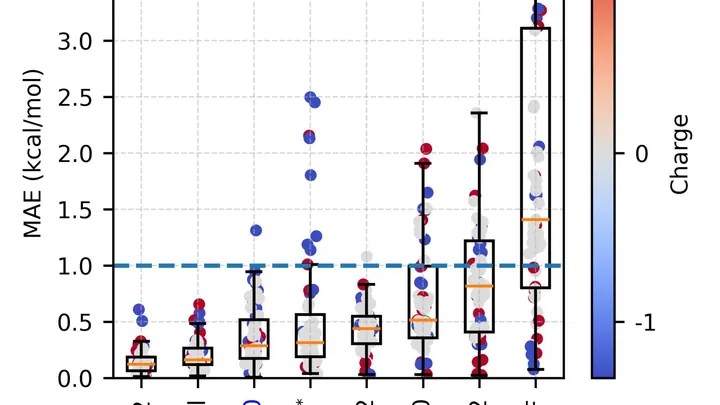
MatGL is an open-source library for materials researchers. It uses graph neural networks (akin to social media algorithms) to predict properties from atomic structure. It comes with ready-made models, like construction kit parts: pick the one you need and quickly test new materials. The tool acceler
arXiv:2503.03837 · 2025-03-05

Life Without Water: Warm Salty Worlds

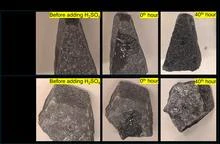
The search for life has typically focused on planets with liquid water. But hot exoplanets lack it. It turns out that ionic liquids—molten salts that don't evaporate in hellish heat—could substitute for water. Scientists created them in the lab from volcanic acid and organic matter. So, there may be
arXiv:2508.08437 · 2025-08-11

Diamond DNA Chip: A Revolution in Rapid Diagnostics

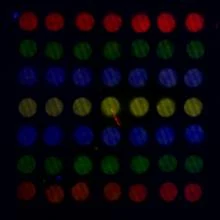
A diamond plate with 49 DNA sensors catches disease marker molecules. When the target is caught, the magnetic noise quiets, and the sensor gives a signal—fast, with no reagents or bulky equipment.
arXiv:2508.13193 · 2025-08-15

How to Watch the Electron Dance in Living Cells

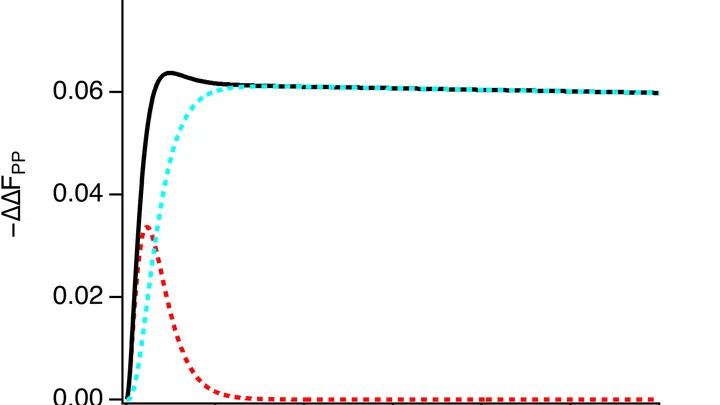
Biological processes depend on magnetic fields inside cells. A new method uses paired laser flashes to see invisible chemical 'dances' in living systems—a step toward portable sensors.
arXiv:2510.05600 · 2025-10-07

Quantum Secrets Inside Viruses

Ordinary computer calculations miss quantum phenomena that are crucial at the nanoscale. Inside the cramped viral shell, the DNA thread behaves like a wave. By applying the mathematics of the microworld to the Paracoto virus, researchers discovered that quantum effects here are not a minor detail bu
arXiv:2511.13768 · 2025-11-14

How Artificial Intelligence Becomes a Scientist's Partner

Algorithms sift through millions of options, suggesting new ideas to scientists—from medicines to distant planets. Robotic labs then test these hypotheses immediately, making science faster and more accessible.
arXiv:2511.20976 · 2025-11-26

A Quantum Accelerator for Drug Design

A hybrid method combines classical and quantum computers to assess the binding strength of a drug molecule to a protein in minutes. It is 20 times faster than classical approaches without sacrificing accuracy, filtering out weak binders before synthesis.
arXiv:2512.06141 · 2025-12-05

The Secret to Accurate Calculations: How Atoms Help Understand Molecules

Calculating molecules is a complex task requiring lengthy setup. The new method uses ready-made 'distance rules' for electrons from simple atoms, much like tailoring a dress from ready-made patterns. This not only saves time but also unexpectedly improves energy accuracy.
arXiv:2512.07530 · 2025-12-08

Lithium Dip Found in Unexpectedly Young Stars

In the 35-million-year-old 'Serpens' star cluster, astronomers discovered a 'lithium dip' — a sharp shortage of lithium in stars. It was previously thought that this only occurs after 150 million years. Fast rotation, like a blender, speeds up the destruction of primordial lithium, forcing a rethink
arXiv:2602.07367 · 2026-02-07

Light Echo Flips Chemistry

Inside an optical cavity, light echo changes the rules of the game: hydrogen loses stability, ring-shaped molecules straighten out and start a non-stop current. The effect grows with the number of molecules, paving the way for controlling chemistry with light.
arXiv:2604.20969 · 2026-04-22

How Chaos Governs the Chemistry of Giants

At the crucial moment of the reaction, when hydrogen ions overcome the barrier, chaos freezes, enhancing tunneling. Scientists have calculated which vibrations bring chaos back and slow down the process — this will allow more accurate modeling of distant planets' atmospheres.
arXiv:2604.21005 · 2026-04-22

Heavy water ice found in planet-forming disk

The Webb telescope directly observed heavy water ice for the first time in a planetary disk—the birthplace of planets. There's unexpectedly a lot of it, pointing to a turbulent history of the ice that might explain the origin of Earth's oceans.
arXiv:2606.10888 · 2026-06-09

Smart Pushes for Quantum Swings

Quantum devices — from masers to ultra-precise clocks — rely on repetitive motions within themselves. Energy losses disrupt these rhythms, but precise 'pushes' can sustain them. Previously, calculating such pushes consumed hours of computer time. Now a mathematical trick does it almost instantly, pa
arXiv:2606.15383 · 2026-06-13

Vortices in the Quantum World

Scientists have reformulated the Schrödinger equation, representing particles as a flowing medium. Points where the probability of finding a particle is zero become vortices. Their integer count naturally yields precise energy levels, explains the eternal jitter even of a particle at rest, and links
arXiv:2606.28640 · 2026-06-26