How alcohol and chloroform loosen the cell wall express
A cell membrane is like a picket fence of tightly packed molecules — long as matchsticks, with a water-loving head and a water-fearing tail. It's not just a wrapper but a living barrier: it lets the right things in, keeps the wrong ones out, and holds its shape. But add a bit of chloroform or alcohol to the water, and that fence starts to sway.
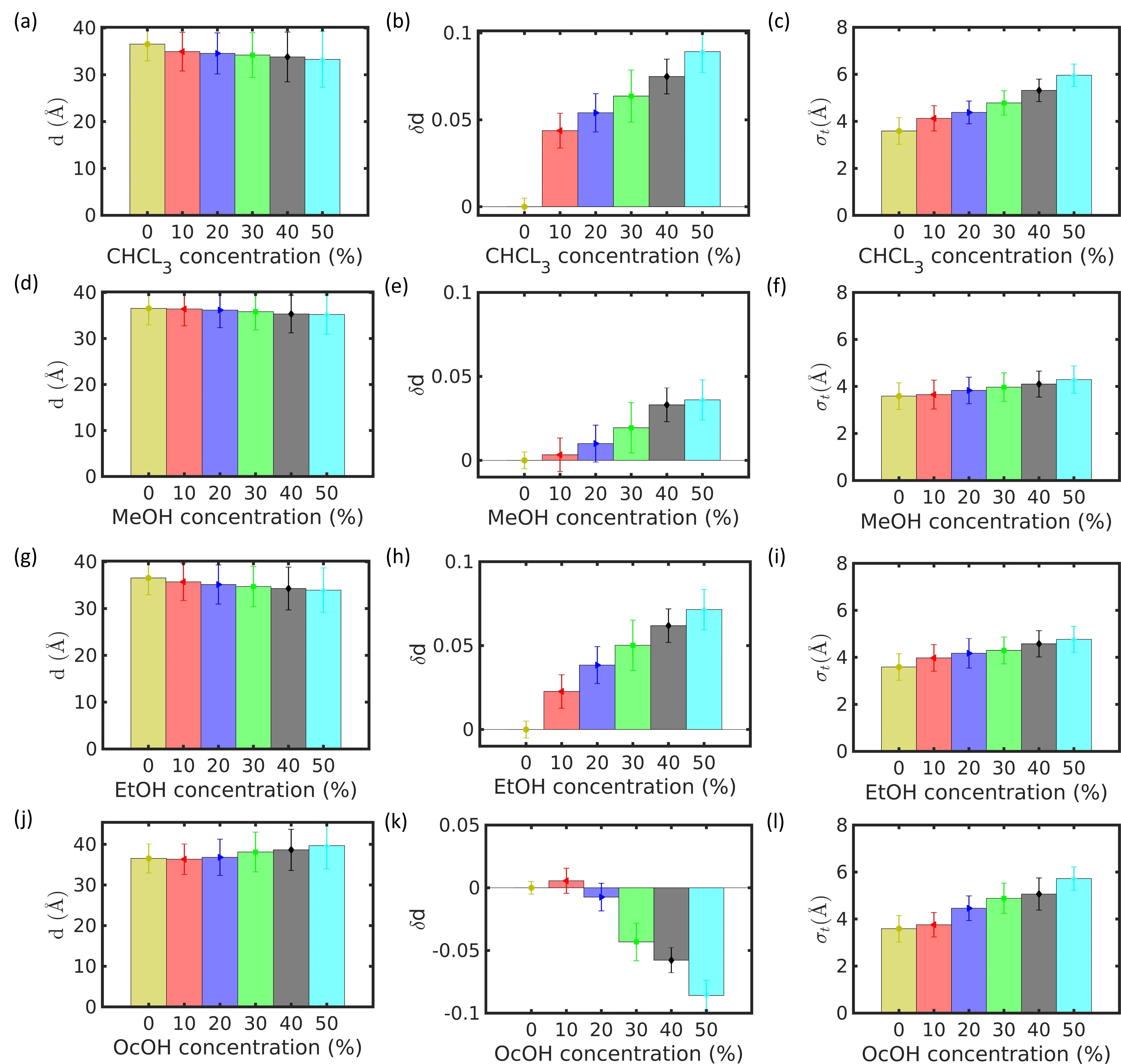
In a fresh study, researchers simulated on a computer how such a membrane behaves when it meets four guests: chloroform and three alcohols — methanol, ethanol, and octanol. They ramped up the concentration from zero to half of the total volume. Over a thousand nanoseconds (a millionth of a second, but an eternity in the molecular world), the membrane never fully melted. Yet even at modest doses, it visibly softened, its thickness began to fluctuate, and its internal order started to dissolve.
The authors measured how readily each substance enters the membrane and how easily it slips through. It turned out that the higher the concentration, the lower the barrier for crossing — especially for octanol. This means that even without poking holes in the cell, a solvent makes it permeable to things that used to be barred. The takeaway is simple: how deep a guest burrows into the "fence" and how much it jostles the neighbors together decide whether the barrier holds or starts letting everyone through.
The everyday ethanol in alcoholic drinks acts on our cell membranes the same way: it loosens them, making them more fluid: that's why alcohol stings on mucous membranes and disinfects.