Metabolism combines two streams of reactions: catabolism (breakdown of complex substances with energy release) and anabolism (synthesis of compounds necessary for the body with energy expenditure). Basal metabolism — the minimum energy expenditure to sustain life — accounts for about 60–75% of daily calorie consumption. Metabolic rate depends on age, gender, muscle mass, thyroid hormones, and genetics.
History
The term 'metabolism' comes from the Greek 'metabole' — change. Study began with the work of Jan Baptist van Helmont (17th century), but systematic research emerged in the 19th century: Theodor Schwann formulated cell theory, and Claude Bernard introduced the concept of homeostasis. In the 20th century, Hans Krebs discovered the citric acid cycle, and Fritz Lipmann described the role of ATP. Modern metabolomics studies thousands of metabolites simultaneously.
How it works
Metabolism is carried out through enzymatic reactions, the rates of which are described by Michaelis-Menten kinetics. Key pathways such as glycolysis and the Krebs cycle act as 'hubs' linking catabolism and anabolism. The electron transport chain in mitochondria creates a proton gradient used by ATP synthase to synthesize ATP — this process is called oxidative phosphorylation. Hormones (insulin, glucagon, adrenaline, thyroxine) coordinate metabolic fluxes through signaling cascades. At the organism level, Kleiber's law relates metabolic rate to body mass.
In practice
Metabolism determines how many calories you burn at rest — this is the foundation of diets and workouts.
Fun fact
The hummingbird has one of the fastest metabolisms among vertebrates: its heart beats up to 1,200 times per minute, and it must eat every 10–15 minutes or it will die of exhaustion.
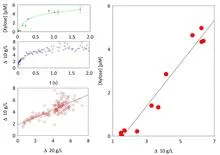
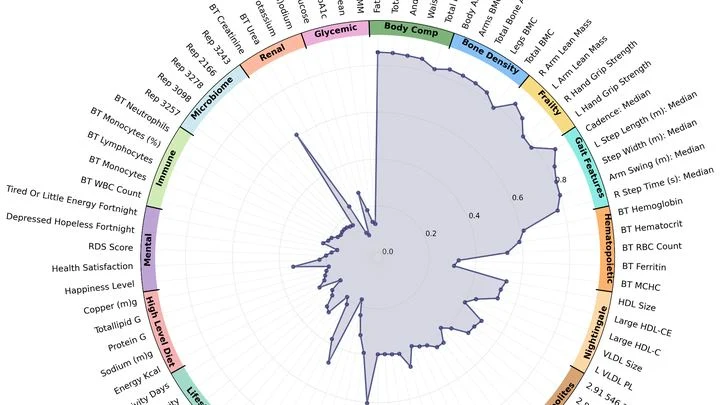
Picture every blood test as a dot on a large map. Plot thousands of those dots and they won't scatter at random: they line up along two main roads. One road separates men from women, the other stretches from youth to old age. Follow these roads and you can see how a person grows up, lives and grows old.
A mouse gets food that is missing a single amino acid, and within five days it loses a fifth of its weight. Its white fat turns darker, as if tiny stoves had lit up inside it. This is not hunger and not exercise: cysteine was simply removed from the diet.
Cysteine is a building block of proteins that our body can make on its own from another amino acid, methionine.
A courier carrying a package enters a dense forest of intertwined ropes. He needs to deliver the cargo deep inside, but along the way he loses strength, and each step becomes harder. This is what an enzyme looks like as it degrades a dense gel of biological molecules. Until recently, no one could simultaneously see how the courier moves and how the forest thins out.
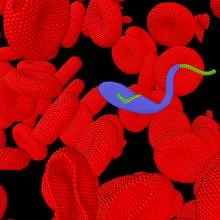
A swimmer in a pool filled with light balls pushes off them and swims faster than in clear water. That is roughly how a trypanosome, a single-celled parasite that causes sleeping sickness, behaves when it enters blood, where red cells occupy nearly half the volume.
An uninvited guest turns up in the house where metabolism lives. It doesn't smash walls or haul out the furniture, but it rearranges things so that familiar routes get tangled. In people with Down syndrome, that guest is an extra copy of chromosome 21, and until recently it was hard to tell exactly what it changes in the body's workings.
Imagine someone hauling two sacks up a hill. One is stuffed with sugar the body cannot process. The other is filled with the years the body has lived faster than the calendar. While the sacks are light, the climb is manageable. But if both are filled to the brim, the legs give way, and the person collapses not with one disease but with several at once.
A worm a millimeter long eats labeled atoms, and then the dance begins. Every carbon and nitrogen atom that enters the body takes its place in the cells: it becomes part of proteins, fats, DNA. The scientists labeled the worm's food with the stable isotopes ¹³C and ¹⁵N, then switched it back to ordinary food and began tracking how quickly the labeled atoms leave the tissues.
A bacterium hit with a dose of ampicillin behaves like a runner pushed to the limit: first it gasps out acid, then falls out of rhythm. Scientists measured this breakdown with sensors thinner than a human hair: they detect pH changes right at the bacterial surface.
Ampicillin doesn't just break the bacterial wall.
Epithelium lines our organs like tiles on a floor. At rest, cells cling to each other, and the tissue is elastic. But during embryonic development, wound healing, or tumor growth, this layer begins to flow like thick honey. What exactly triggers such softening?
At a concert, moving through a dense crowd is tough — the tighter the pack, the less you want to move. That's how active matter usually behaves: swarms of bacteria or robot flocks freeze in tight quarters. But one research group found the opposite effect.
At night, when we sink into deep, dreamless sleep, a tide begins in the depths of the brain. Each heartbeat and each breath sends gentle pulses through the fluid-filled cavities (the ventricles). During the day, these pulses are timid and monotonous — the fluid sloshes back and forth almost in place.
But with the onset of slow-wave sleep, the rhythm changes.
In a glass of water, oil gathers into droplets: that's equilibrium separation dictated by chemistry. But there are systems where order arises not from rest but from a constant flow of energy.
Inside every cell, logistics is in full swing: tiny protein motors, like couriers, haul cargo along a network of microtubules. One of the main workhorses is kinesin, which steps using the energy of ATP (the cell's main energy currency). For a long time, researchers tried to evaluate it like a car: how much fuel it burns, how fast it gets there.
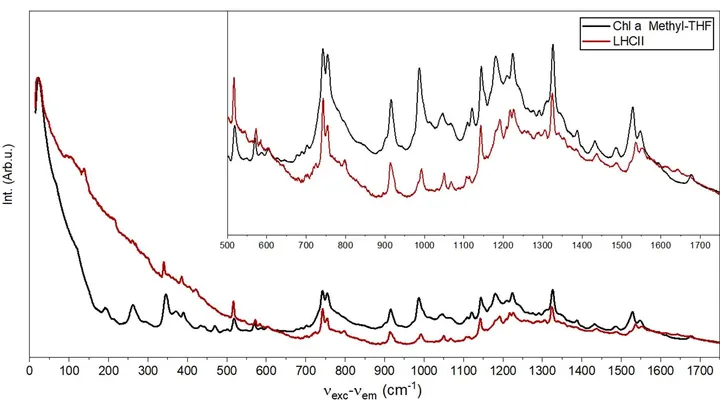
A sunbeam hits a leaf, and inside, a relay race begins. Energy hops from one molecule to the next until it reaches its goal. In photosystem II (a protein complex that kicks off photosynthesis), the runners are pigment molecules: chlorophylls and pheophytins.
A molecule works like a marketplace: electron shoppers enter through two gates (contacts) and head for stalls with the most attractive goods — the chemically active spots. Previously, current was thought to spread evenly, but it turns out up to 90% of all flow rushes through these 'hot spots'. Reactive centers become superconducting highways inside the molecule.
Imagine a packed subway car at rush hour. Passengers don't just stand there: they breathe, release moisture, squeeze toward exits, and sometimes get stuck in doors, blocking movement. Now imagine these passengers can remodel the car's walls, add handrails, or turn the floor into gel.
Inside each of us, invisible clocks are ticking. They control the release of cortisol — the hormone that helps us wake up in the morning, cope with anxiety, and keep our immune system on its toes. In adrenal insufficiency, these clocks break down: the body can't produce the right amount of cortisol on its own.
A protein in a cell is not a frozen sculpture. It is constantly in motion: bending, breathing, jittering. This motion, its dynamics, determines how the protein works. But peering directly into the dance is hard, and computer simulations often demand enormous computing power.
A new approach, named DynaMode, views protein motion as a musical piece.
A living organism is a machine that constantly channels energy through itself and converts it into heat. This internal cycle is called internal entropy production (a measure of energy dissipation). But about 2.5 million years ago, our ancestors switched on a second loop — an external one. They picked up a sharpened stone, and then a burning branch.
Life is a constant dance between order and chaos. Back in the mid-20th century, Erwin Schrödinger noted that living things feed not so much on matter as on "negative entropy"—the ability to maintain their own order by increasing disorder around them.
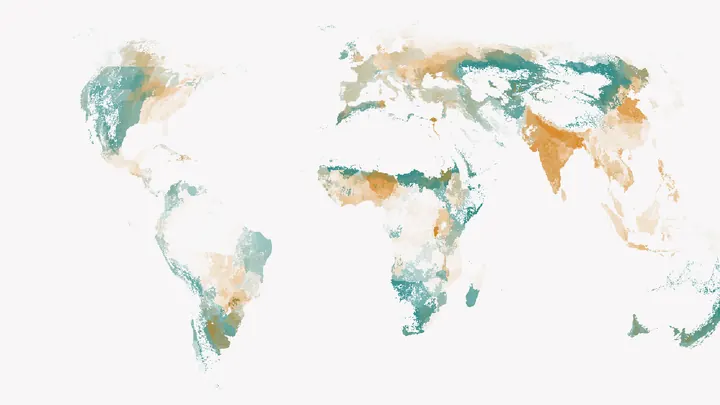
Every year, the food we eat costs humanity tens of millions of years of life due to unhealthy diets. At the same time, a third of all greenhouse gases warming the planet are produced along the journey from farm to plate. It seems obvious: switch to healthier eating, and we'll save the climate and improve our health. But new research shows these two goals don't always go hand in hand.
For a long time, we only saw proteins in their final form — like photographs of dancers frozen in a beautiful pose. Programs like AlphaFold learned to predict that pose from a chain of carbon links. But the real magic is how a protein finds this shape faster than you can blink, performing a swift dance.
Billions of tiny motors hum inside every living creature. Cells ceaselessly pump substances, burn sugar, and build new proteins, and all this invisible motion warms us from within. To maintain order, life must dissipate heat into the environment, like a stove that never goes out.
The power of this internal heating is almost independent of size.
A lump of plasticine, when kneaded, behaves like an amorphous solid — not a crystal, but not a liquid either. Inside such a material, avalanches can occur: one tiny rearrangement triggers neighboring ones, and a wave sweeps through the entire sample.
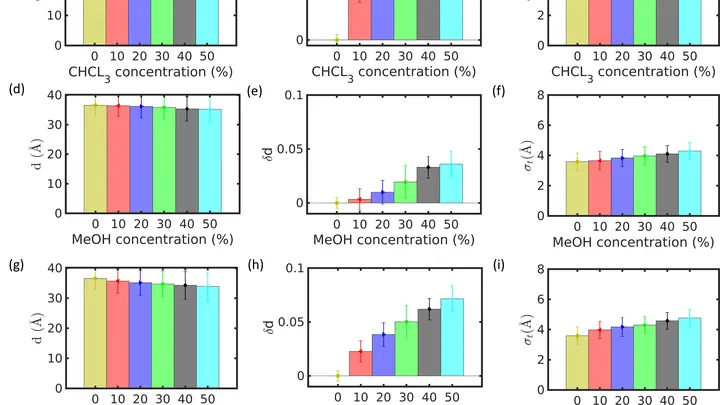
A cell membrane is like a picket fence of tightly packed molecules — long as matchsticks, with a water-loving head and a water-fearing tail. It's not just a wrapper but a living barrier: it lets the right things in, keeps the wrong ones out, and holds its shape. But add a bit of chloroform or alcohol to the water, and that fence starts to sway.
A cell crawls over a gel (sometimes viscous, sometimes elastic) and decides on its own when to speed up. It doesn't just glide: its internal chemical motor (noise in gene expression can affect the production of 'fuel') pushes the leading edge, while the rear detaches from the substrate.
An eight-kilogram rhesus macaque can live up to forty years. A cat of the same weight rarely sees its twentieth birthday. This difference is no accident: across all primates, from tiny marmosets to gorillas, lifespan is markedly longer than in other mammals of similar body mass. Standard models linking lifespan to metabolic rate fall short here.
The microbial community in the gut is like an orchestra: what matters is not only the musicians but how they play together. When disease strikes, it's not just the lineup of microbes that changes: their interconnections shift too. Researchers built interaction networks of microbial genes in healthy and sick individuals.
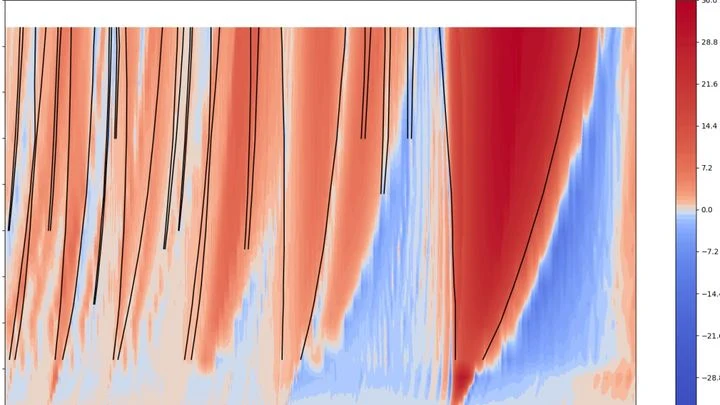
The heart doesn't push blood in a steady stream but in pulses. Each beat sends a wave racing through the arteries, like ripples along a taut garden hose. For a long time, it was thought that an animal's metabolic rate depended only on how vessels branch, like pipes in a house. But new work flips that view: what matters isn't the shape of the pipes but the pulse itself.
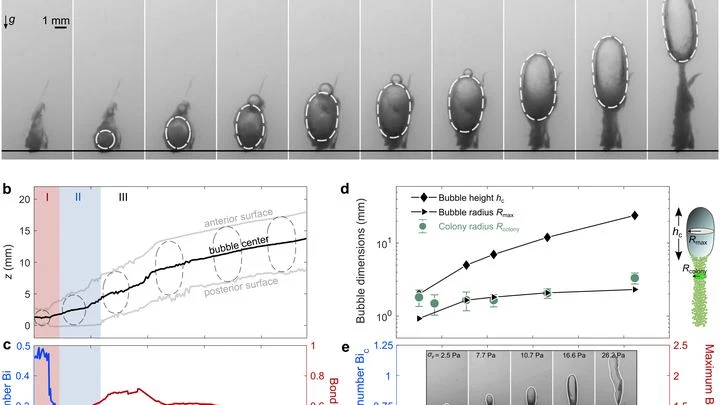
Yeast are trapped in a clear gel, like raisins in jelly. They can't move on their own, but soon they start rising to the top. The secret lies in their own homemade fizz.
During fermentation, yeast release carbon dioxide. In a thick medium, the gas doesn't escape but accumulates until bubbles form.
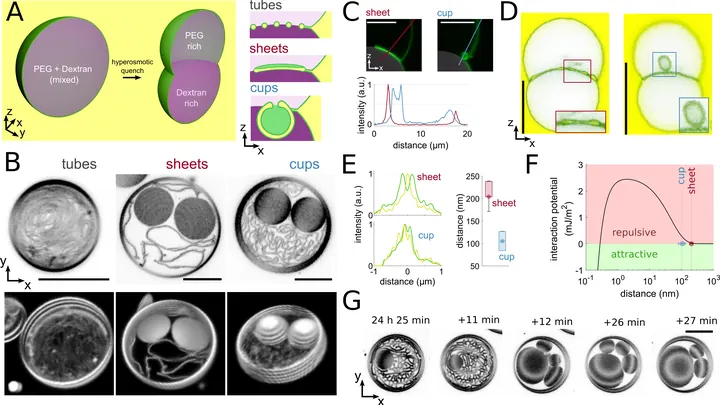
Inside a cell, there are tiny liquid droplets, like oil droplets in water. They form from proteins and RNA and serve all sorts of purposes, from storing molecules to speeding up reactions. But if droplets start merging with each other, you'd end up with one big puddle, which would wreck the cell's organization.
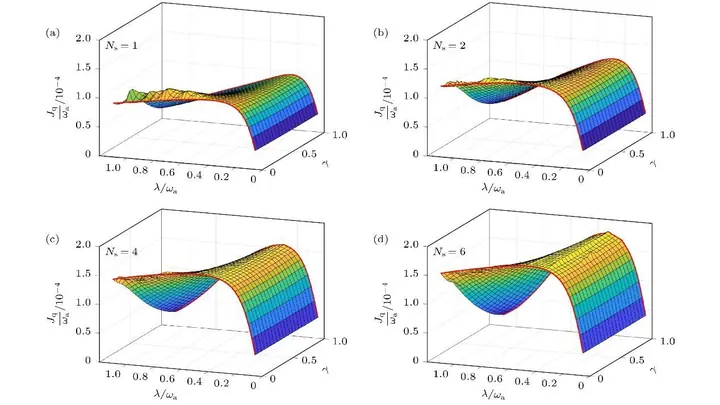
Light and atoms, like dancers, can move in sync or out of step. When their interaction is anisotropic (that is, direction-dependent) the dance gets trickier. In a new study, physicists considered a model where many atoms (qubits) collectively interact with an anisotropic light field, and each component is connected to a thermal reservoir.
Gait is not just a way to get from point A to point B. Each step, arm swing, and torso tilt is like a signature the body leaves in space. Doctors have long noticed that disease alters gait, but they considered it merely a symptom of a specific problem: if you limp, your leg hurts. Now it turns out that gait is a whole book about health, and you can read it with an ordinary camera.
Each breath slightly speeds up the heart, and each exhale slows it down. This rhythm, visible on an ECG, is called respiratory sinus arrhythmia. For a long time, it was dismissed as a mere side effect of the nervous system. But new research shows that this coordination is not a coincidence: it's a way to save energy.
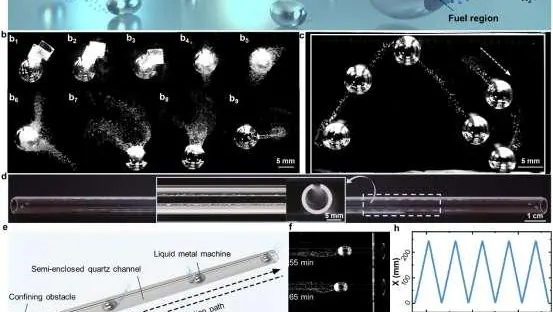
A droplet of liquid metal glides along a narrow channel like mercury from a broken thermometer. It needs no motor — the fuel is a chemical reaction with the surrounding liquid. But what happens when the droplet hits a wall? Previously, such machines were studied in open spaces, and in tight channels they behave differently.
Inside a living cell, droplets float that don't mix with the surrounding fluid, like oil in water. These droplets aren't just passive clumps; they actively press on membranes and make them bend. Scientists observed this process in living plant cells, reproduced it in a test tube, and simulated it on a computer.
When you stir sugar into a glass, the water seems to move every which way. But inside a chemical reactor with an impeller, the liquid isn't just churning: it forms hidden "islands" that barely exchange their contents. Scientists found a way to see these islands by following the paths of tiny particles.
Microbial communities are like a noisy orchestra: thousands of instruments, and it's hard to tell who's playing the lead. In the gut, ocean, or soil, millions of bacterial species live, and scientists need to figure out which ones truly matter for human health or soil fertility.
The new approach works like smart laundry sorting.
When a sunbeam hits a leaf, a relay race begins inside it. The energy of light passes from one chlorophyll molecule to the next until it reaches the reaction center — the place where the chemistry of life kicks off. This relay runs with astonishing accuracy: nearly every quantum of light finds its way.
Inside every cell, there is a scaffold of filaments, like construction scaffolding that gives the cell its shape and allows it to move. These filaments are connected by crosslinking proteins: some simply hold them together like ropes, while others act as tiny motors that crawl along the filaments and pull them toward each other.