Cosmic Tan: How Stellar Flares Repaint Water Worlds ✦
Original: "Ultraviolet Radiation Effects on the Optical Properties of Water-Dominated Exoplanet Hazes"
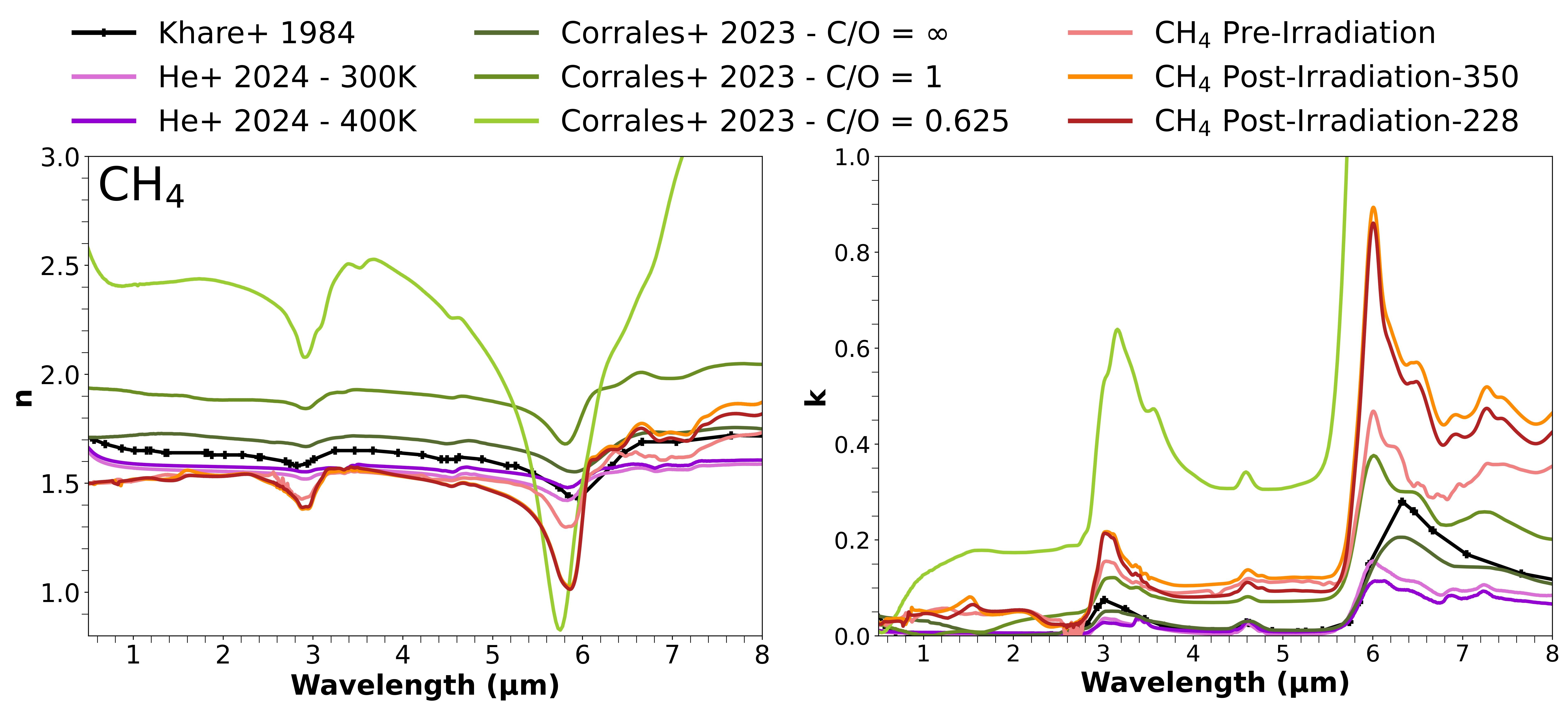
The ultraviolet "tan" from stellar flares changes the color and opacity of atmospheric hazes, and telescopes like JWST can detect this difference, paving the way for precise diagnosis of water worlds.
Links in the knowledge graph 1
Wrapped in foil like secret ingredients, samples of alien hazes await their moment in the lab. The ultraviolet blast from the host star repaints them, and the telescope catches this color chord. Someday, such subtle hues will point to habitable worlds, making us look anew at every twinkling red dwarf.
🎯 The haze samples were stored like secret ingredients: in a nitrogen atmosphere, sealed with parafilm and wrapped in foil — all to isolate them from ubiquitous terrestrial dust and moisture.
k = \frac{\lambda}{4\pi t} \ln\frac{1-R}{T}
λ is wavelength, t is film thickness, R is reflection coefficient, T is transmission coefficient.
Scientists
Christian DopplerD. B. McLaughlinDidier QuelozMichel MayorR. A. RossiterAlbert Einsteinexoplanet
Water
methane
carbon dioxide
spectroscopy
transit method
JWST
red dwarf
cosmic dustLaws
Doppler effectgravitational lensingKepler's third lawMaxwell's equationsPlanck's lawPlanck–Einstein relation