The Quantum Tango of Neutrons: The Dineutron on the Edge of Stability ✦
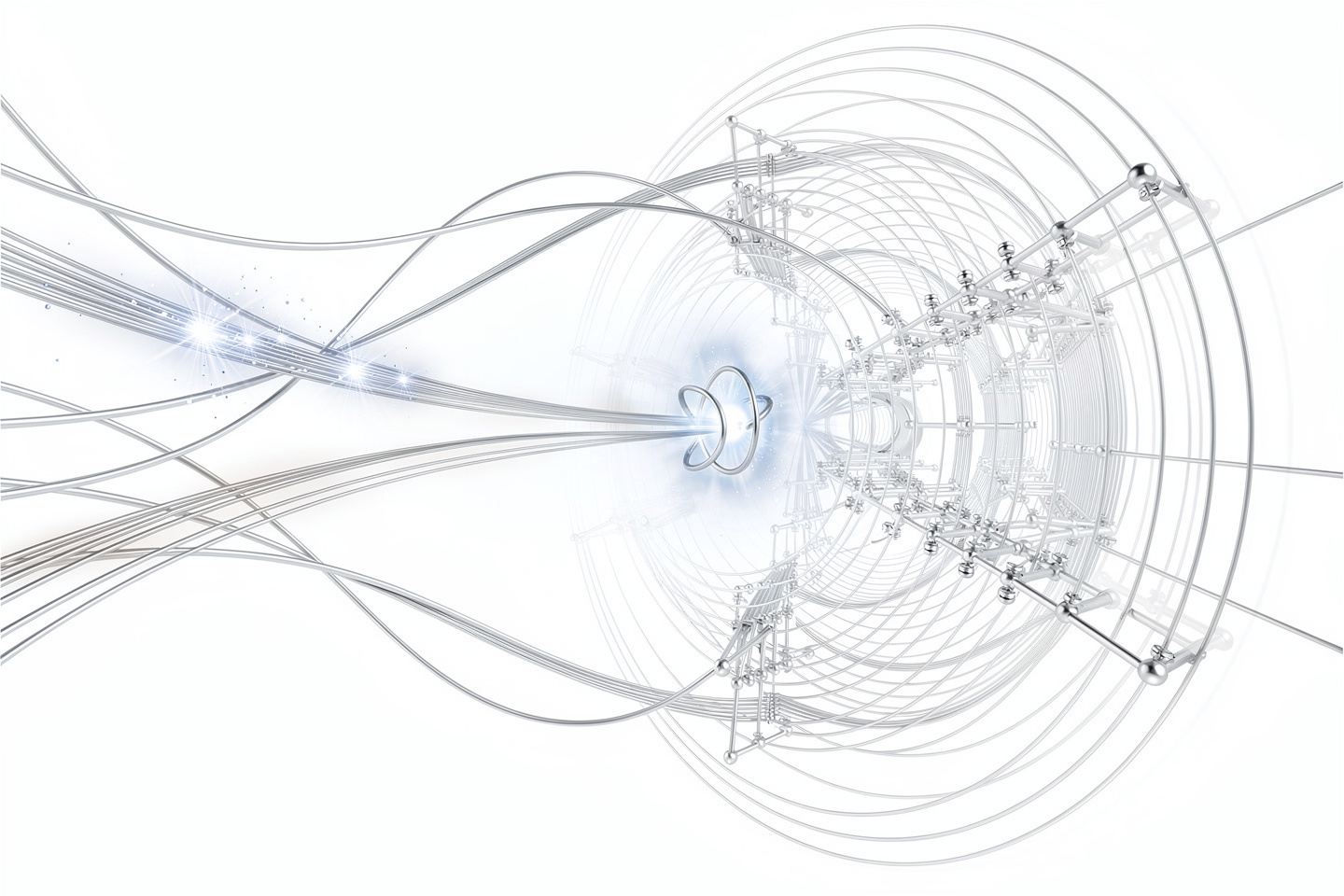
Two neutrons in free flight fly apart like strangers in a crowd. But on the surface of an atomic nucleus, where the density is a thousand times lower than nuclear, they suddenly lock into a quantum tango, circumventing the Pauli exclusion through superposition. This dineutron is the key to superfluidity in neutron stars and, perhaps, to new forms of matter.
🎯 The term ‘dineutron’ was historically ambiguous: some physicists used it for any two neutrons with small relative energy, others only for a spatially compact pair. Today, the consensus leans toward the second definition, emphasizing that the dance is not a random encounter but a deliberate choreography.
🎬 In science fiction, neutron matter is often depicted as ultra-dense ‘neutronium’, from which impenetrable armor can be built. The idea of dineutron and tetraneutron clusters breathes new life into this concept: perhaps in the distant future, engineers will learn to stabilize tiny neutron droplets for exotic technologies — a kind of quantum ‘capsules’ of neutronium, familiar from the novels of Stephen Baxter.