Why One Map Isn’t Enough for All Mazes ✛ ✎
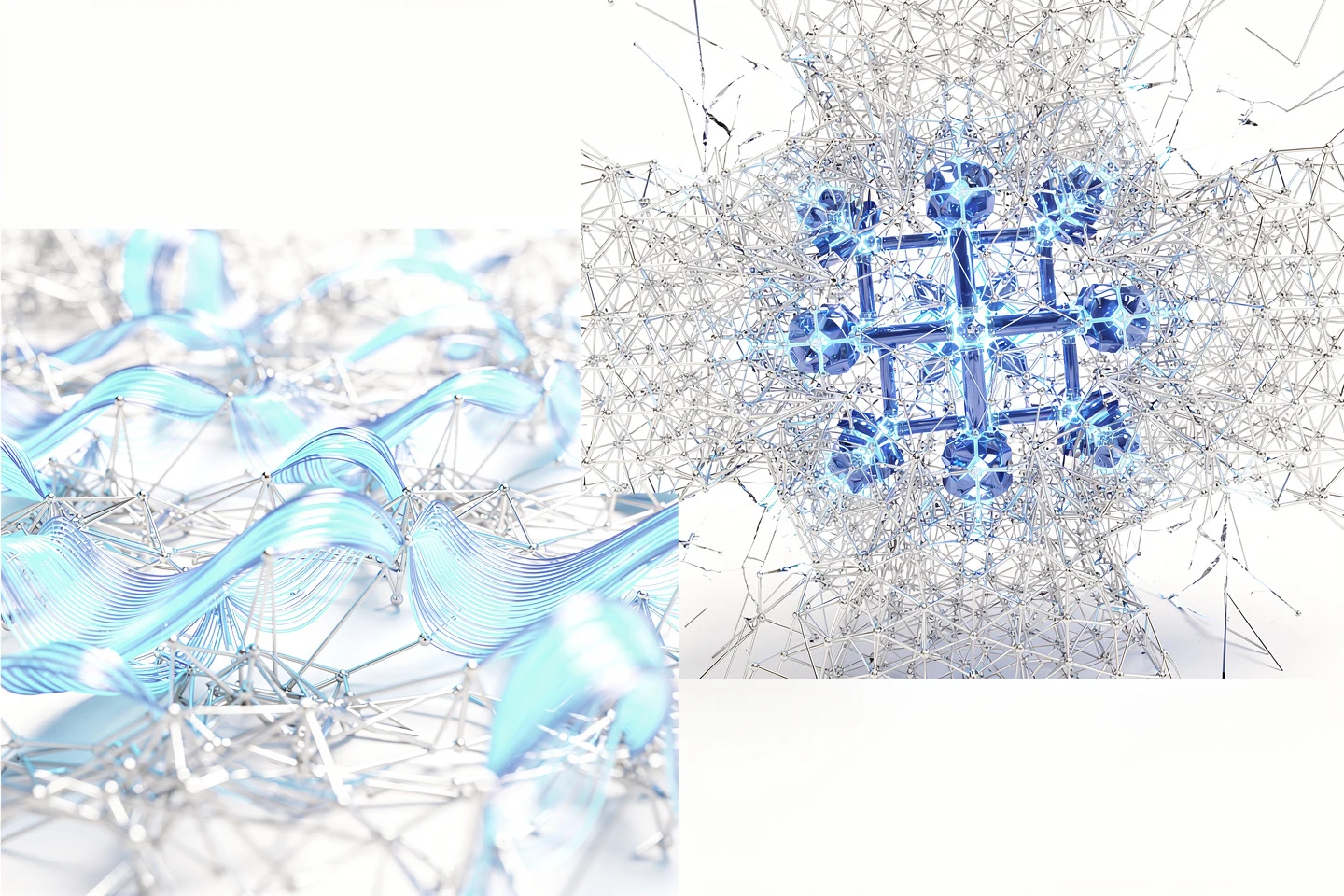
A cartographer lays a large sheet of paper on the table. His task: to fit every possible road network onto it — straight highways, tangled mazes, webs of country lanes. He’s allowed to stretch or shrink distances a bit, as if peering through frosted glass. But every network must still be recognizable. Robin Tucker-Drob proved that no such universal map exists.
It all comes down to counting. Imagine the map is divided into grid cells, and lines can only be drawn along them. Then the number of distinct networks the map can display is finite: it grows roughly like a number raised to the power of the number of intersections (nodes). Now let’s count how many networks exist without short closed loops (where the girth, the length of the shortest cycle, is large). It turns out their number explodes far faster — superexponentially, as if the number of intersections itself leaps into the exponent. If the cartographer were to pick at random, hoping to find a suitable way to lay out a network, his chances would dwindle with each new intersection.
But mathematicians built a cunning monster network that swallows up all the complex obstacle networks, like a Russian nesting doll. To construct it, they used small cancellation — a method of piecing together a giant puzzle where each piece repeats very rarely. They also applied edge labeling — special marks to keep long paths from repeating. This monster network no longer fits on any map with limited precision. The dream of a single picture shatters.
The takeaway is simple: don’t look for a single template. Each landscape is unique. Scientists are searching for ways to relax the constraints — maybe a nearly universal map is still possible? And the monster-building method could also help with dynamical systems — for instance, to understand how the web of connections in an ecosystem changes over time. Yet the sheet on the cartographer’s table will forever remain incomplete.
The number of distinct road networks from 100 points without short loops exceeds the number of atoms in the observable universe. Even just listing them all would require more memory than all the world’s computers combined.