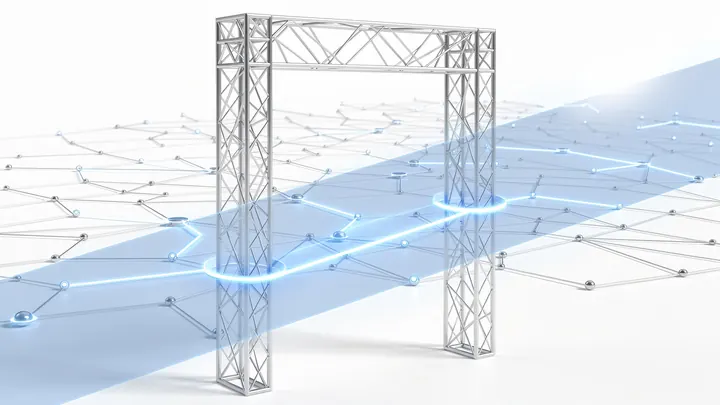
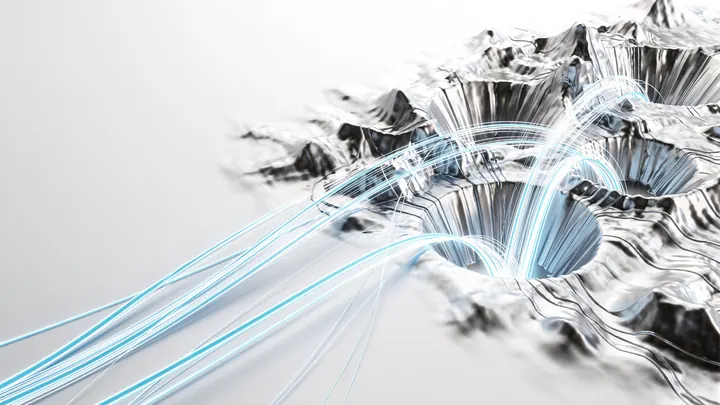
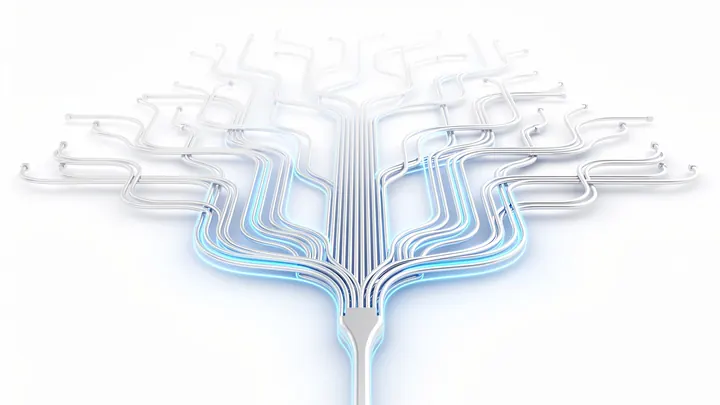
An alpinist sees three ridges ahead, but he needs not the highest, but the lowest pass. Optimization mathematically seeks the minimum (or maximum) of an objective function — a numerical measure of solution quality. Constraints define the feasible region: you can't walk on air or steeper than 45 degrees. Linear programming deals with straight slopes, where the answer lies at a vertex. For smooth hills, gradient descent is used. If the terrain is cut by ravines and cliffs, evolutionary algorithms come into play — they launch a whole crowd of virtual alpinists, and the most successful routes are crossed and mutated. Thus, a path is found in multidimensional spaces where no map can be drawn. When the step becomes smaller than a millimeter, the search stops — the pass is conquered.
History
Roots go back to the calculus of variations of the 17th–18th centuries, but the modern era began in the 1940s with the development of linear programming and the simplex method. The advancement of nonlinear optimization in the 1960s brought penalty methods and conjugate gradients. In the 1980s, interior-point algorithms emerged, revolutionizing the solution of large-scale problems. Today, optimization is the foundation of all machine learning technologies.
How it works
Most algorithms construct a sequence of points converging to the minimum. Gradient descent moves against the gradient. In machine learning, the gradient of the loss function is computed on a random subset of data (batch), enabling optimization of billions of parameters. Regularization adds penalties for complexity to avoid overfitting. For constrained problems, methods like the reduced gradient method or sequential quadratic programming are used. Global optimization employs Bayesian methods and search with decision trees.
In practice
GPS navigators plot routes, airlines schedule flights, and engineers calculate streamlined shapes — all this is the work of optimization algorithms.
Fun fact
The traveling salesman problem — visiting 100 cities by the shortest route — has more possible routes than there are atoms in the universe. Yet smart optimizers find a solution in seconds.
Assembling furniture usually starts by dumping all the parts on the floor and sorting them into piles. For quantum computers, the role of such parts is played by Pauli strings, the simplest building blocks used to describe electrons in a molecule.
A translator at the negotiating table doesn't listen to every word; they grasp the meaning of whole phrases. Electron microscopy poses a similar challenge: you need to figure out the crystal's thickness and its tilt in the beam, and all you have is a diffraction pattern, a mosaic of thousands of bright and dark spots.
Picture a flock of birds gathering around a feeder that no one built. Each bird searches for food on its own, yet they all end up together. Usually, such behavior is explained by social instinct: birds want to be near their kin. But what if the flock is simply a side effect of greed?
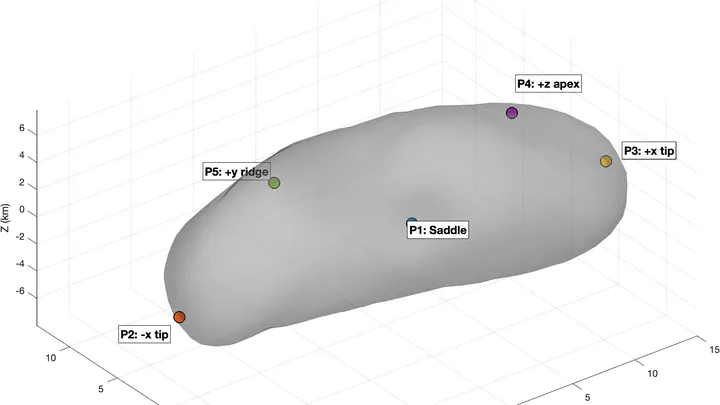
Hopping from rock to rock on the asteroid Eros is not for the faint of heart. Gravity there is so weak that a person could jump hundreds of meters, but that's exactly why any wrong push sends you into space or slams you into sharp cliffs.
Two photographers shoot the same mountain. One takes a hundred shots from the summit and only a couple from the base; the other does the opposite. If you try to align their images, the algorithm might decide that the summit in one photo matches the summit in the other simply because there are many similar points there, not because it's the same spot. Sampling density throws it off.
In the ICU, the decision of how much fluid to give a sepsis patient and what dose of a vasopressor to administer is made every hour. A mistake in either direction can be fatal. But how do you know which decision would have been best? You could take thousands of patient records and ask a program to "replay" them, trying different actions.
That's exactly what the authors did.
Hunting for a new material is like cooking without a recipe: you try, try again, and often throw things out. Previously, scientists manually flipped through papers and tested compositions one by one. Now there's a "robot chef" that reads the literature itself, mixes components, and checks what came out.
A stellarator fusion reactor resembles an intricately twisted magnetic cocoon. Its job is to confine superheated plasma so that hydrogen nuclei fuse and release energy. But the cocoon's three-dimensional shape creates gaps: some particles escape, especially the fastest ones, which carry most of the heat.
A laser beam can do more than heat things up: it can also calm motion. When light enters a mirror trap, it exerts pressure on the mirrors, and if you tune the beam's color just right, that pressure becomes a gentle braking force. This is how tiny mechanical vibrations are cooled to nearly absolute zero.
Two gardeners haggle over water from a magical well. One proposes how many buckets to take, the other can agree or refuse. If the deal goes through, the water decreases; if not, the well gradually refills. This haggling repeats hundreds of times, and the gardeners' habits sometimes change randomly, as if they're trying new tactics.
In calm water, the route is clear. But in turbulent flows, a robot needs a different strategy. Typical approaches demand an accurate map of currents, but in reality, you can't get one. Nature does it differently: fish feel pressure and vortices right against their bodies.
When a pipe bursts in the basement, a plumber acts step by step: locates the leak, measures the pressure, determines the cause, patches it up, and checks if it's dry. The same recipe — the standard model DMAIC — is being proposed against epidemics.
First, they determine the scope — how many hospital beds are occupied, which industries are sagging.
Imagine an experienced chef during rush hour: suddenly a stove fails or a key ingredient runs out. Instead of panicking, he instantly reworks the recipes — speeding up some dishes, slowing down others, reallocating resources on the fly. This principle of dynamic adaptation underpins a new generation of ultra-reliable networks.
A search party combs a foggy field. At first, people spread out wide: a high 'temperature' of search means a great variety of attempts. Upon finding a trace, they close in. But the speed of convergence is critical — narrow the circle too early, and the best find stays aside. The coordinator assesses the spread of searchers and commands when to speed up or slow down.
Usually a CT scanner takes many X-ray images from different angles and assembles a 3D picture. But sometimes doctors only scan a small area (say, one lung) and the data cuts off. It's like a chef given a single spoonful of soup and asked to name the exact recipe for the entire pot.
Conventional antennas for precise direction finding must work coherently: they capture not just volume, but also the wave's phase at a given moment. The slightest tuning mismatch, and the direction is lost. The new method relies solely on signal strength. It's like finding your way in fog, seeing only the brightness of lights, not their color.
Human hearing is wired so that the brain prioritizes familiar patterns — a friend's voice, the patter of rain, a car horn. But a new system works on a different principle: it registers any sound burst, even one never encountered before.
Code-writing assistants often behave like a chef who, to boil a single egg, rereads the whole cookbook. When asked to make a tiny fix, they reopen dozens of files and retrace long-familiar connections. This is unnecessary work — energy going to waste.
A driver on a slippery road doesn't know exactly how the car will respond to the steering wheel, and learns on the go, leaving room for error. A smart control algorithm behaves in a similar way.
If you take a table of numbers where the sum of squares in each row and column is 1, and you want to maximize the sum of fourth powers, the answer will only be permutations of coordinates. The fourth power sharply penalizes division: 0.5 gives only 0.0625, while 1 remains 1. It's advantageous to give the entire weight of a row and column to one cell, filling it with +1 or -1, and the rest with zeros.
In fast-moving vehicles, mobile internet slows down: the signal, traveling at the speed of light, blurs like the scenery outside the window. Engineers have found a way to pack data more densely without letting them mix up. It's like a multi-lane highway where packet-cars drive not with a safe interval, but almost bumper-to-bumper.
Medical scans are maps of tissue density. The brightness of each pixel reveals what’s there, much like photometry measures light intensity. But conventional algorithms analyze pixels in isolation, producing jagged organ boundaries.
A new approach compels the program to prioritize smoothness.
Traditionally, machine learning algorithms operate in a static environment, like water flowing along a pre-cut channel without changing its shape. The new method flips this paradigm: it lets an agent simultaneously master actions and deliberately modify the very environment it inhabits.
To make the drone act like a predator, engineers wove three hunting phases into one: search, track, and strike. No more task-switching: its unified logic runs seamlessly.
At its heart is a mathematical filter designed for guiding Apollo spacecraft.
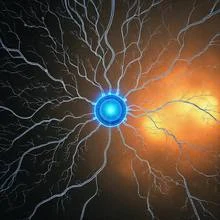
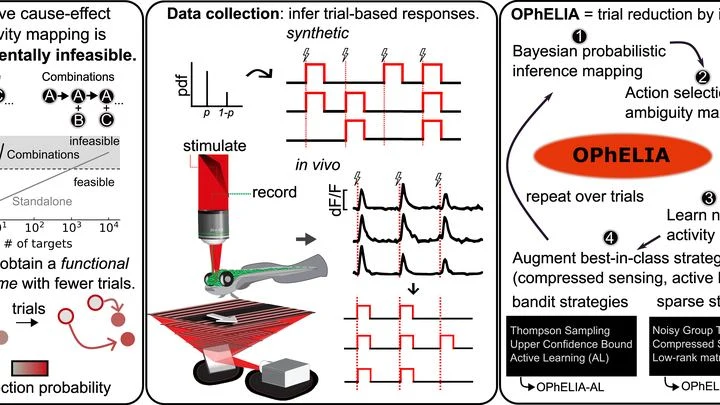
To understand how the brain works, you need a detailed map of neuron connections — the so-called connectome. The traditional approach is like trying to figure out a huge garden irrigation system by opening each tap one by one and watching where the water flows.
A family tree becomes a tangle if you account for adopted children and remarriages. Evolution often resembles such a tangle: although the Standard Model, the traditional view of divergent evolution where species branch like a tree, paints a neat tree of species, in reality genes travel not only by inheritance but also directly between unrelated organisms — a process…
Complex machinery, from drones to surgical robots, sometimes behaves like a wild mustang: full of disorder and whims, where the slightest touch triggers a storm. Instead of rote memorization of formulas, the new method observes the system like a horse breaker.
Building a light chip is like a game where you have to guide a beam through a maze of tiny mirrors and beam splitters. Each element acts like a railroad switch: it either lets light pass straight through or directs it to an adjacent track. The goal is to produce a specific light pattern at the output while using as few 'switches' as possible.
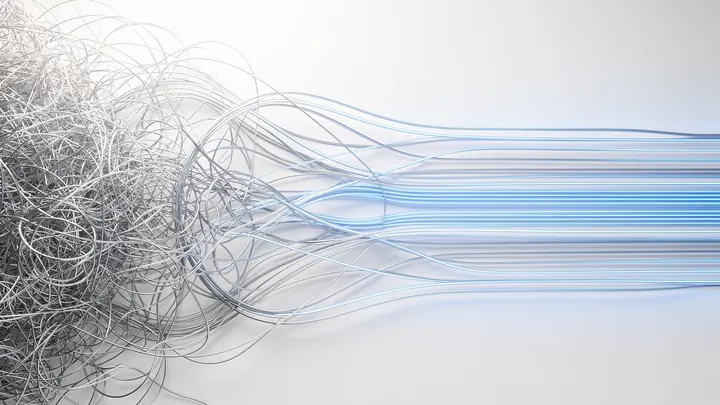
Usually, engineers spend years finding the shortest route for each task.
Recommendation systems that decide which post you’ll see next run on deep neural networks made up of thousands of operations — intricate computation Graphs (blueprints of operations on data). These systems are living, ever-evolving Dynamical Systems: the slightest architecture change cascades through the entire graph.
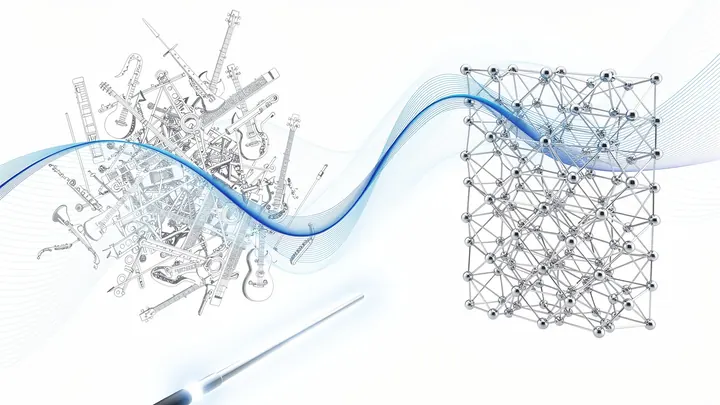
A metallurgical workshop piled high with aluminum scrap looks like an orchestra out of tune before a concert: each instrument is off-key in its own way. Offcuts of airplane wings, crushed cans, shavings from milling machines: each 'instrument' has its own metallicity, nonlinearly influencing the final 'melody' of strength and thermal conductivity.
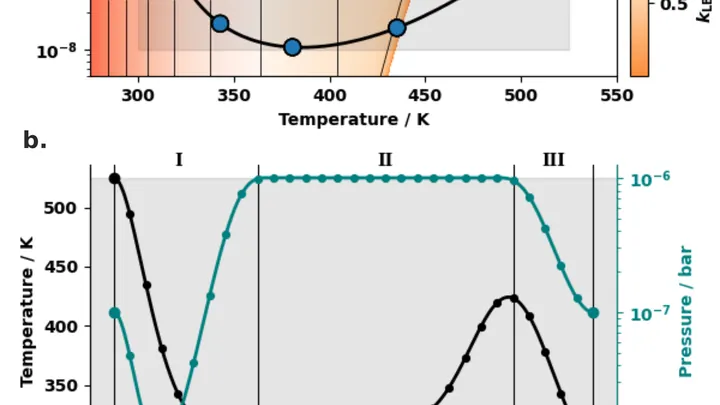
A gardener wants to grow a rare flower. Watering and fertilizing can't be done haphazardly; it must follow a strict schedule: a bit more warmth in the morning, a bit less moisture in the evening. Otherwise, the bed will be overrun by common weeds. Molecules on a metal surface behave in much the same way.
When organic molecules settle on a metal, they assemble into patterns, like pieces of a mosaic.
Light flows like an invisible river. If you place an obstacle in the stream, the water whirls into eddies. Likewise, specially designed surfaces create light 'whirlpools' that catch nanoparticles like wood chips.
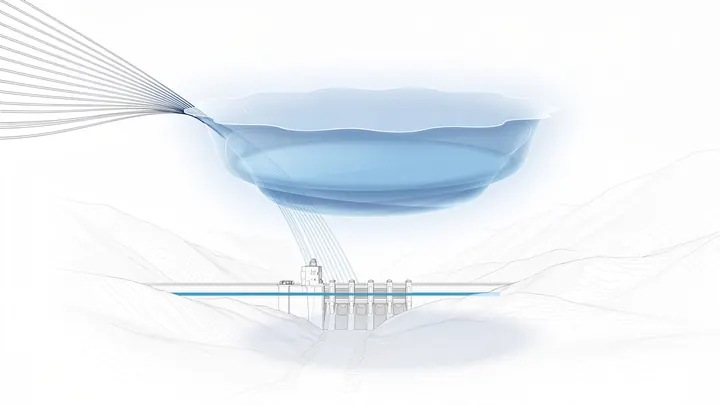
Inside the concrete dam, machines hum, running on empty. Three out of ten turbines are silent. The water level in Southeast Brazil’s largest reservoir has dropped so low that the blades are about to gulp air. The country’s 160 hydropower plants, which supply more than half its electricity, are linked into a single water network where every drop counts.
The ballroom fills with guests. Every new arrival is a request, and the dance steward's job is to find a suitable pair. Two people can be matched as soon as they're close, yielding an accurate pair, but what if a perfect partner arrives a minute later? Hesitate, and the waiters grow weary: some get bored, others lose patience.
A child builds a simple game in Scratch: a character appears in the center and instantly jumps to a corner. The first move happens between frames — no one sees it. Removing that command is safe. But how does an automatic optimization optimizer know that? Today, the Scratch repository holds tens of millions of projects written by young authors.
A robot in a maze walks into a dead end. A minute later, it’s the first to find the exit. This illogical maneuver is exploration, not a mistake. Like a cartographer circling a mountain to see its slopes.
Evolutionary algorithms in silico have long mimicked selection and mutation to search for the best solutions.
A huge sheet of paper lies on the table. A cartographer tries to fit all conceivable landscapes onto it: mountain ranges, tangled gorges, endless plains. Each landscape is a finitely generated group, and the map is its Cayley graph, a graphic portrait of the group, where vertices are elements and edges are connections between them.
On a topographic map, raindrops choose their path: falling on one slope, they flow into River A; on the other, into River B. An observer sees only the winding rivers (the response variables Y) and knows which slope the water came from (the instrument Z), but cannot see the drops themselves (the unobserved factors ε).
7 278 601 292 779 396 715. That’s exactly how many unlabeled chordal graphs, graphs with no induced cycles of length four or more, can be built on twenty vertices. This number isn’t a puzzle for a supercomputer; it’s the exact output of a new algorithm that treats symmetry as a tool, not an obstacle.
2 is the threshold beyond which a well-behaved sequence risks losing its structure.
Instead of the usual uniform scale, picture a rubber ruler with uneven elasticity. That's exactly how Orlicz spaces work: Banach spaces of sequences where each scale has its own stiffness, described by a convex Young function (a kind of spring).