Probabilitytheory provides a way to measure uncertainty. It describes random phenomena — from pollen jittering in water (Brownian motion) to galaxy clusters. At its core is the probability space: a set of possible outcomes, each assigned a number from 0 to 1, and the sum of all equals 1. Conditional probability (the chance of an event given that another has occurred) refines our assumptions; Bayes' theorem flips the condition and updates probabilities with new data. This is the engine behind spam filters, medical diagnostics, and machine learning.
History
The formal study of probability began in the 17th century with the correspondence of Pascal and Fermat in 1654. Jacob Bernoulli's posthumous work 'Ars Conjectandi' (1713) introduced the law of large numbers. Thomas Bayes (1763) and Pierre-Simon Laplace formulated the principle of inverse probability — Bayes' theorem. In 1933, Andrey Kolmogorov, in 'Foundations of the Theory of Probability', axiomatized it on the basis of measure theory, linking pure mathematics with experience.
How it works
Probabilitytheory works by specifying a sample space of elementary outcomes and a probability function. Rules — additivity for mutually exclusive events, multiplication for independent ones — allow computing probabilities of complex events. The law of large numbers guarantees that as the number of trials grows, the sample mean tends to the expected value. The central limit theorem states that sums of independent random variables are asymptotically normal, justifying frequentist statistics. Conditional probability and Bayes' theorem provide a mechanism for updating knowledge with incoming information. The apparatus of measure theory formalizes distributions via distribution functions, densities, or characteristic functions.
In practice
Insurance companies set policy prices, meteorologists report precipitation percentages, and doctors assess treatment risks — all based on probability calculations.
Fun fact
Shuffle a deck of 52 cards, and the resulting order is almost certainly unique in history. The number of permutations is so vast (8×10⁶⁷) that even if every person on Earth had been shuffling a deck every second since the Big Bang, we would be nowhere near repeating a combination.
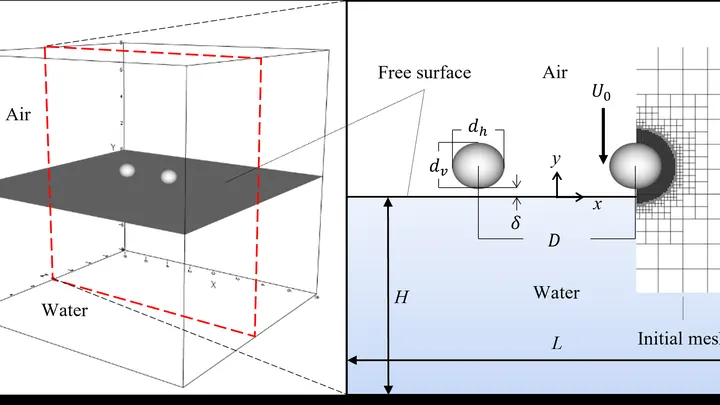
A raindrop slides on the wind and hits the ocean not straight down but at an angle. At that moment, its energy splits into two channels: one pushes the water forward along the flight path, the other presses it downward into the depths. Which channel proves stronger determines what happens at the surface: a quiet submergence, a fan of spray to one side, or a crown that shatters in all directions.
The optical sky background is a cosmic palimpsest, where light from billions of unresolved galaxies is layered, each layer corresponding to a different epoch. Until now we could only distinguish the brightest "letters"—individual stars and nearby galaxies.
A driver on a slippery road doesn't know exactly how the car will respond to the steering wheel, and learns on the go, leaving room for error. A smart control algorithm behaves in a similar way.
A snowflake grows, an oil slick spreads, a crowd moves — each case has its own equations. But the end result is often the same: shape, speed, and pattern follow a simple scheme that repeats across scales. This is universality — when a common law hides behind the details.
Soil is not a solid sponge but a labyrinth of pores of various sizes. After rain, water does not fill them all at once: first the narrowest ones, then the wider ones. Physicists built a theory of this process based on a simple image — a set of communicating vessels.
In mathematics there is a sieve that sifts not dust, but infinity itself. It’s called a Q-space: here any subset turns out to be a Gδ set — a countable intersection of open sets, as if sifted through an unimaginably fine mesh.
We're used to thinking that noticing only confirmations of our guesses is a mistake. But recent calculations, inspired by wave behavior, flip that view. It turns out that the habit of seeking the familiar is the best way to reduce information noise (scientists call it entropy).
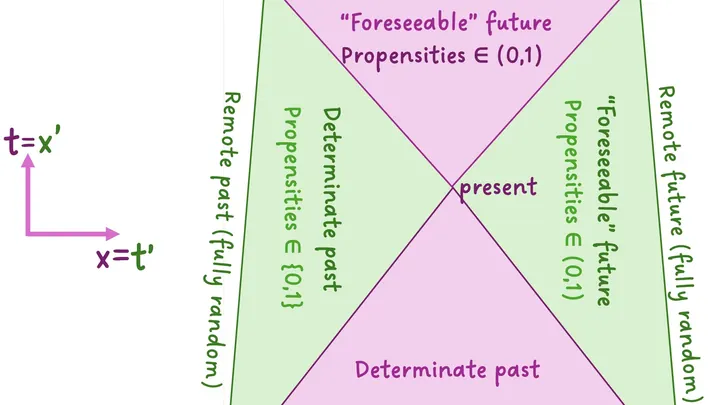
The quantum world is known for uncertainties: for example, you can't measure a particle's position and its speed at the same time. But new research shows that in a 'fuzzy' spacetime, even probability itself — the measure of chance — loses sharpness. A foggy compass doesn't give an exact direction: its needle wavers.
The aurora borealis is like a distant theater: the show may be on, but whether the audience sees it depends on the curtain. Here, the curtain is clouds and moonlight. Earlier forecasts tried to predict both the occurrence of auroras and viewing conditions at once, mixing everything together.
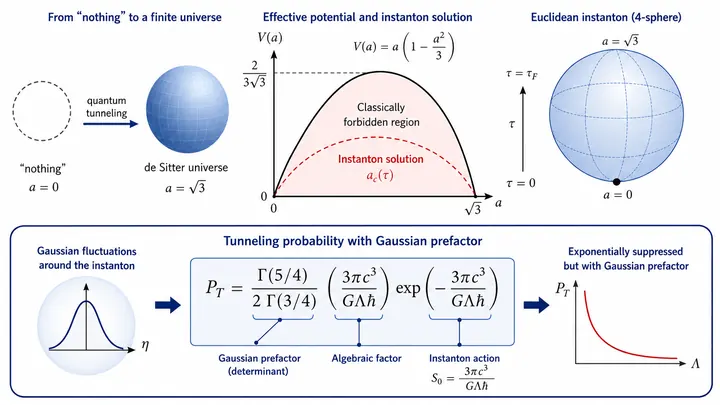
Quantum nothingness resembles water in a pot just before boiling. From time to time, a bubble spontaneously swells up — but not of steam, but of an entire universe. Such a bubble doesn't collapse; instead, it inflates into spacetime, triggering its own Big Bang. The only question is how often this happens.
A rubber band stretches and snaps back. A steel spring compresses and expands. Elasticity seems like a property of simple things — a piece of metal or a drop of gel. But the authors of this work looked deeper.
They showed that the electron's spin, its own tiny rotation, can also be elastic.
Spread a handful of coins on the table. Each coin is a possible outcome: heads, tails, or something else. If we know how chaotic this set is (its entropy), which combinations of probabilities will we encounter more often? It turns out the answer depends on how much chaos we allow.
A pot of water on the stove eventually settles down: the temperature evens out, the liquid stops boiling. Physicists call this thermal equilibrium — a state where energy is distributed in the most probable way.
Every group has its unspoken trios: three friends who are always together. And there are pairs that exist on their own. It turns out that how much trios "contain" pairs determines how everything, from a virus to a new idea, spreads through the group.
Scientists introduced a measure they call the nesting coefficient.
Water churns behind a rock in a river, air swirls behind an airplane wing: it seems like completely random motion. But the authors of the study found a rigid kitchen recipe in this chaos.
They decomposed the fluid's rotation (angular momentum) into two independent parts.
In a big city after rain, water collects in the same low spots no matter where the first drops fall. An hour later, the pattern of puddles hardly depends on where the downpour started. That is equilibrium — the outcome a system reaches regardless of its start, once the details are forgotten.
A raindrop falls into a puddle, and the impact sends up a little fountain of fine spray. Each of those droplets is a new, secondary drop. How many there are, how big they are, and how long they live depend on a host of factors: the fall speed, the drop size, the properties of the water. Scientists set out to make sense of this chaos using computer simulations.
A weather forecaster might correctly predict rain every day, but when he says "70% chance of precipitation," it actually rains only 30% of the time. His forecasts are useful, but the numbers can't be trusted. The same happens with models that predict cancer survival from tissue images and genetic data.
Researchers tested 14 such models on data from five cancer types.
When a neutron or proton enters an atomic nucleus, it behaves like a ball hitting a rough wall: it can bounce off in different ways, depending on where it hits.
A raindrop falling to the ground strikes with a certain force. But what if the drop isn't round but elongated like a cigar or flattened like a pancake? It turns out that shape is everything: the impact force can vary by more than a factor of ten just because of how the drop looks at the moment of impact.
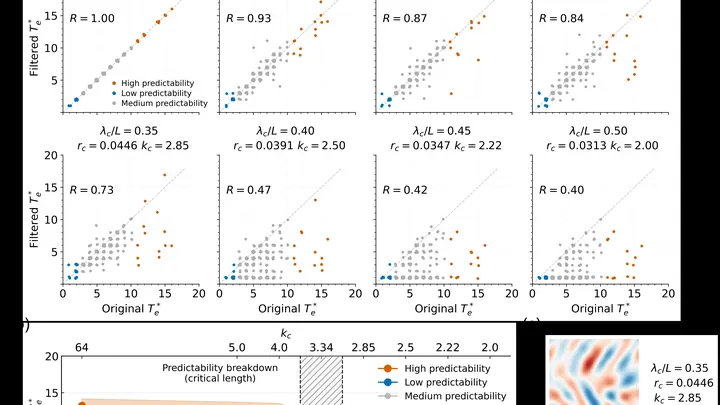
In a turbulent flow, like a raging river, energy constantly cascades from large whirlpools to small ones. Occasionally, particularly powerful bursts occur, resembling sudden waves crashing against the shore. Scientists asked: can we know in advance when such a "wave" will strike? It turns out the answer depends on which vortices are present in the flow at that moment.
Solar flares — sudden energy releases on the Sun — can knock out satellites and power grids. Previous models often either cried wolf or missed a real blow. The fix: attach a reliability estimate to every prediction.
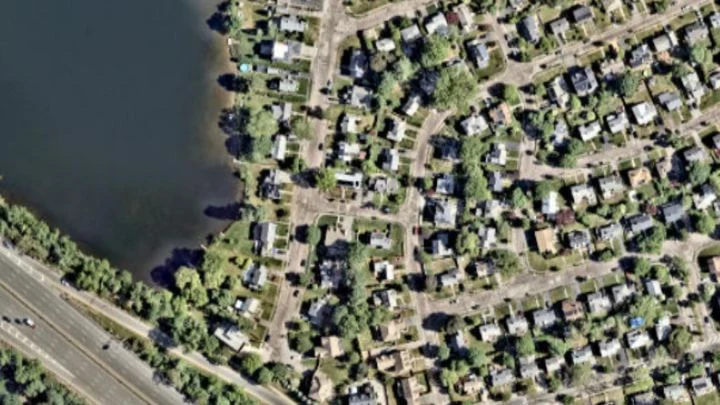
The weather on the next street can differ from yours: cooler by the river, hotter over asphalt, windier between buildings. A regular forecast misses this: its grid cell is the size of a city, not a backyard.
A solar panel on a roof produces little current in the morning, a lot at noon, and stays silent at night. Wind doesn't blow randomly either: it's often stronger in the morning and evening than during the day. Energy providers need to know in advance how much energy will be available in an hour or three, so they can switch on backup plants or store electricity in batteries in time.
Two barometers hang on the wall. One reads clear, the other says partly cloudy. Which weather do you trust? That is roughly the question facing a group of climate scientists when two independent methods predicted different futures for the Pacific Ocean in 2026.
An epidemic is not a steady stream but a series of hits. One carrier may infect no one, while another infects fifty people at once. Such rare but powerful events are called 'dragon kings': they stand out from the overall pattern and determine how severe a disease wave will be.
In the new study, the virus is compared to a billiard ball.
An epidemic is like a forest fire: the flames race toward where there are more dry branches. Similarly, a virus spreads faster where people live in closer quarters. But old mathematical models described infection as an ink blot spreading evenly across paper.
According to the laws of physics, nothing can outrun light, otherwise for some observers the effect would occur before the cause. Artur Ekert and Andrzej Dragan showed that this situation creates an uncertainty resembling quantum indeterminacy.
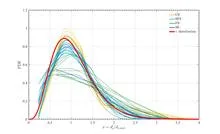
Rain doesn't fall just any old way. If you take records from nearly fifty thousand rain gauges scattered across the globe and compare how much water falls on a rainy day in different parts of the planet, you'll spot a surprising pattern.
Each Atlantic hurricane season is like a game of dice, where the number of spots depends on three major climate forces: El Niño, ocean temperature in the 'hurricane nursery,' and the North Atlantic Oscillation.
A translator who learned a language from thousands of books can interpret a conversation without being distracted by noise in the hall. Similarly, a neural network trained on 127,137 years of model climate produces a winter forecast in a fraction of a second, faster and more accurately than bulky dynamical systems.
An orchestra without a conductor plays in harmony, and you want to understand who influences whom. The violinist hears the cello, the cellist catches the rhythm of the percussion, and the flute adapts to everyone at once.
A translator who jumps at every rustle in the hall starts mixing up words by the end of the meeting. Their confidence in being right grows, while their accuracy drops. That is roughly how poorly calibrated probabilistic forecasts behave: the model claims a high probability for an event, but reality disagrees.
In 1946, Felix Bloch predicted that even without an external magnetic field, a fluctuating magnetic moment exists in an ensemble of spins. It grows as the square root of the number of particles, and in small samples this noise can exceed thermal polarization.