There Is No Universal Map for All Groups ✛ ✎
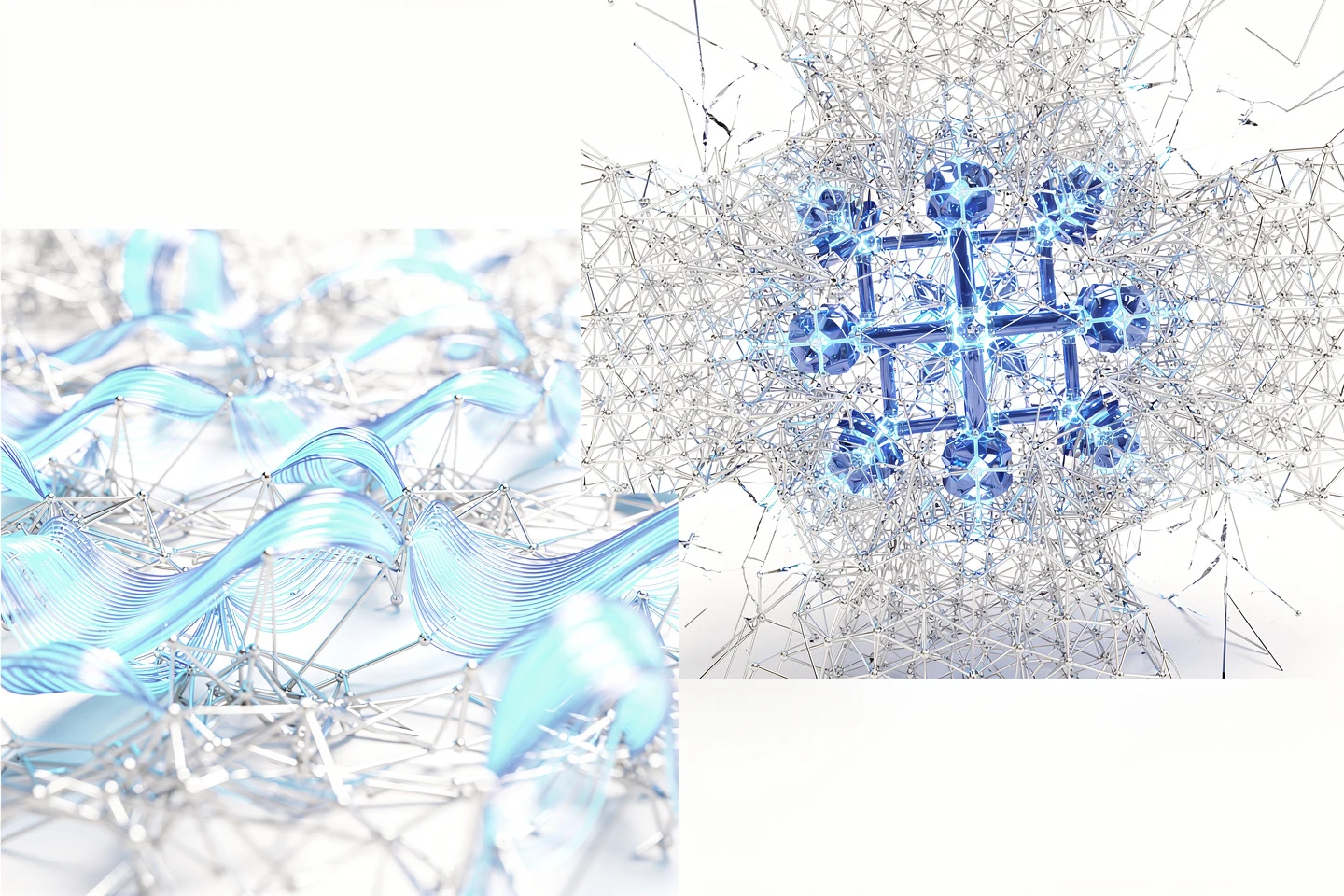
Context
On the table lies a huge sheet of paper. A cartographer tries to put every conceivable landscape onto it: mountain ridges, tangled ravines, vast plains. Each landscape is a finitely generated group. The map is a Cayley graph with a fixed vertex degree. Distortions are allowed: distances can be stretched and squeezed, but only up to a fixed factor. Simon Thomas formulated the conjectures: is it possible to create such a universal map? Tucker-Drob’s theorem answers: no—regardless of the scale and the allowed coarse distortions, some landscapes will always fail to fit on the table.
Methods
To prove this, the mathematician splits the problem into stages. First, fix a target map Λ—a bounded-degree graph with a finite-cococompact coarse quasi-action, meaning it has a finite set of “typical” sheets that can be combined to approximate any point. If every group could be placed on Λ, then there would exist regular maps—L-Lipschitz maps with fiber size at most M. Using the quasi-action, the image of the map is nudged toward a fixed finite set of landmarks, and after exploring possible preimages in the lexicographic product, one obtains an exponential upper bound on the number of isomorphism classes of graphs on s vertices that can be embedded in Λ: at most $A^s$. In parallel, the Linial–Simkin theorem provides a stash of 3-regular landscapes with long cycles without self-intersections (girth ≥ c log_2 s), and these landscapes are super-exponentially plentiful—at least (a s)^{3s/2}. For large s, the super-exponential overtakes the exponential, yielding an obstruction landscape that cannot be drawn on Λ without exceeding the distortion limit. Varying parameters (L,M) and running through a countable family of target maps, one builds a sequence of such obstructions with rapidly increasing girth and a bounded ratio of ridges to cycle length. Then graphical small cancellation comes to the rescue—a method of labeling edges with symbols from a finite alphabet so that long paths do not repeat (a variant of Osajda’s theorem, implemented by Espère and Gocanti). This coded labeling allows all obstruction landscapes to be glued into a single giant group K, whose Cayley graph contains them isometrically.
Results
The main result: for any sequence of maps $Λ_i$ with a finite number of typical sheets, there exists a finitely generated obstruction group K that cannot be coarsely transferred onto any $Λ_i$. Consequently, there is no universal graph-map—Thomas’s conjectures are refuted. No locally compact group with a countable base can serve as a coarse container for all finitely generated groups. Moreover, such obstruction groups can be built in a continuum, pairwise incomparable by quasi-isometry. Numerically, the clash between exponential and super-exponential becomes decisive already at moderate sizes s; the constant A grows with the required map precision.
Implications
The result dashes the hope for a unified coarse classification of all groups and forces us to study landscapes one by one. The cartographer’s sheet of paper remains incomplete: some reliefs will always fall beyond its edges. Methodologically, the synthesis of graph counting and small cancellation provides a powerful tool for constructing exotic spaces. For dynamical systems theory, it underscores that even regular actions with finitely many orbits do not exhaust the diversity of finitely generated groups.
Future development
Naturally, one seeks quantitative strengthenings: how fast must the parameters grow before an obstruction appears? Can one relax the quasi-action condition to merely bounded degree and the absence of universality? Exploring coarse universality in other categories—for instance, for locally compact groups with weaker conditions—is also of interest.
Impact
On geometric group theory, coarse geometry, topology, and dynamical systems theory.
Next steps
Investigating optimal constants in the exponential bound and searching for explicit constructive obstructions without a diagonal argument. Systematic study of coarse universality in classes of locally compact groups.
Key open problems
The theorem settles two questions from the program of classifying finitely generated groups up to quasi-isometry, which goes back to Gromov. It also contributes to the problem of the existence of universal objects in categories with coarse morphisms.
The knowledge machine's view
This section is addressed to the author of the paper and their colleagues. Neighbouring works were found by meaning-based search across our archive, not by word overlap. We do not review: we show the field around the work.
What the work does
The paper refutes Thomas's hypotheses about the existence of a universal graph for finitely generated groups up to quasi-isometry. The author constructs a sequence of obstruction graphs with rapidly growing girth, using graphical small cancellation to glue them into a single group K that does not quasi-isometrically embed into any graph with a finitely co-bounded quasi-action. This demonstrates the absence of a universal 'map' for all groups.
Where its strength is
The strong point is the construction of a concrete counterexample, based on contrasting the exponential and super-exponential growth of the number of graphs, which provides a clear quantitative mechanism. This opens the way to studying the diversity of quasi-isometric classes of groups.
Where it could go next
- It might be interesting to see how spectral graph theory methods developed for analyzing large networks can be adapted to study properties of the constructed obstruction group, for example, to estimate its growth or random walks.based on: Graphs Achieve Perfect Fourier Harmony arXiv:2607.13338
- Nearby is work on comparing structures via distortion-stable invariants; perhaps its approach could help classify the continuum of pairwise non-quasi-isometric groups obtained in this paper, or identify additional distinctions among them.based on: The Secret of Warped Webs: A New Way to Compare Networks arXiv:2601.03787
- In the archive there is an analysis of topological aspects of large structures; perhaps methods from it could help investigate how the absence of a universal graph relates to topological properties of spaces of quasi-isometric classes.based on: Topology of the Universe: Listening to the Cosmic Drum arXiv:2606.24886
Worth trying
- Try applying spectral invariants (e.g., spectral gap) to the obstruction graphs to obtain new quasi-isometric invariants.
- Check whether persistent homology or other topological invariants can be used to distinguish groups from the constructed continuum.
- Investigate whether the absence of a universal graph persists under additional restrictions on the groups (e.g., for groups with finitely many ends).
Nearby works in our archive
- Quantum Map Detectives Find Hidden Connectionssimilarity 0.60
- The Secret of Warped Webs: A New Way to Compare Networkssimilarity 0.57
- Communities by Size: When Networks Assemble Like a Puzzlesimilarity 0.56
- Topology of the Universe: Listening to the Cosmic Drumsimilarity 0.54
- Graphs Achieve Perfect Fourier Harmonysimilarity 0.53
- A Universe Without an Edge: Why an Open World Cannot Be Eternalsimilarity 0.53
The archive is sparse around this work: the closest review is only 0.60, against a usual 0.64. It looks like few have drilled nearby.
The construction of large-girth graphs using Hamiltonian cycles traces back to an idea used by Linial and Simkin in 2023. It turned out that there are so many of these graphs that they inevitably “break” any attempt at a universal embedding.
Key numbers
- exponential base A: depends on embedding parameters, on the order of thousands
- super-exponential growth exponent: 3/2
- small cancellation parameter λ: ≤ 1/6
- degree of obstruction graphs: 3
- minimum girth of an obstruction graph: c log_2 s, c ∈ (0,1)