Popular

George Gabriel Stokes

1819–1903 · Mathematics, Physics, Hydrodynamics, Optics
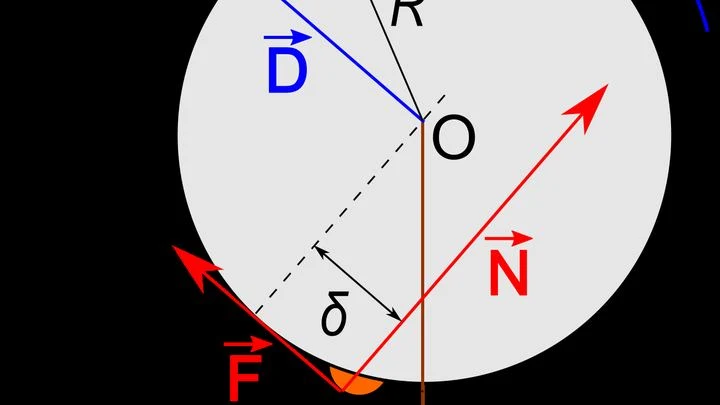
George Gabriel Stokes made significant contributions to mathematical physics and fluid mechanics. His name is associated with Stokes' theorem, which unifies several integral theorems and is widely applied in electrodynamics and hydrodynamics. He also formulated the Navier-Stokes equations, describing the motion of viscous fluids, and discovered the phenomenon of fluorescence (Stokes shift).

Biography

Graduated from Cambridge University (Pembroke College). From 1849 to 1903 he held the post of Lucasian Professor of Mathematics at Cambridge. Collaborated with William Thomson (Lord Kelvin) in the fields of hydrodynamics and optics. Was president of the Royal Society (1885–1890), awarded the Copley Medal (1893).

Key discoveries

💡 Stokes was not only an outstanding scientist but also actively participated in politics: he was elected as a Member of Parliament for Cambridge University from 1887 to 1892.
Quote: "The more we study the works of the Creator, the more we see the wisdom and goodness with which they were created."
Links in the knowledge graph 1
Related tags
electromagnetismgravityspectroscopyspeed of lightturbulence
Related laws
Navier-Stokes equationsStokes' theorem
Related scientists
Henri PoincaréRobert HookeJacob BekensteinJohann Jakob BalmerJocelyn Bell BurnellArno PenziasCharles TownesJames Clerk Maxwell

Related articles

No articles yet