How to Make a Quantum System Shut Up express
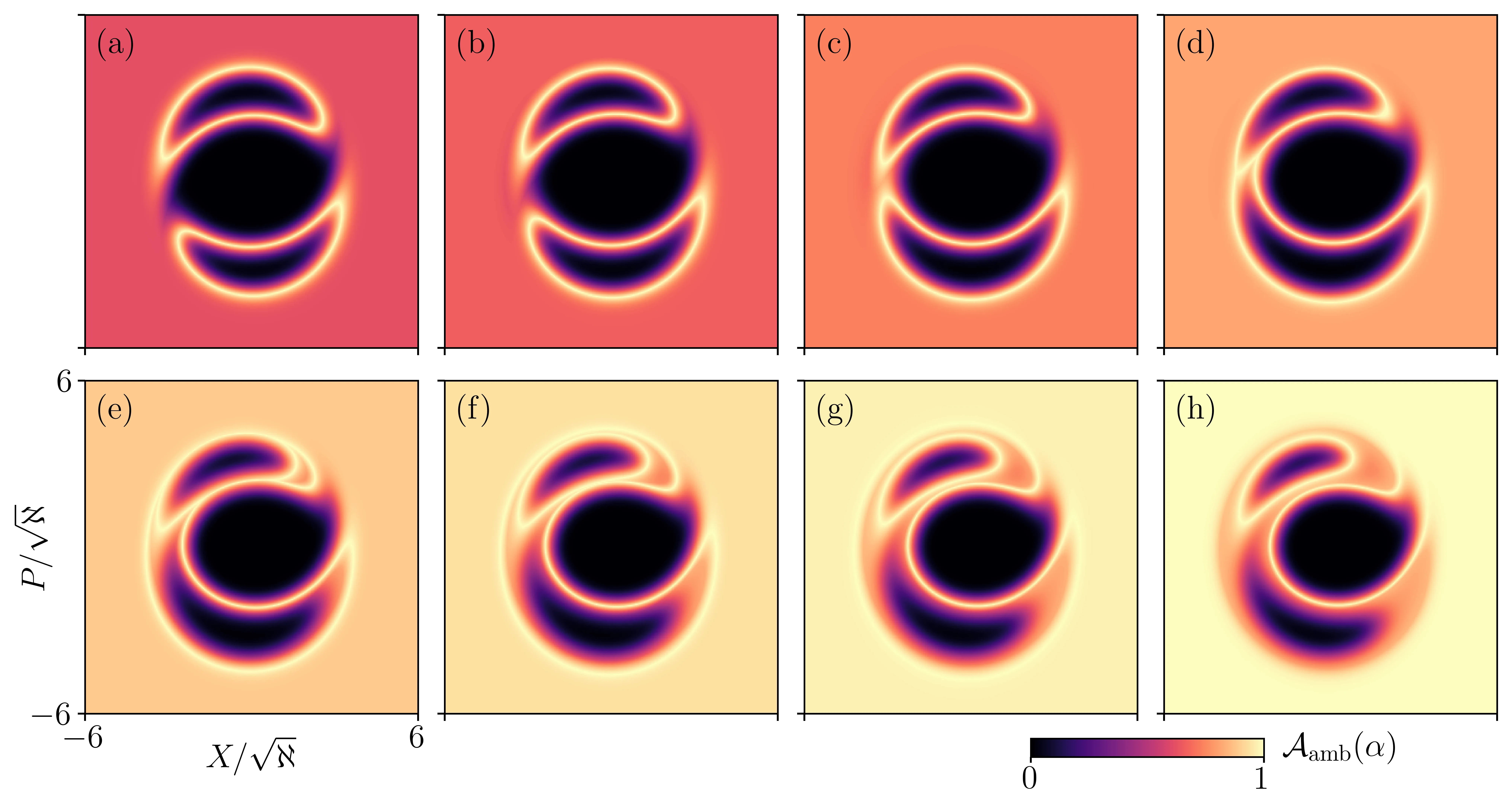
The quantum world never stands still. Even in the most perfect resonator, a trap for particles of light, energy gradually leaks away, and information is erased. Physicists call this process decay, and it has its own rhythm: some 'notes' fade quickly, while others linger. Previously, scientists could only listen to this melody of fading — measuring the frequencies at which a system loses energy. The new work offers something more: a conductor's baton capable of controlling each voice individually.
The authors developed a method based on paired mathematical tools — left and right 'eigenoperators.' The left operator acts like a sensitive tuner: it determines which input signal will excite a specific decay channel. The right operator, conversely, shows how that excitation will manifest in the system — what 'deformation' it will cause. The product of these two operators yields a number — the channel's weight. If the weight is zero, the channel goes silent. This allows targeted suppression of unwanted noise without disturbing the rest.
The takeaway is simple: knowing only the decay frequencies is no longer enough. To truly control a quantum system, one must understand the geometry of its excitation and the pathways of loss. This approach turns passive observation into active control, as if you weren't just watching a dying fire but could add logs only where you want to keep the heat.
Original abstract
as written by the authors arXiv:2608.05046v1
Liouvillian eigenvalues determine decay rates and oscillation frequencies, but not how the corresponding modes are excited, propagated, and detected in a chosen protocol. We develop an operational spectral theory based on matched left and right eigenoperators. Left eigenoperators determine excitation by an input or source; right eigenoperators determine the propagated density deformation and readout overlap; their product is a gauge-invariant modal weight. For bosonic systems, coherent preparations turn left eigenoperators into phase-space excitation maps whose zeros identify mode-selective suppression, while right eigenoperators yield the corresponding Wigner deformations. Resolved slow subspaces define operational coordinates and, when positivity and Markov-admissibility hold, a projected routing generator. In driven Kerr resonators, the framework identifies preparations that suppress a switching mode, separates symmetry-resolved relaxation channels, and reveals bias-induced crossovers in projected multichannel routing while the coherent-preparation partition continues to deform. Preparation geometry and slow-sector propagation thus provide complementary operational information beyond Liouvillian eigenvalues alone.
The eigenoperators used by the authors behave almost like vectors in school geometry: they have 'left' and 'right' versions, and only their correct combination yields a meaningful result — much like the dot product of two vectors gives a number independent of the coordinate system.