Symmetry in physics is a property of a system that remains unchanged under a transformation, such as reflection, rotation, or time reversal. It is a foundational concept because symmetries constrain the possible laws of nature and dictate conservation laws: for example, translational symmetry leads to conservation of momentum, and rotational symmetry leads to conservation of angular momentum. Symmetry also plays a central role in classifying particles and materials, and in understanding why certain phenomena, like superconductivity or quantum entanglement, can persist under specific conditions.
History
The modern formalization of symmetry in physics began with Emmy Noether in 1918, who proved that every continuous symmetry corresponds to a conservation law. The concept was further developed in the 20th century through quantum field theory and the Standard Model, where gauge symmetries describe fundamental forces.
How it works
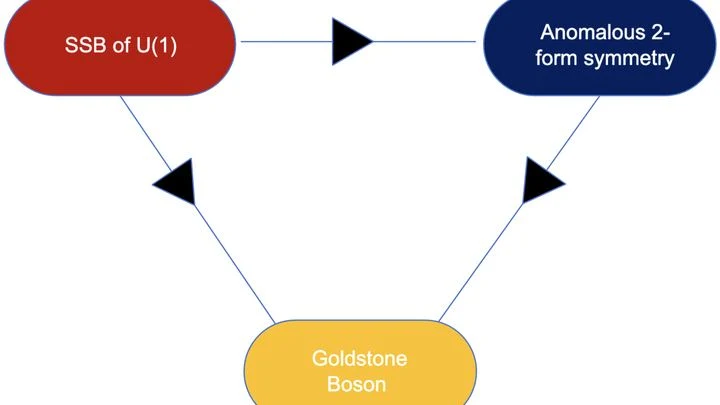
A system has a symmetry if applying a transformation leaves its essential properties—such as its Hamiltonian or observable behavior—unchanged. In quantum mechanics, symmetries correspond to unitary operators that commute with the Hamiltonian, leading to degenerate energy levels and selection rules. In condensed matter, spontaneous symmetry breaking occurs when the ground state of a system does not share the symmetry of the underlying equations, giving rise to phases like ferromagnetism or superconductivity. Hidden symmetries, such as SO(8) in certain particle collisions, can emerge dynamically and simplify complex interactions.
In practice
Symmetry principles are used to predict new particles, design materials with desired electronic properties, and stabilize quantum states for quantum computing, as seen in research on protecting entanglement from thermal noise.
Fun fact
The SO(8) symmetry, which appears in certain particle collision models, has a special 'triality' property that interchanges vectors, spinors, and conjugate spinors—a unique feature among Lie groups.
A quantum spin chain is like a string of beads, where each bead is a microscopic magnet pointing up or down. In the XXZ model, these little magnets interact differently along the three axes, and at special parameter values, roots of unity, the system awakens with a hidden memory.
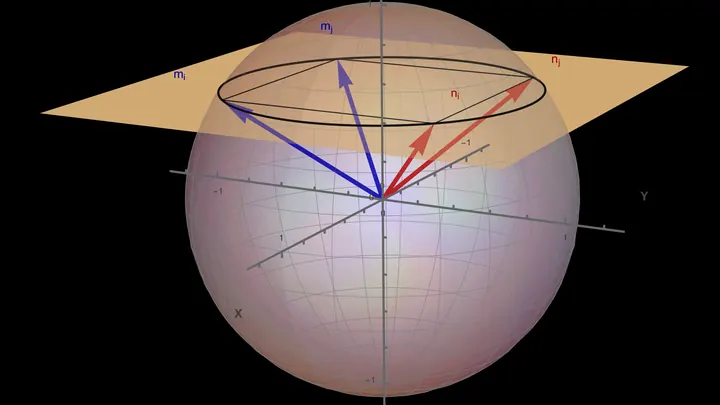
The quantum world is known for uncertainties: for example, you can't measure a particle's position and its speed at the same time. But new research shows that in a 'fuzzy' spacetime, even probability itself — the measure of chance — loses sharpness. A foggy compass doesn't give an exact direction: its needle wavers.
An infinite chain of atoms spaced at equal intervals. Shift the entire chain by one step, and the picture doesn't change. That's translational symmetry: the world looks the same wherever you look. You'd think such a simple rule would give rise to simple states, like a crystal lattice assembled from identical building blocks.
But the authors counted those blocks anew.
You can edit a cell perfectly, and it still turns out useless. The gene is fixed exactly as planned, yet the cell behaves unpredictably: it drifts, changes fate, loses safety. It's like fixing one gear in a watch, but the watch still runs wrong because the whole mechanism is out of sync.
Previously, a cell was viewed as a list of independent parts.
A solar panel on a roof produces little current in the morning, a lot at noon, and stays silent at night. Wind doesn't blow randomly either: it's often stronger in the morning and evening than during the day. Energy providers need to know in advance how much energy will be available in an hour or three, so they can switch on backup plants or store electricity in batteries in time.
River water flows smoothly until it hits a narrow spot. There the current speeds up, and around a bend it may swirl into a vortex. Similar funnels, but just molecule-sized, can gather particles in one place all by themselves — no pump or motor needed.
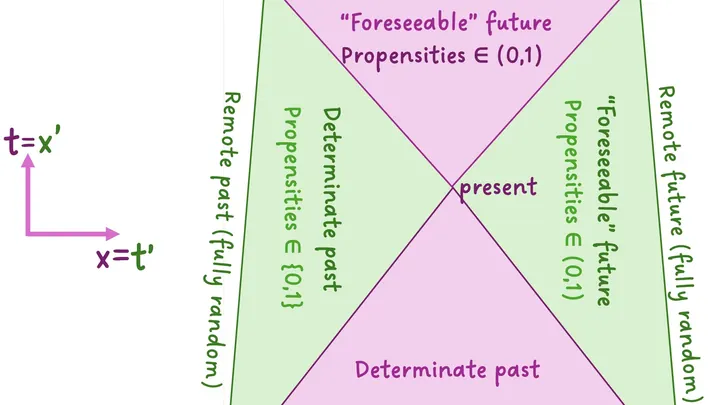
According to the laws of physics, nothing can outrun light, otherwise for some observers the effect would occur before the cause. Artur Ekert and Andrzej Dragan showed that this situation creates an uncertainty resembling quantum indeterminacy.
Time crystals are an exotic phase of matter that exhibits periodic motion not in space but in time, even while in its ground, unexcited state. This idea, reminiscent of a perpetual clock that never needs winding, was first proposed by Frank Wilczek.
Matter is like a house. In some rooms, there is the strict order of a crystal, where every atom is in its place. In others, the chaos of superfluid helium, where atoms forget about their neighbors.
Quantum entanglement is a fragile resource. Heat a system, and thermal fluctuations will tear the delicate threads of correlations: at a sufficiently high but finite temperature, the Gibbs state of a local Hamiltonian becomes separable, that is, representable as a probabilistic mixture of products of local states.