Liquid Builds Its Own Space Trusses ✎ express
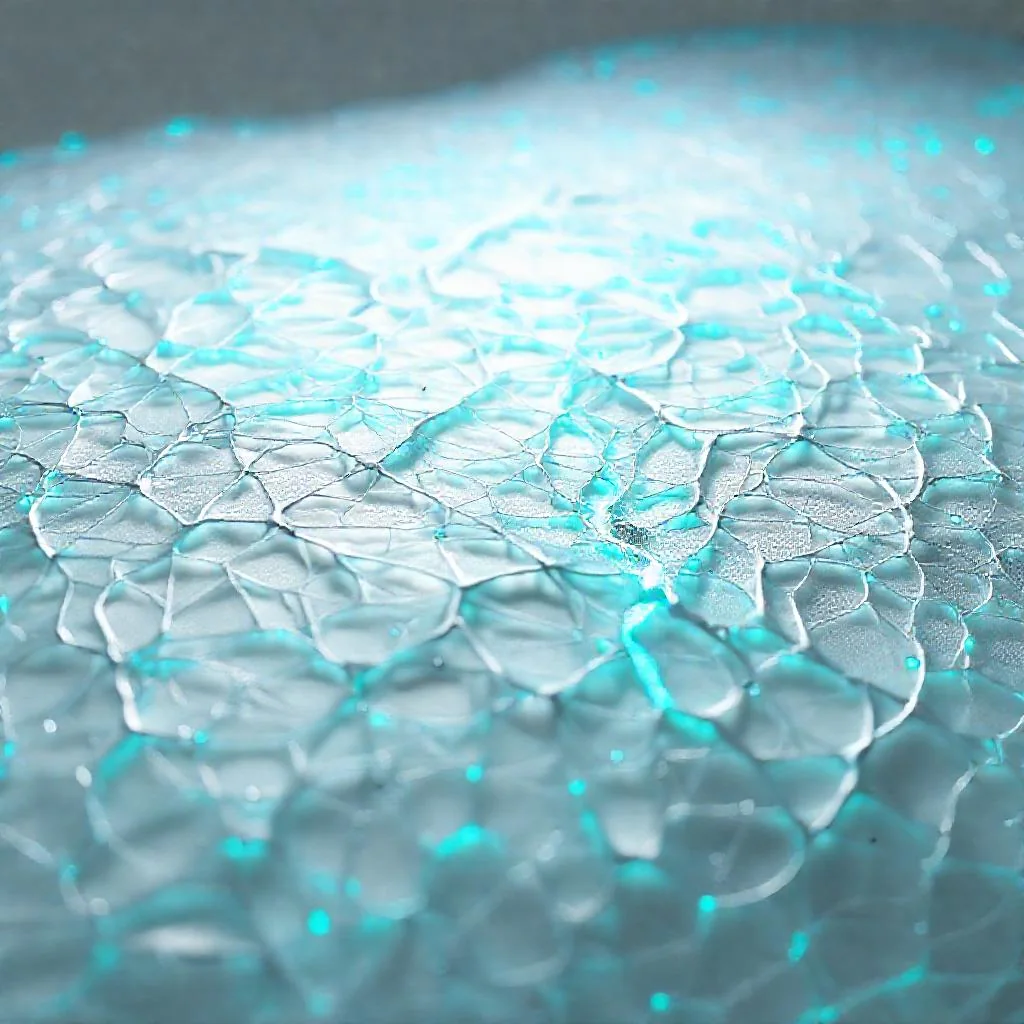
Space construction today is a costly hassle with prefabricated parts: every panel has to be lifted from Earth, then assembled in zero gravity, like building a model kit while wearing thick gloves. Engineers from a new study propose a different path: not hauling or printing, but letting the liquid itself sculpt the structure.
In weightlessness, gravity disappears, and surface tension takes center stage — the same force that pulls a droplet into a sphere or stretches a soap film across a wire frame. If you give the film boundaries, a frame or a lattice, the liquid will distribute itself along them, taking on a shape with minimal surface area. Such surfaces are called minimal: they resemble elegant saddles and arches, and they are exactly what soap solution forms on a bent wire.
The authors developed a program that calculates the required frame shape so that the liquid stretches into a desired openwork structure — for example, one inspired by the Schwarz surface, a repeating pattern of smooth bridges. Then, in a terrestrial laboratory where weightlessness is simulated by submerging in a liquid of the same density (neutral buoyancy), they verified that the film indeed takes the calculated shape and holds its geometry after solidification.
This approach promises a double benefit: the structure is lightweight because material is distributed exactly where needed, without extra walls; and there's no assembly required: it is born as a single piece. For orbital trusses, antennas, or frames of future stations, this saves both mass and time. A flight experiment on the International Space Station is scheduled for the first quarter of 2027, where the method will be tested in true weightlessness.
Minimal surfaces also occur on Earth: for example, the film between two rings forms a catenoid — a shape resembling an hourglass that minimizes area given fixed boundaries.
The idea of self-assembling liquid structures echoes the 'liquid' buildings of aliens in the film Arrival (2016), where forms are born from a fluid medium.