Microrobots are miniature machines, typically ranging from a few micrometers to a few millimeters in size, engineered to operate at scales where conventional robots cannot. They are designed to perform precise tasks in confined or delicate environments, such as inside the human body for targeted drug delivery, in microfluidic chips for lab-on-a-chip diagnostics, or in manufacturing for micro-assembly. The field draws on principles from robotics, materials science, and micro-electromechanical systems (MEMS), and often involves wireless control via magnetic fields, light, or chemical reactions.
History
The concept emerged in the late 1980s with early MEMS devices, but the term 'microrobot' gained traction in the 1990s. Notable milestones include the first wirelessly controlled swimming microrobot in the early 2000s, developed by researchers like Bradley Nelson's group at ETH Zurich. However, the field is still evolving, and many foundational contributions are recent.
How it works
Microrobots are usually fabricated using photolithography or 3D printing at the microscale. Their locomotion depends on the environment: in fluids, they may use helical tails that rotate like corkscrews (mimicking bacteria) or rely on magnetic gradients to pull them along. In dry environments, they might walk or roll using tiny actuators. Power is often supplied externally—magnetic fields are common because they penetrate biological tissue harmlessly—or through onboard chemical reactions that generate propulsion. Control is achieved by modulating the external field or by designing the robot's shape to respond to specific stimuli.
In practice
Microrobots are being developed for targeted drug delivery, minimally invasive surgery (e.g., clearing blocked arteries), and environmental remediation, such as breaking down pollutants in water.
Fun fact
Some microrobots are inspired by sperm cells, using a single flagellum to swim through viscous fluids like cervical mucus.
Space construction today is a costly hassle with prefabricated parts: every panel has to be lifted from Earth, then assembled in zero gravity, like building a model kit while wearing thick gloves. Engineers from a new study propose a different path: not hauling or printing, but letting the liquid itself sculpt the structure.
For three days straight, a laser blasted a jet of gas, and every second it produced a beam of electrons with the energy of a tiny lightning bolt. Previously, such beams could only be produced in huge halls where the accelerator takes up an entire building. Now the whole setup fits in a room and ran without a glitch for 72 hours.
The Moon is a natural archive that has been collecting cosmic dust for billions of years. Among the microscopic grains that arrived from distant stars, there could be techno-specks — particles created by alien civilizations.
Ordinary magnetic sensors lose sensitivity as they shrink. But scientists turned a tiny diamond into a light-based compass. Unlike jewelry diamonds, what matters here isn't purity but artificially created defects — these are what turn the crystal into a compass.
Light needs space. A camera lens sits several centimeters from the sensor so the rays have room to focus. Now, that gap has been squeezed to the thickness of a sheet of paper, and light still behaves as if it had traveled its rightful centimeters. That's what 'spaceplates' do: flat elements that mimic free-space propagation.
The brain is a fortress. It's protected by a dense layer of cells that only lets in what it needs. Drugs can't get through this barrier, which is why many brain diseases are so hard to treat.
Scientists have found a way to crack the fortress gates. They built a device that sends focused ultrasound into the brain. Tiny gas bubbles are injected into the blood.
Conventional photolithography, used to make chips, hits a fundamental limit: light cannot draw features smaller than its wavelength. Here, they took a different route. First, they made sparse vertical ridges of oxide, then deposited layers of aluminum oxide, each one atom thick, onto them.
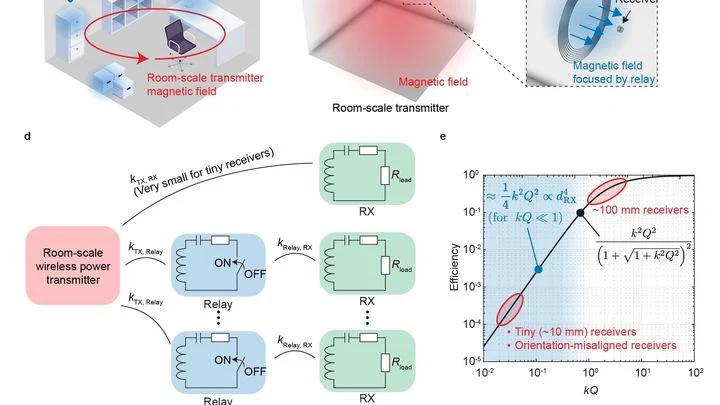
Think of wireless charging in a room as a pool where energy-water is everywhere, and tiny sensor-floats barely bob. Their induction coils are too small to efficiently scoop from this diffuse electromagnetic field. Unlike radio waves, the energy here doesn't travel at the speed of light: it lingers in the near field, waiting to be harvested.
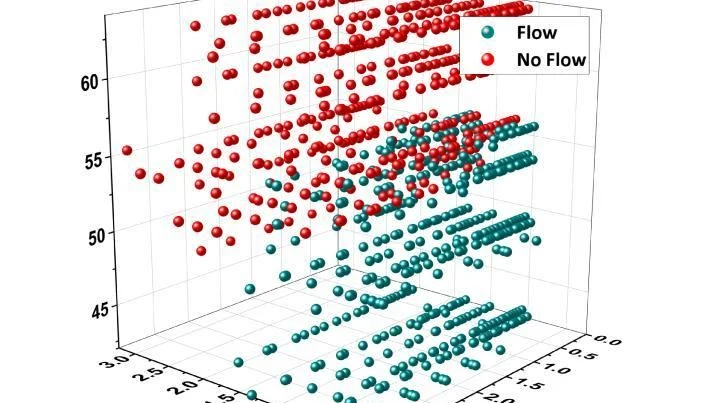
Water in a narrow gap crawls on its own: that's the capillary effect that pulls sap up a stem. But if it hits a step, the liquid can freeze, like a traveler before a high threshold. Scientists built tiny glass channels and watched when a drop steps over the ledge and when it gets stuck.
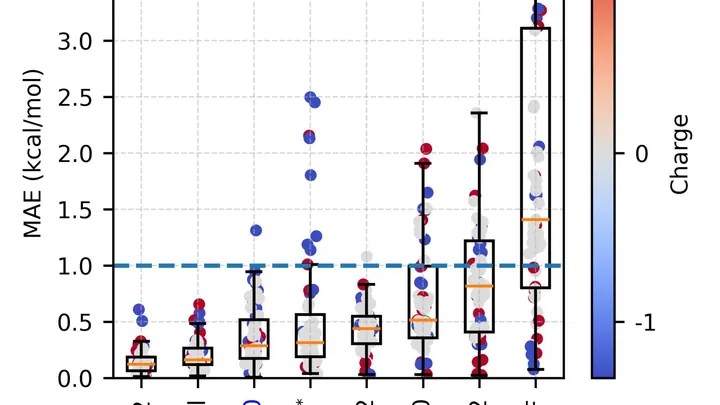
You need to sift through millions of keys to find the one that unlocks the lock of a disease. Each key is a molecule, and the lock is a protein in our body. Checking each key manually is impossible, so chemists use computer models that predict how a molecule will behave in reality. Until recently, accurate calculations took hours or days on powerful computers. The new tool AceFF does it in seconds.