The International Space Station (ISS) is a modular space station in low Earth orbit, serving as a microgravity and space environment research laboratory. It is a collaborative project among five space agencies: NASA (United States), Roscosmos (Russia), JAXA (Japan), ESA (Europe), and CSA (Canada). The ISS has been continuously inhabited since November 2000, providing a unique platform for experiments in biology, physics, astronomy, and materials science that cannot be performed on Earth.
History
The first module, Zarya, was launched in November 1998, followed by the Unity module in December 1998. The station has been continuously crewed since Expedition 1 arrived in November 2000.
How it works
The ISS orbits Earth at an average altitude of about 420 kilometers, completing roughly 16 orbits per day. It maintains a microgravity environment (about 10^-6 g) by continuously free-falling around Earth. The station's systems include solar arrays for power, thermal control radiators, life support for crew, and docking ports for visiting spacecraft. Experiments are conducted in onboard laboratories, with results transmitted to Earth or returned via cargo capsules.
In practice
The ISS supports research in protein crystallization, combustion science, fluid dynamics, and human physiology, with applications ranging from drug development to understanding bone loss in osteoporosis.
Fun fact
The ISS is visible from Earth with the naked eye and is the largest human-made object in space, spanning about the size of a football field.
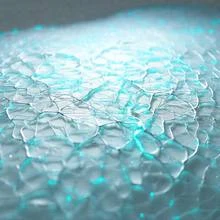
Space construction today is a costly hassle with prefabricated parts: every panel has to be lifted from Earth, then assembled in zero gravity, like building a model kit while wearing thick gloves. Engineers from a new study propose a different path: not hauling or printing, but letting the liquid itself sculpt the structure.
A mirror can direct a reflected beam onto one spot, even as it rotates. Engineers borrowed this trick for radio waves, building a smart mirror on a drone. It cancels out shakes and vibrations on the fly: it anticipates the drone's movements and instantly re-aims to keep the signal crisp.
In the silent ocean of the Galaxy, mature civilizations have likely long chosen an unexpected strategy: instead of loud beacons, they scatter quiet fireflies — autonomous interstellar laser beacons, drifting in the void and dropping microsecond flashes. These 'seeds of contact' are not tied to their home stars and do not drown in their glow.
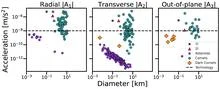
Remember the sensational comet 1I/‘Oumuamua — the first object to come to us from another star? Its hyperbolic trajectory left no doubt: it was a wanderer from the interstellar void. But astronomers wondered: could some of these visitors not be strangers at all, but our own, escaped from the Solar System millions of years ago?
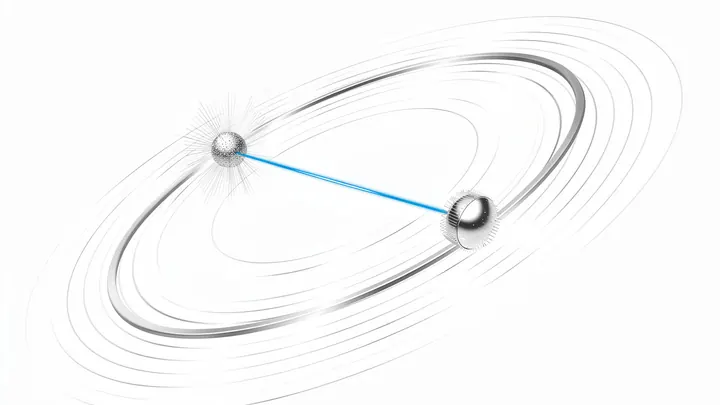
A pair of neutron stars, locked in a gravitational embrace, traces invisible circles in the void. A century ago, Albert Einstein described this dance as waves of curved geometry, but for a long time we could only catch glimpses — through the feverish flicker of radio pulses.
In absolute silence, you need to hear a feather drop. But someone keeps rustling a plastic bag. For the space-based LISA observatory, that 'rustling' will come from charged particles in space.
A research probe is planned for the nearest black hole — a region of spacetime whose gravity traps even light. After a hundred years of flight, the spacecraft will enter orbit around the mysterious object to answer a key question: are we looking at a black hole or a neutron star — the ultra-dense remnant of a massive star, compressed to nuclear…
A stone falls into a well, and the splash reaches your ears with a delay. Something similar happens to light as it leaves Earth: its oscillations become less frequent, the beam seems to 'tire.' This is gravitational redshift — a phenomenon Einstein spoke of a century ago.
A handful of coins accelerates to one-fifth the speed of light. That's what Coracle interstellar probes will be like — tiny spacecraft weighing just a few grams, each with an ultrathin sail film. A powerful laser beam pushes them forward: light presses on the sail like wind fills a yacht's sails, except instead of air, it's a stream of photons.
A comet hurtling through space is a mountain of ice and dust that carries itself across the Solar System. If you mount small engines on such a mountain, it becomes a ship with its own fuel: gas from the interior can be vented through nozzles to change course.
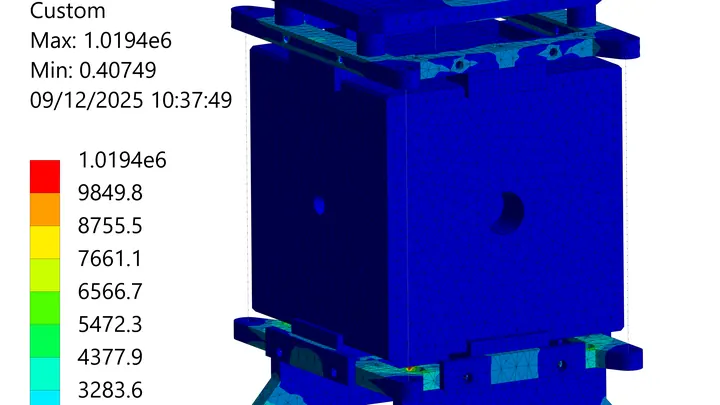
At the bottom of lunar craters, where sunlight never reaches, an eternal cold reigns — about minus 240 degrees Celsius. In these icy pockets, known as permanently shadowed regions, plans are underway to install a mirror resonator made of monolithic silicon.
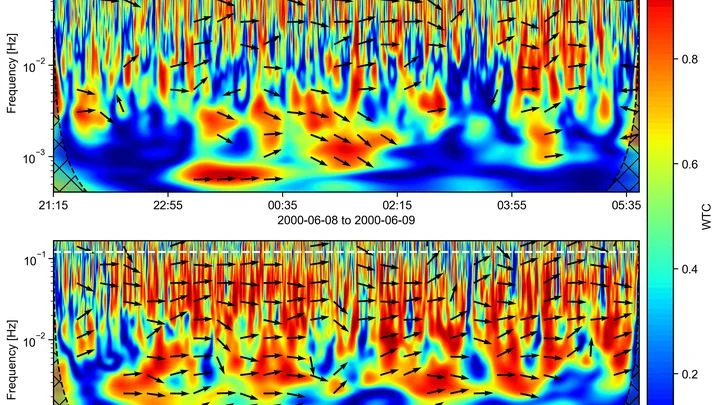
The Sun constantly emits a stream of charged particles, mostly hydrogen — the solar wind. Sometimes the Sun ejects dense blobs of magnetized gas, inside which calm usually reigns. But in 2000, scientists noticed two regions inside one such cloud where the gas was churning.
Spinning a sling, we whirl a stone. Its speed builds, and if released at the lowest point, it flies farthest. In space, the gravity of the Sun acts as the strap: the probe dives as close to the star as possible, and at the moment of maximum speed, a brief engine thrust, like a yank of the hand, gives it a huge boost.
The Comet Interceptor mission launches without a target. The spacecraft freezes at a point of space equilibrium, like a fighter jet on combat standby: engine warmed up, but takeoff only on alert.
In October 2017, the Pan-STARRS telescope in Hawaii spotted an object moving too fast to belong to the solar system. It was 1I/ʻOumuamua, the first interstellar visitor ever recorded by astronomers. Since then, two more have joined it: comet 2I/Borisov and object 3I/ATLAS.
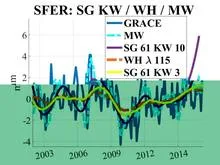
Imagine sensitive scales scattered across Europe. Each GPS station is one such scale, recording daily how much the ground beneath it has risen or fallen. When water accumulates underground, the surface sags slightly; when water leaves, the surface lifts. These movements are tiny, on the order of millimeters, but the stations pick them up.