A Star in a Sprint: Chasing the Fastest Star in the Galaxy ✛
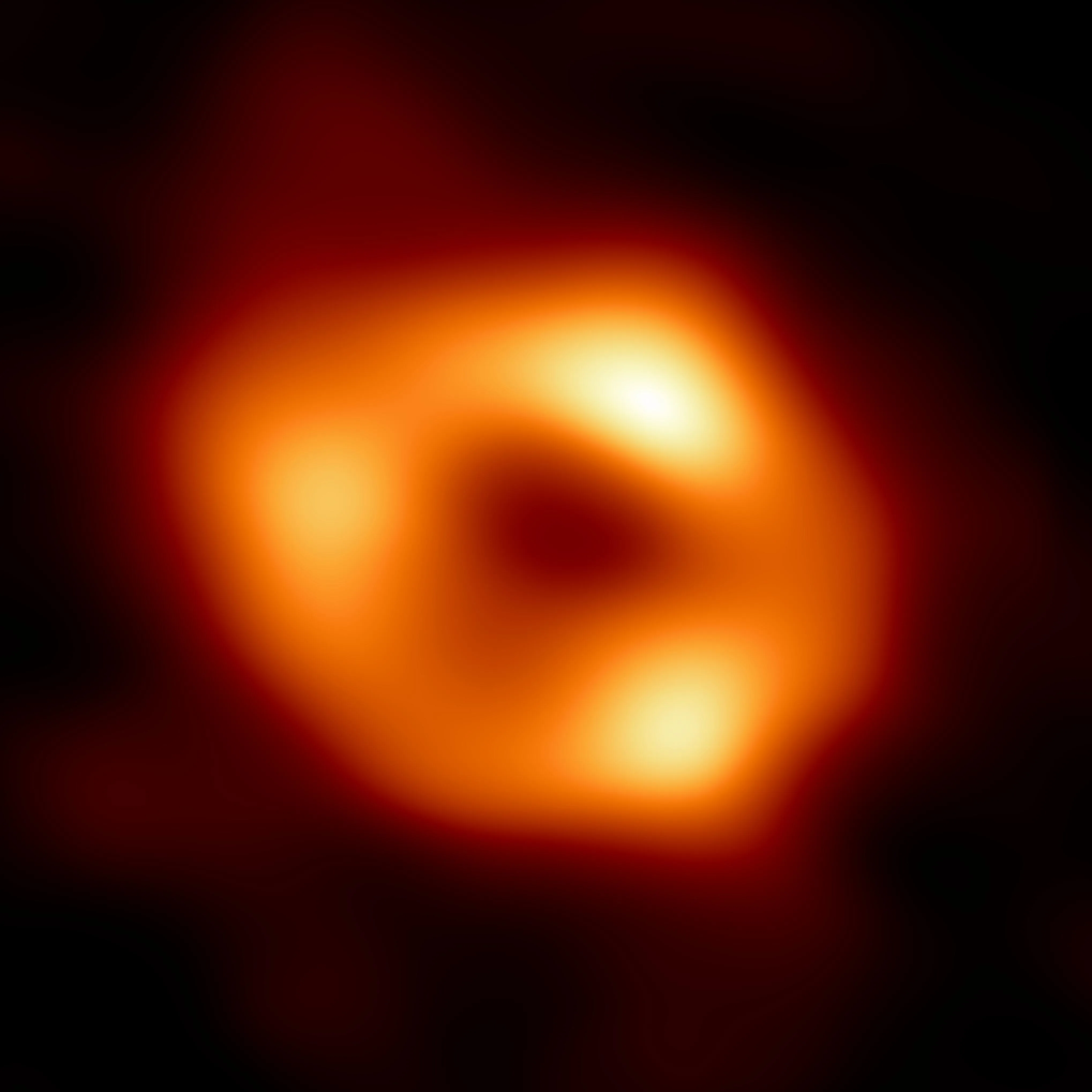
Picture a sprinter rounding a lighthouse on the edge of a cliff at full tilt. Each lap, the path shifts slightly because the wind from the lighthouse nudges them sideways. At the center of our galaxy, star S301 is tearing around a supermassive black hole at 25,600 kilometers per second, which is 14 times faster than the fastest spacecraft humans have ever built. Its orbit is not closed: each revolution, it shifts by a tiny angle because space near the black hole is curved. This shift is called Schwarzschild precession.
We've seen this shift before, in star S2, but its orbit lies ten times farther from the black hole, so its precession is barely noticeable. S301 is a different beast. It swings so close to the black hole that light from it takes a noticeable detour on its way to us, which must be accounted for in calculations. To catch this shift, astronomers plan to use the GRAVITY+ instrument array, which can pinpoint the star's position to within 100 microarcseconds. That's like spotting a coin on the Moon from Earth. The campaign starts in 2028 and runs for 13 years, with observations concentrated around the moments when the star makes its closest approach to the black hole.
But even with that obstacle, the plan works. The team simulated all possible sources of error: atmospheric jitter, uncertainties in the black hole's position, and the pull of other stars. After accounting for everything, the orbital shift would be measurable to a precision of 3.2%. That's like measuring the length of a room to within a millimeter while standing at the far end of a corridor. The result doesn't depend on how fast the black hole is spinning, so it's a clean test of gravitational theory.
The chase for the galaxy's fastest star is just beginning. If observations go as planned, by 2041 astronomers will have the first direct proof that a star's orbit rotates in the strong gravitational field of a black hole. And so, the sprinter rounding the lighthouse will help us probe how space and time behave in the most extreme conditions in the universe.
At pericenter, S301 moves at 25,600 km/s, more than 14 times faster than the fastest spacecraft ever launched by humans. If such a star needed to fly from Earth to the Moon, it would cover that distance in 15 seconds.
In Greg Egan's novel 'The Light of Distant Stars', a civilization lives on a planet near a supermassive black hole, where orbital precession affects the climate. Here, the same physics is observed from a safe distance.