cs.AR cs.AR

5 articles

articles

Quantum Physics2026-04-011 minarXiv:2604.00816express
Quantum Computer Gets a Speed-of-Light Vision Upgrade
A quantum computer holds atoms in light traps, like marbles in dimples. To read out the answer, you need to photograph each atom and determine whether it's glowing or not. Previously, analyzing such an image took so long that the computer sat idle. Now, engineers have created a specialized board that looks at the photo and instantly finds all the atoms.
Quantum Physics2026-07-122 minarXiv:2607.10707express
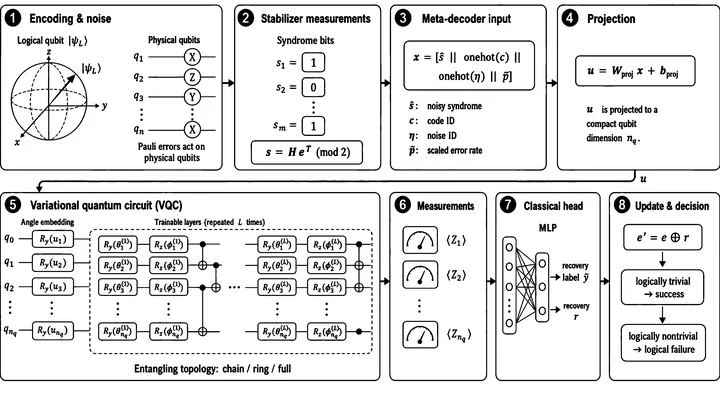
Quantum Error Correction Learns on the Fly
A quantum computer is like an orchestra where each musician is a fragile qubit. The slightest noise, and the melody falls out of tune. To keep the harmony, you need a conductor who instantly hears the false notes and brings the instruments back into line.
cs.GL2026-07-133 minarXiv:2607.13089
Restoring the Z3: How Relay Clicks Brought a Lost Computer Back to Life
Berlin, December 1943. A bomb flash, and the first fully automatic programmable computer in history, the Z3, vanishes in flames. Its creator, Konrad Zuse, doesn’t even try to rebuild the hardware: after the war, he constructs new machines. But the idea of the Z3—like a lost painting, with only sketches and memories left — awaits its moment.
cs.AR2026-07-141 minarXiv:2607.13106express
Teaching Cameras to See Faster and Cheaper: On-Chip Neuromorphic Video Processing
Modern machine vision systems are gaining autonomy: engineers have managed to implement an image recognition algorithm directly on a miniature chip, freeing the camera from having to send data to a bulky computer.
Quantum Physics2026-08-152 minarXiv:2608.15173express
A Quantum Computer That Rewrites Its Program on the Fly
A quantum computer is like an orchestra where each instrument is a qubit and the conductor is the control processor. The conductor must not only set the tempo but also change the score on the fly if a soloist plays something unexpected.