Popular

Nancy Grace Roman

1925–2018 · astronomy, astrophysics, space sciences
American astronomer known as the 'Mother of Hubble' for tirelessly championing the idea of space telescopes. She played a key role in planning and implementing the Hubble project, as well as in programs to study galaxies and stellar populations.

Biography

She studied at Swarthmore College and the University of Chicago. She worked at NASA, where she became the first woman in a leadership position in the field of astronomy. She contributed to the development of satellite observatories.

Key discoveries

💡 Roman was interested in astronomy from childhood and even organized an astronomy club at school, despite a lack of support.
Quote: "If I hadn't become an astronomer, I would probably have become a lawyer — I always had a gift for persuasion."
Links in the knowledge graph 1
Related tags
galactic evolutiongalaxy clusterHubble Space TelescopeJWSTstar formation
Related scientists
Adam RiessHans BetheRashid Alievich SunyaevTheodore LymanEmile ClapeyronJames JeansR. Brent TullyWalter Baade

Related articles

The Colors of Life on Distant Planets

Scientists have figured out how to search for life on other planets by looking for colored traces on the surface. These paints are left by living organisms. The HWO telescope will spot such color signatures even if the air shows no signs of life — for instance, when it’s ancient and doesn’t produce
arXiv:2601.08883v1 · 2026-01-12

Cosmic Billiards: How Planets Become Wanderers

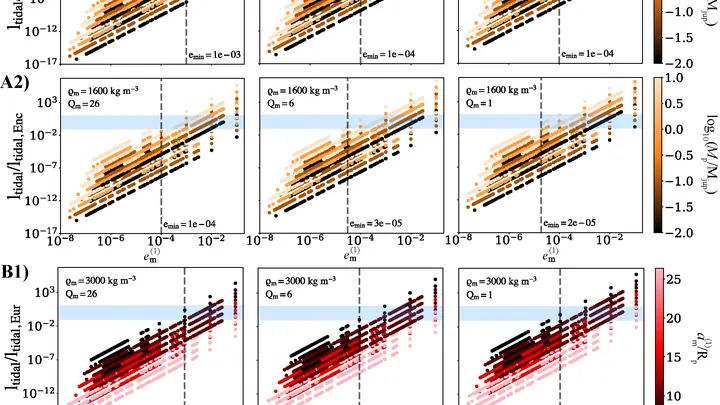
Gravitational kicks from distant giant planets knock small rocky worlds (super-Earths) near the star out of the system. The ejected planet becomes a lonely wanderer. This same mechanism can shuffle the orbits of the remaining planets and even send them plunging into the star.
arXiv:2601.09835v2 · 2026-01-14