Convolutional neural networks are deep learning architectures specialized for processing grid-like data, used in optical spectroscopy, polarization recovery, and medical imaging.
Delicate work: imagine a photographer in a red room developing a film. He places it in a tray, and the image slowly appears on the sheet. The outlines come first—similarly, the first convolutional layer of a CNN (a sliding 3×3 filter) extracts horizontal and vertical lines. The second layer then notices corners and simple textures, and the fifth can recognize a cat's ear. By the end of the process, a meaningful portrait is assembled from abstract feature maps.
History
The idea of local receptive fields dates back to the work of Hubel and Wiesel on the visual cortex (1959). In 1980, Kunihiko Fukushima proposed the neocognitron, a hierarchical network for pattern recognition inspired by these discoveries. The first practically useful CNN was created by Yann LeCun in 1989 (LeNet) for handwritten digit recognition. With the advent of GPUs and the ImageNet dataset, architectures by Alex Krizhevsky (AlexNet, 2012), and later VGG, ResNet, and EfficientNet, revolutionized computer vision.
How it works
The convolutional layer computes cross-correlation between the input tensor and filters. Each filter is a small weight tensor (e.g., 3×3×depth), sliding with a specified stride. The formula is: result[x,y] = bias + sum over i,j,k input[x+i, y+j, k] * filter[i,j,k]. Then nonlinearity (typically ReLU). The pooling layer (max pooling) replaces a window with the maximum value, reducing size. Deep networks can learn a hierarchy of features from simple gradients to complex objects.
In practice
A phone camera that automatically focuses on faces; medical scans where software finds tumors.
Fun fact
The GoogLeNet network (2014) contained 'mini-networks' inside, called inception modules, which simultaneously looked at the image with filters of different sizes—as if several magicians examined one photo through magnifying glasses of varying strengths.
Getting lost in a hall of mirrors is easy: every wall reflects another, and you feel like you've been here before. The brain gets similarly confused when surrounded by many similar places. Neurons responsible for the spatial map can fire the same signal for two different corners of a room. This is called spatial ambiguity.
You're looking for fireflies in a dark forest. Instead of photographing the whole forest every second and then poring over the images, you carry a small device that spots the flashes on its own and cuts out only a circle around each one. The rest, the blackness, isn't saved. That's exactly how the new sensor for scientific cameras works.
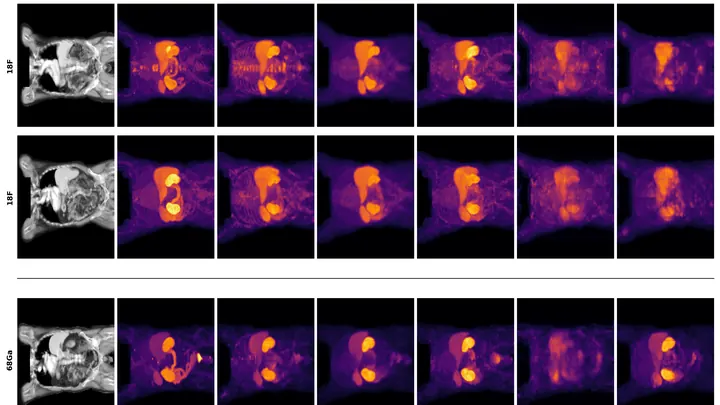
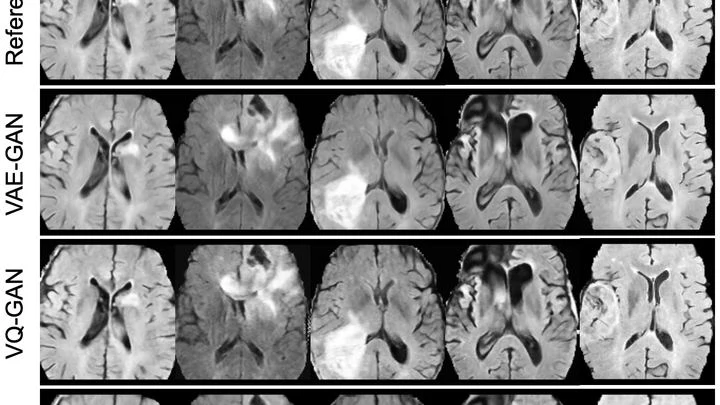
A tumor in a scan is like a tiny bright dot on a vast dark canvas. That dot is what the doctor needs, not a perfectly smooth background. But when a neural network learns to turn a regular CT scan into something resembling a PET scan, it often tries to make everything look nice, and ends up smearing that dot.
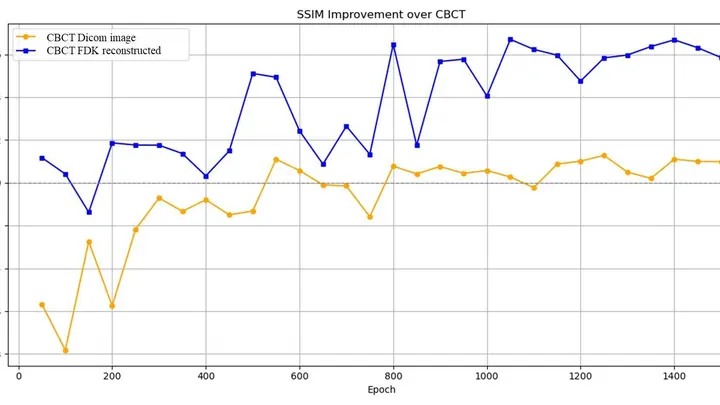
A low-dose X-ray image looks like a view through a fogged-up window: outlines are there, but details drown in a hazy veil. Doctors need such images during radiation therapy — to aim the beam precisely at the tumor and spare healthy tissue. But saving on radiation comes at the cost of noise, streaks, and artifacts that obscure what matters.
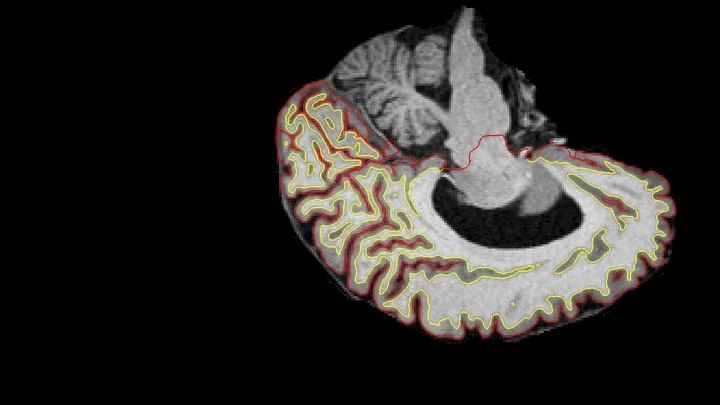
Two scans of the same brain taken at different times are like photographs of the same house before and after renovation. To see what changed, you overlay them and look at the differences. But an MRI scanner is not a perfect camera: it adds its own distortions, as if the photo were taken through slightly warped glass.
At the end of a massive star's life, its core collapses in a fraction of a second, giving birth to a supernova flash. This cataclysm shakes spacetime itself, emitting gravitational waves — ripples that race across the Universe.
An array of radio telescopes is like a camera missing several lenses. Ever since Karl Jansky picked up the radio hiss of the Milky Way, astronomers have been trying to piece together a whole picture from fragmentary signals. But the antennas are spaced apart, and the mathematically “developed” image — the dirty map — ends up smeared.
Each morning, dozens of telescopes swing toward the Sun. Their cameras catch a narrow band of red light — the Hα line, discovered by Johann Balmer. The images reveal dark, whimsically curved threads. They look like stitches in a giant tapestry sewn through the blazing corona.
Communicating with a satellite is like trying to hear a whisper in a storm: the signal drowns in noise. Engineers have created an AI algorithm that runs directly on the satellite and, with minimal power consumption, detects distortions more accurately than previous methods.
The photo enhancement algorithm is like a navigator that step by step leads a blurry picture toward a sharp view. It removes noise and distortions, moving pixel by pixel along a familiar map. But if the image was taken in unfamiliar conditions (say, with unusual blur) the map doesn't match the terrain.
A single-pixel camera works like an artist creating a picture through a stencil with many holes. In each frame, only a portion of the light, modulated by a mask, a spatial light modulator, reaches the single sensor, and then the computer reconstructs the full image by assembling this mosaic with computational algorithms.
Many natural processes are described by differential equations, but scientists often have only fragmentary data — a sort of torn map. The new computational method works like a cartographer who reconstructs a complete map of the terrain from a few landmarks.
A typical tracking program resembles a navigator steering a ship by the stars. But as soon as the sky clouds over, coordinates drift, and entropy (a measure of uncertainty) builds up in the data. The new algorithm gets a ‘co‑pilot’ — a module that monitors how confident the main navigator is.
A radio signal with layered modulation resembles the cultural layer of an ancient city: each level carries its own information, but over time they get jumbled by interference. Conventional algorithms get lost in this mess. The new TSDN method acts as a neural network archaeologist.
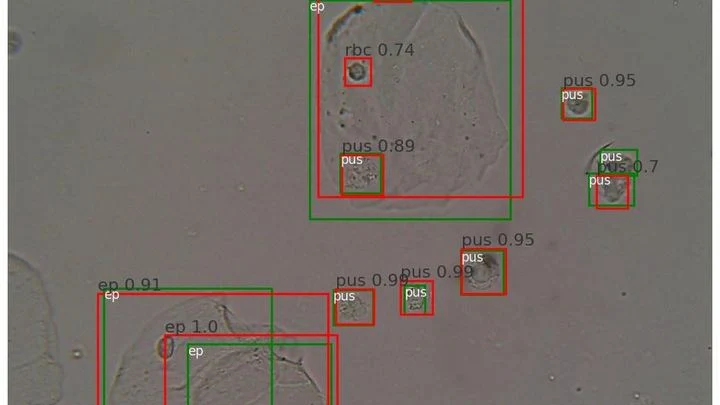
A drop of urine under a microscope isn't a flat puddle but a multi-layered volume. Like a stack of transparent pages: if you focus on one, the neighboring ones blur. The microscope's light only shows one depth layer sharply. To see all the cells, a lab technician had to take a series of snapshots, manually adjusting focus — tedious and slow.
The data from a single CT scan is comparable to several feature-length films. TCAM-Diff bypasses this bottleneck: the program compresses the 3D scene into three shadow projections — like a sculptor reconstructing a solid statue from silhouettes on three walls.
When biologists measure the activity of thousands of genes, they usually just see a list of coincidences, like two ingredients in a soup that often end up together. The standard method looks for such pairwise connections but doesn't show who influences whom.
A new approach, like a detector of dark matter, uncovers hidden threads of causation.
Usually a CT scanner takes many X-ray images from different angles and assembles a 3D picture. But sometimes doctors only scan a small area (say, one lung) and the data cuts off. It's like a chef given a single spoonful of soup and asked to name the exact recipe for the entire pot.
A child exploring an unfamiliar apartment crawls from object to object and remembers what is visible from each corner. This is how the brain builds a mental map — an internal model of space. The gradCSCG algorithm works on the same principle: it receives a video stream from a camera and independently draws a map of the room, relying only on the changing images.
A city signal bounces between walls like a ball, and your phone catches dozens of its 'reflections'—echoes. Each microsecond of delay adds 300 meters to the path.
The signal's speed is constant, like that of light (speed of light).
Medical scans are maps of tissue density. The brightness of each pixel reveals what’s there, much like photometry measures light intensity. But conventional algorithms analyze pixels in isolation, producing jagged organ boundaries.
A new approach compels the program to prioritize smoothness.
Active noise cancellation creates 'anti-sound' to neutralize noise. But ordinary systems are blind: they don't know where the sound is coming from. In rooms with an echo, it's like boxing with a blindfold on — you're canceling blindly.
In a kitchen with gas burners, each heats differently. If the cook moves the pots, food may burn. Just so in a wireless network: the antenna-burners and user-pots require precise placement. Ordinary neural networks don’t distinguish positions, treating all burners as identical. So they struggle to estimate signal quality or adjust transmission.
A cook who learns to cook from hand-drawn pictures risks ruining every dish. The same trap awaits computer vision: models need thousands of labeled images, but collecting them manually is expensive and tedious. Synthetic frames solve the problem, but only if they look real.
Modern machine vision systems are gaining autonomy: engineers have managed to implement an image recognition algorithm directly on a miniature chip, freeing the camera from having to send data to a bulky computer.
Look into the night sky — before you is not a scattering of lights, but a multi-layered manuscript. Under the bright ink of stars and galaxies appears a faded, almost erased text.
DNA methylation consists of tiny chemical marks on our genes. Over the years, they change on a fairly strict schedule. Standard epigenetic clocks look at these marks and output a single number: biological age. But a number can't tell you how the pattern of marks rearranged day by day, year by year. The authors of this work decided to turn a static photograph into a continuous film.
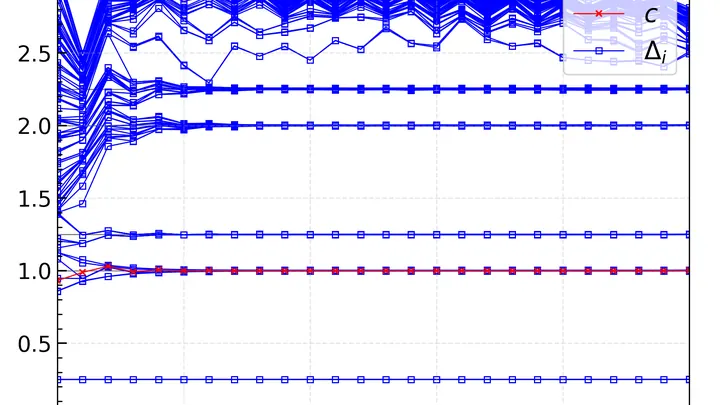
In quantum physics, there are theories where everything follows clear proportions, like a musical rhythm that always returns to the beginning of the bar. But there are also 'irrational' theories where the rhythm breaks and predicting the next beat is nearly impossible. One such theory is the compactified boson: a particle lives on a circle, and its behavior depends on the radius of that circle.
Almost a century after Фриц Цвикки suspected something was amiss in the motion of galaxies in the Coma cluster, and Вера Рубин measured stellar velocities in spiral arms, the nature of тёмной материи remains one of the most vexing mysteries.
The depths of space are not silent — they are full of encrypted messages. Every star, every quasar sends its flickering light code: rhythmic like the Morse of a Cepheid, or chaotic like a cracked cipher of a supernova. Astronomers intercept these signals by the millions each night — but how to read them without a key?
Geophysics has always sought a language to converse with the depths. Well drilling is a crude alphabet, laboratory core tests are slow decoding. A new approach turns humming porosity into a pure note.
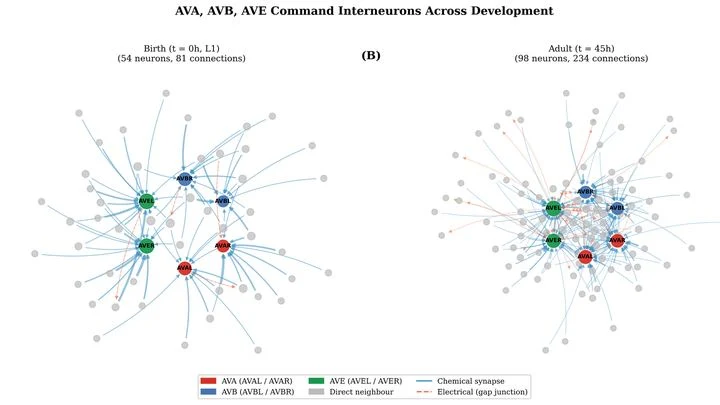
Assembling a nervous system is like building a city where each new house, a neuron, must connect to the road network at the right time. In the tiny worm C. elegans, this process can be seen in detail: it has only 302 neurons, and scientists have reconstructed their contacts at different developmental stages.
Engineers create an alloy for solar concentrators by adding hard particles — like raisins in dough, to help it hold its shape under extreme heat. Too big a raisin and the material cracks. Previously, scientists manually counted these particles on microscope images.
X-ray detectors work like honeycombs: particles flash here and there in hexagonal cells. Conventional algorithms stretch these combs onto a square grid, creating ghostly polarization artifacts. Scientists used a neural network that lives by the rules of the hive — it processes the hexagonal structure directly, preserving the natural pattern.
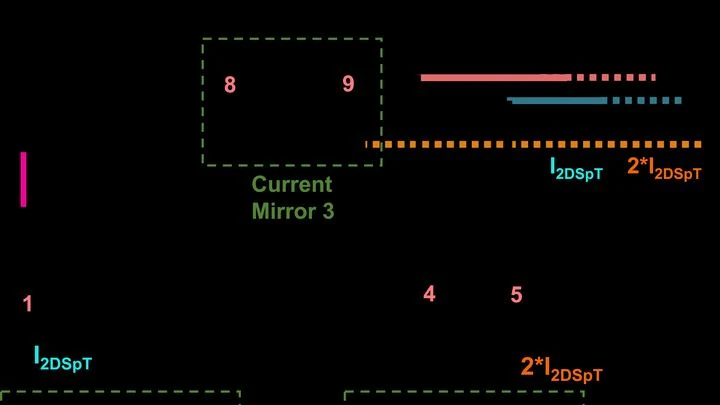
A neural network, like a sheet of graph paper, receives homogeneous signals at its input, and draws its own coordinate grid. Initially, connections between inputs and network cells form a gentle hill: the response is strongest at the center and fades toward the edges.
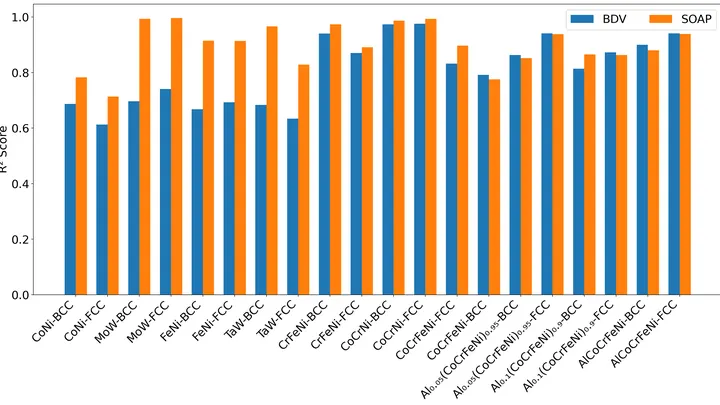
Creating an alloy from several metals is like cooking a soup from mysterious ingredients: guessing the final texture without trial and error is nearly impossible. Conventional models often get it wrong when there are more than three different kinds of atoms.
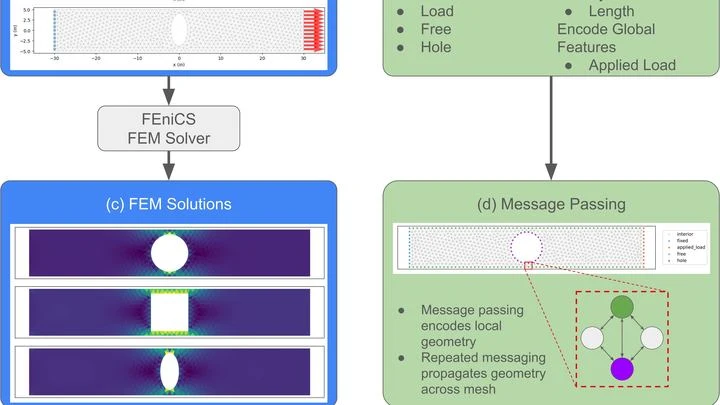
Designing machines is like cooking: you need to know exactly where the 'dough' will tear. Old computer simulations check every point on a part for hours, like measuring the entire pot to make sure the handle doesn't fall off.
A smartphone camera captures everything indiscriminately, but the eye immediately picks out what matters. The retina doesn't just pass the image to the brain: it highlights contours on the spot, suppresses noise, and adjusts to brightness.
A proofreader checks a manuscript before it goes to print. They don't know every possible mistake, but they know exactly what flawless text looks like. Spotting a strange symbol or a blurred word, they immediately circle it in red. That's roughly how the new program for checking medical images works.