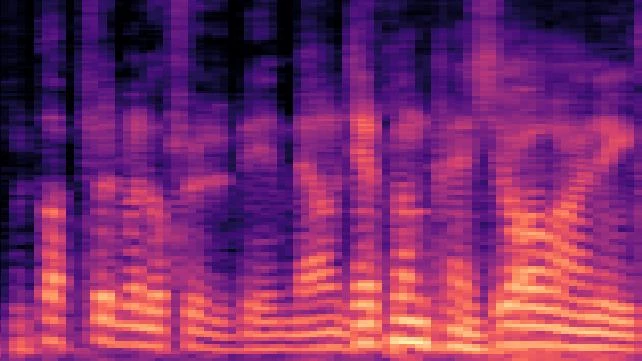
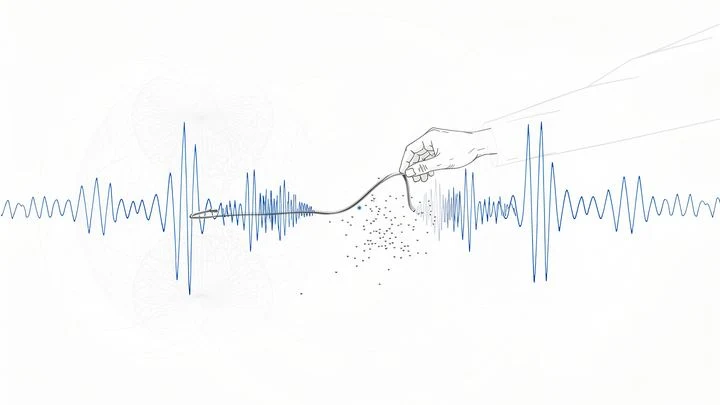
Signal processing is a mathematical tool for working with information encoded in changes of a physical quantity (sound pressure, voltage, brightness). An analog signal is digitized: instantaneous values are measured at a given frequency, yielding a stream of samples. Then algorithms are applied for filtering (removing interference), compression (MP3 uses psychoacoustics to discard inaudible frequencies), and restoration (removing blur in photos). The central idea is the Fourier transform, which moves a signal from the time domain to the frequency domain: a graph of oscillations becomes a spectrum where the amplitude of each frequency component is visible. The entire telecommunications, audio recording, and medical imaging industries are built on this.
History
Its roots go back to the harmonic analysis of Jean Fourier (1822), though decomposition into trigonometric series appeared even earlier. In the 20th century, the works of Nyquist and Shannon on sampling gave an impetus, and then the digital revolution of the 1960s-1970s produced the Fast Fourier Transform algorithms (Cooley and Tukey, 1965), making spectral analysis fast. The development of integrated circuits allowed real-time processing — from CD players to cellular communications. In the 21st century, compression methods (JPEG, MPEG), wavelet transforms, and neural network approaches have expanded the capabilities of signal processing beyond recognition.
How it works
The basic cycle: an ADC converts the signal into a sequence of samples x[n]. Then a digital filter described by a difference equation is applied, e.g., y[n] = Σ b_k x[n-k] – Σ a_k y[n-k] (recursive filter). To analyze the frequency composition, the Discrete Fourier Transform is computed: X[k] = Σ x[n] e^{-j2πkn/N}. In practice, the Fast Fourier Transform (FFT) is used, reducing the complexity from O(N²) to O(N log N). For non-stationary signals (where frequencies change over time), the Short-Time Fourier Transform or wavelets, localized in both time and frequency, are used. Modern communication systems are built on Orthogonal Frequency-Division Multiplexing (OFDM), which divides the channel into thousands of subcarriers to combat multipath fading.
In practice
Noise cancellation in phones, music compression into MP3, medical tomographs, radars, data transmission over Wi-Fi — all of this works thanks to signal processing algorithms.
Fun fact
The MP3 format discards about 90% of the data, yet to our ear the difference is almost imperceptible — the algorithm relies on how the brain masks weak sounds with loud ones at nearby frequencies.
Hunting for a new material is like cooking without a recipe: you try, try again, and often throw things out. Previously, scientists manually flipped through papers and tested compositions one by one. Now there's a "robot chef" that reads the literature itself, mixes components, and checks what came out.
Quantum computers make mistakes. Each qubit is like a ball balanced on the tip of a pencil: a slight tremor in the hand and it rolls off. To keep the balls from falling, you need someone to notice the wobble and correct it in time.
The orchestra plays, but the conductor hears only a general hum. Each instrument plays its own part, but you can't tell where the flute is and where the double bass is. You need a spectrum analyzer — a device that breaks down sound by frequency.
A neuron receives thousands of signals on its branching processes — the dendrites. Some signals push the cell toward firing (excitation), others hold it back (inhibition). For a long time, it was thought that the neuron simply adds up all the 'fors' and 'againsts.' But in real dendrites, inhibition works differently: it can not subtract but divide the excitatory signal.
Reconstructing a full picture from fragments is like discerning an orchestra's melody in a noisy hall. Such challenges arise in photometry, where a star's brightness is recovered from faint twinkling. Traditional methods need precise noise information, which is almost always unknown.
An ordinary road map with traffic is a heap of numbers. Sending them all as is takes too long. But you can reduce the volume without losing the gist. Researchers found a clever solution: first redraw the map so that streets become points, and intersections become bridges between these points.
In 2019, the world saw the first image of a black hole's shadow — an orange doughnut on a black background, becoming a symbol of scientific progress. But this image wasn't captured by a camera: it was born from mathematical alchemy, where data from eight radio telescopes, which gathered only crumbs of signal, merged into a single picture.
Radio signals in a room act just like sound in a concert hall: bouncing off walls and objects, they create a unique pattern — a silent melody for every location. Your phone, like a keen ear, catches this melody amid noise and distortion. It remembers which chord matches the corner of the couch, and which one fits the doorway.
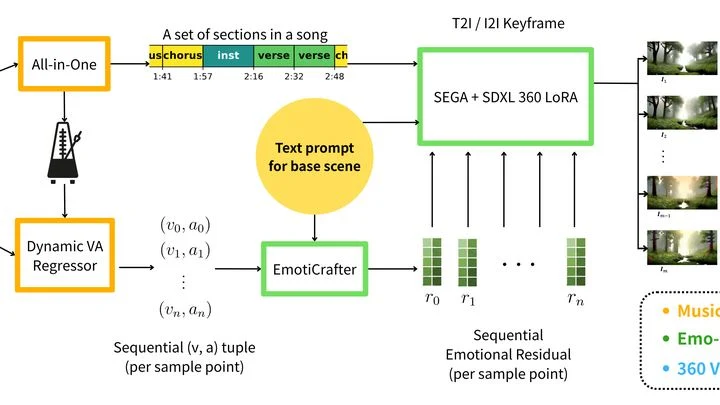
A conductor holds not a baton but a brush, and each stroke gives birth to color and form. New technology works the same way: it transforms a song's mood into a panoramic video that surrounds the listener.
First, the algorithm decomposes the track into emotions, similar to how light is analyzed by spectrum.
Electricity from the wall socket isn’t steady noise; it’s a wave pulsing 50 times a second. Every gadget at home has to sync with this rhythm, or chaos would break loose. To keep the beat, power grids use a phase detector — a “smart ear” that listens to the voltage like a musician tuning into a note.
Traditional hearing aids resemble a chef who cooks from a recipe blindly. They analyze the sound chaos from the microphone and amplify speech based on it. In a noisy café, this approach often errs. The new system behaves like an experienced cook: first processes the signal, then samples the result.
Human hearing is wired so that the brain prioritizes familiar patterns — a friend's voice, the patter of rain, a car horn. But a new system works on a different principle: it registers any sound burst, even one never encountered before.
Narrating a long text, like an audiobook, used to require the computer to keep a detailed picture of every split second of sound in mind, as if for an hour-long conversation you had to draw a millimeter-accurate map of the entire route. These 'maps' were enormous, and even powerful machines choked, assembling speech piece by piece.
A city signal bounces between walls like a ball, and your phone catches dozens of its 'reflections'—echoes. Each microsecond of delay adds 300 meters to the path.
The signal's speed is constant, like that of light (speed of light).
Passive sensors communicate by reflecting radio waves, like an echo. The energy savings are clear, but many reflections turn into a jumbled mess. It's like a choir where each singer repeats their own part without a conductor.
A new approach assigns each sensor a specific rhythm — a digital code.
Modern machine vision systems are gaining autonomy: engineers have managed to implement an image recognition algorithm directly on a miniature chip, freeing the camera from having to send data to a bulky computer.
A neural network that generates sounds from text is like a kitchen where dozens of chefs prepare each 'dish.' Many just get in the way — sending false signals and wasting resources.
The standard way of digitizing speech: taking volume readings thousands of times per second. It's like tasting broth with a teaspoon: each sip is watery, with almost no detail. The data stream swells, though the substance is minuscule.
Scientists proposed first "simmering down" the audio signal.
A typical cardioid microphone, like an ear, hears best from the front, but its readings blur when sound comes from the side. The solution is to gather several such 'ears' into a sphere. You get a sound ball that picks up signals from all directions. By comparing measurements, the system breaks down errors into simple components — much like spectroscopy splits light.
Cleaning speech from noise is like tuning an old TV: twist the contrast knob too far, and faces become unnatural. Researchers separately adjusted the 'volume' and 'time shift' for each frequency of sound, as if splitting it into a rainbow — a method known as spectroscopy. It turned out the key knob is volume, not phase synchronization.
Wireless devices flood the airwaves with signals that blend into chaos — as if everyone in a room started talking at once. Scientists have proposed a solution: smart panels, reminiscent of acoustic tiles. Each cell can either reflect a radio wave on command, like a wall echo, or absorb it, as soundproofing dampens noise.
The 120 residents of Montelago are not people but digital characters. Each, besides a name and biography, has three hidden coordinates: trust in municipal authorities, assessment of source credibility, perceived adequacy of information. These numbers are known to the creators but not to the system itself.
The Sun is not just a blazing ball, but a colossal orchestra, where the strings are solar filaments — giant arches of dense plasma floating in the scorching corona. They tremble, and each oscillation is an encrypted melody of magnetic fields.
Statistical models are an attempt to stretch a perfect mathematical web over the uneven landscape of data. When a model resists, it emits tension, but we've grown accustomed to ignoring it. Researchers spend hours staring at residual plots, trying to guess where the model is 'coming apart at the seams.' Squealer translates this resistance into sound.
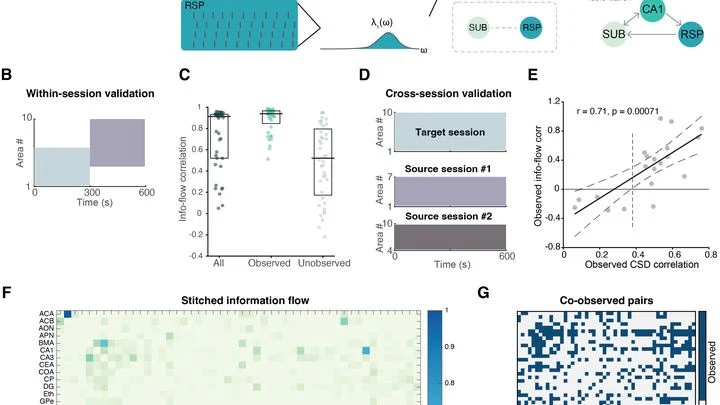
A patchwork quilt where each patch is a recording of activity from a small brain region. One patch was stitched on Monday in London, another on Tuesday in New York, and a third a month ago in Tokyo. This mosaic covers the brain only partially, and there is no common seam to join them.
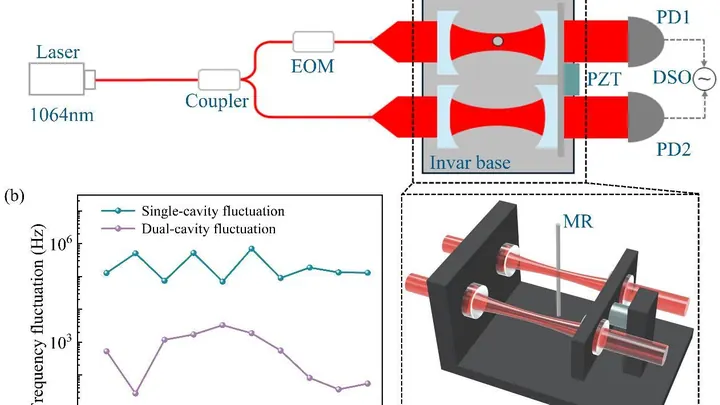
A guitar string is stretched between two mirrors. A beam of light bounces back and forth between them, and the string shudders at every touch. Sometimes the light loses energy — the string takes it and dissipates it as heat, like a fading sound. Other times, the string shifts the pitch of the light itself, changing its color but barely dimming it.
If you clap your hands in an empty room, the echo will tell you about its size and shape. Every object (a chair, a book, a person) adds its own signature to this echo: sound reflects off it in a particular way. The authors of the paper have figured out how to completely rewrite this acoustic signature. They surrounded a region of space with a closed surface of microphones and loudspeakers.
After a merger, the newborn black hole emits a fading tremble — gravitational waves, similar to a ringing bell. By analyzing the overtones of this signal, spectroscopy can determine its mass and spin rate.
A fundamental string plucked at the moment of the Big Bang doesn't just hum a single note — waves run along it, and occasionally tiny loops peel off. These loops, like tuning forks, begin to ring at their own frequency, producing a very high-pitched sound.
A spectrum is like a photograph of a material's inner workings, taken with light. When a beam passes through or reflects off a sample, molecules leave characteristic dark bands, peaks, on that photograph. But if the image is overexposed or veiled in gray, making out details becomes nearly impossible.
Battery aging is like metal fatigue: a crack grows inside long before the part breaks. Usually, you only learn about the problem when capacity drops below 80%—but by then, the damage is irreversible.
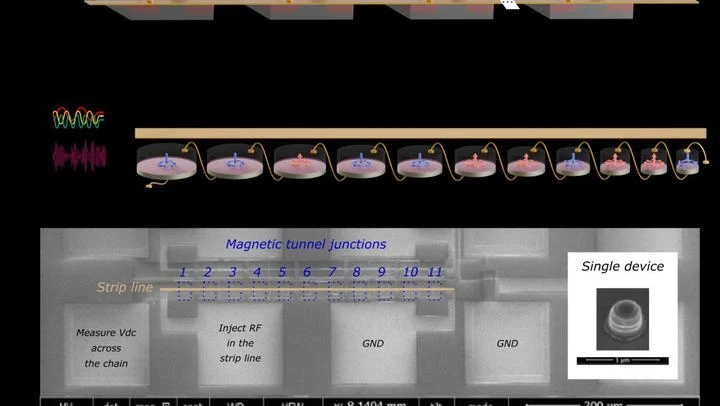
A radio receiver picks up only one station because its resonant circuit is tuned to that station's frequency. Magnetic vortices in a new type of computing element work in much the same way.
A flat crystal of charged atoms suspended in an electromagnetic trap behaves like a perfectly calm pond. The slightest breeze, and ripples spread across its surface. This 'pond' catches the splashes from dark matter particles and the ripples of spacetime — high-frequency gravitational waves.
Each vowel sound is a distinct shape of the mouth, tongue, and throat. When you say 'ah,' 'ee,' or 'oo,' not only does the air inside your head change, but so does the way radio waves pass through it. Researchers peered into this process using MRI scans taken right during speech and built a precise computer model of the head — from bones to soft tissues.
An orchestra where musicians play in different cities, and the conductor hears them with a fraction-of-a-second delay. That's roughly how radio telescope networks like the Very Long Baseline Array work — a dozen antennas from Hawaii to the Virgin Islands catch the whispers of distant galaxies.
An orchestra where each musician plays their own part but hears only the neighbor. One wrong note, and a wave of errors rolls through the hall. That's how Ising machines work — special devices for solving problems where you need to find the best option among many.
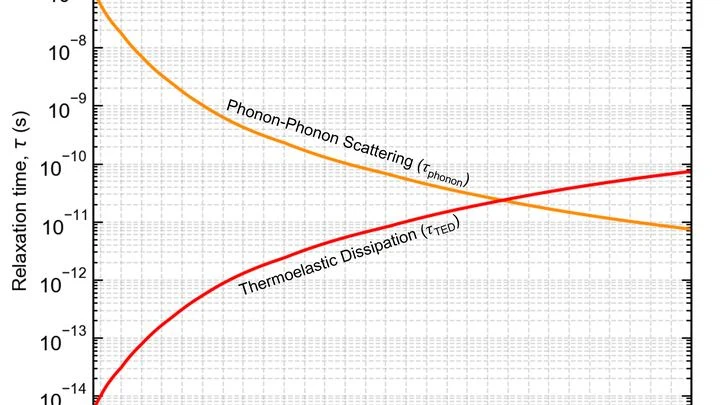
A guitar string rings longer if you don't touch it too much. A resonator, a device that vibrates at a single frequency like a tuning fork, behaves in much the same way. A team of engineers made such a "tuning fork" from aluminum nitride, smaller than a grain of sand, and made it oscillate 16 billion times per second.
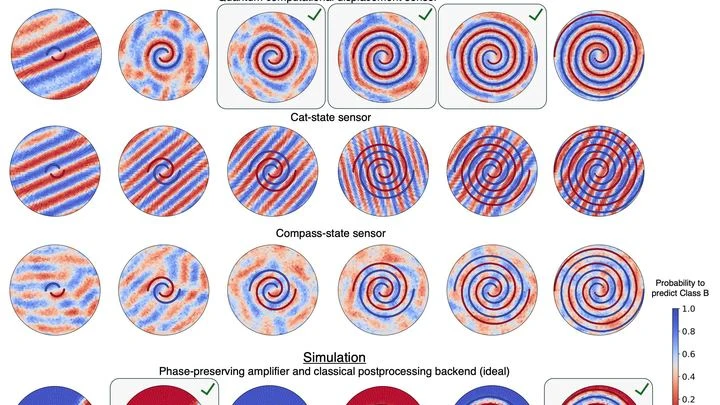
A judge walks into the courtroom but doesn't look at the evidence: he immediately delivers the verdict. That's how the new quantum sensor works: it doesn't measure the signal but directly decides which class it belongs to.
In conventional quantum sensing, it's all like a detective story: first you gather clues (measure the signal), then you analyze them.
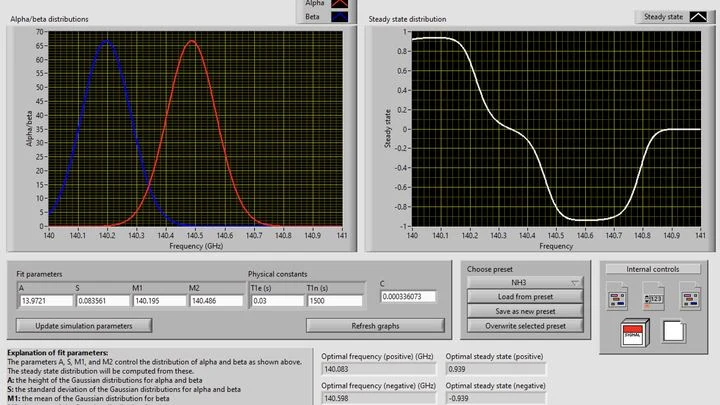
At Fermilab's accelerator, a particle beam strikes a target of frozen ammonia. The hydrogen nuclei inside are like tiny tops, and physicists need them all spinning the same way. Then the collisions reveal how the proton's spin is put together.
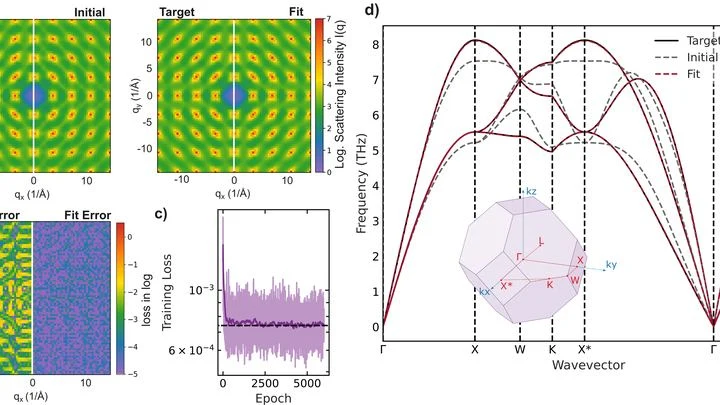
Heat a crystal, and its atoms start to jiggle like plucked strings. An X-ray beam passing through the crystal scatters off these vibrations, painting on the detector not only sharp spots but also faint, smeared patterns. These patterns are like fingerprints: from them, you can reconstruct how strongly atoms pull and push on each other.