Ondas batidoras del viento solar: cómo se calienta la corona exprés
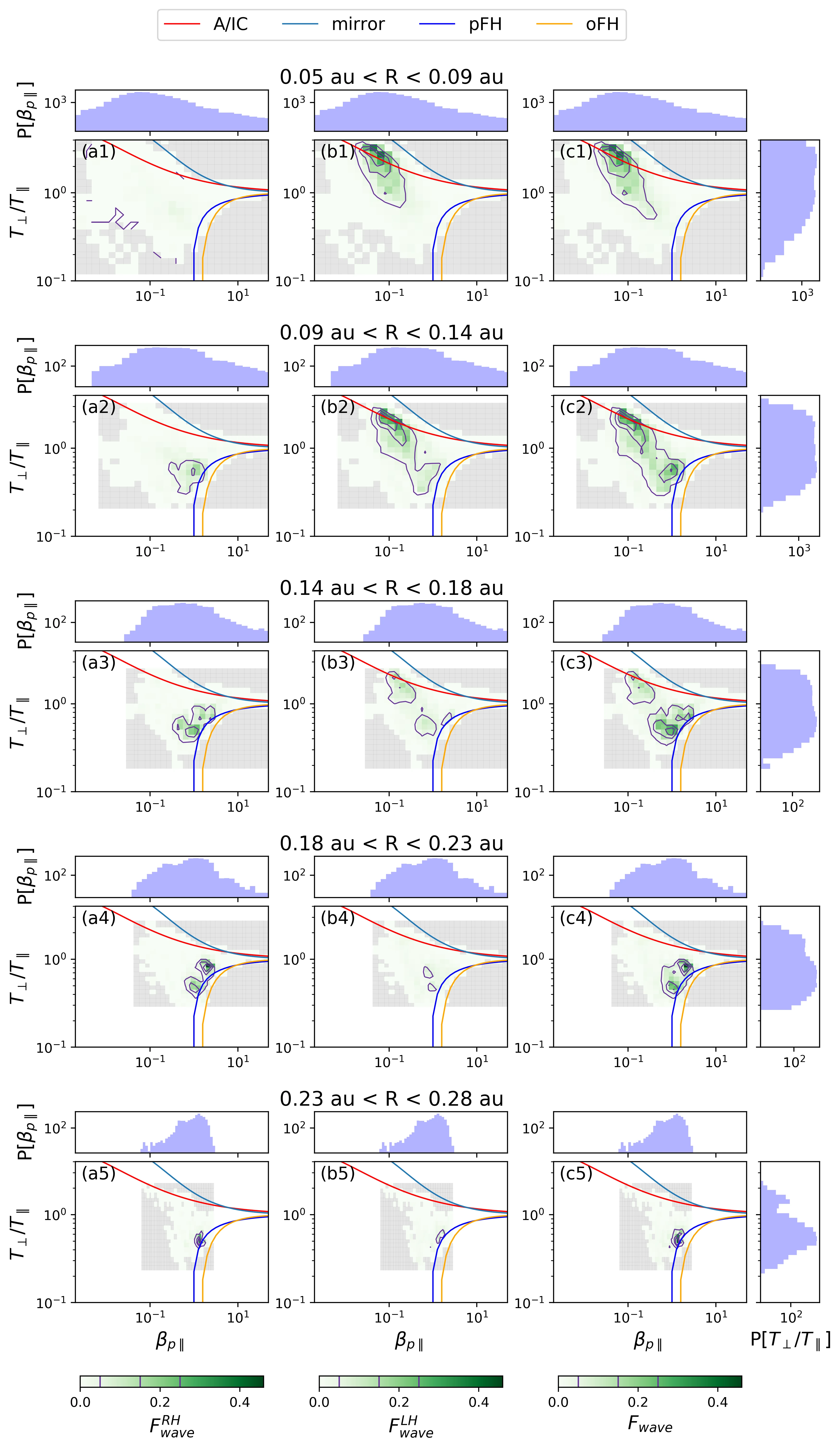
El viento solar no es un arroyo tranquilo, sino una sopa burbujeante de partículas cargadas. La sonda Parker, al sumergirse cerca del Sol, captó dos tipos de ondas que actúan como batidoras. Las ondas levógiras, como un batidor de varillas en manos de un chef, agitan la materia cuando la temperatura a lo largo y a lo ancho del movimiento difiere. Rugen casi un tercio del tiempo cerca de la estrella, aumentando la proporción de las partículas más rápidas, como una batidora que empuja la espuma hacia la superficie.
Las ondas dextrógiras
Un análisis fino de la luz (espectroscopía) y el aprendizaje automático permitieron detectar el momento en que los chorros térmicos generan las ondas dextrógiras. Paradójicamente, es esta ondulación invisible, y no las eyecciones colosales, la responsable de calentar la enorme corona, cuya temperatura es cientos de veces mayor que la superficie del Sol. Del ritmo de estas ondas depende el clima espacial cerca de la Tierra.
Resumen original
tal como lo escribieron los autores, en inglés arXiv:2512.11182
Parker Solar Probe (PSP) observes abundant circularly polarized ion-scale waves throughout the inner heliosphere. These waves are a signature of the interplay between plasma microinstabilities and turbulent dissipation. We perform a mission-wide statistical survey of ion-scale waves observed by PSP, investigating if the waves correspond to specific free energy sources in the measured proton velocity distributions. We find that left-handed waves (LHWs) are frequently observed, with the fraction of time they are observed increasing closer to the Sun, reaching $$\sim$$30\%. Right-handed waves (RHWs) are less frequently observed, with the associated time fraction decreasing closer to the Sun. The observed LHWs are generally consistent with parallel propagating ion cyclotron wave (ICW) storms that occur continuously for extended periods of time. Turbulent energy spectra are consistently steeper when LHW storms are observed; these wave storms mediate the spatial transport of the free energy associated with temperature anisotropy. The observed RHWs are generally consistent with oblique and parallel fast magnetosonic waves (FMWs), and their observation is well correlated with enhanced proton parallel heat flux, which quantifies the presence of secondary proton populations. Using observations and the SAVIC machine learning instability identification algorithm, we identify a threshold on the proton heat flux beyond which FMWs are likely to be driven unstable by the proton beams. We are thus able to associate trends in the observed ion-scale waves with known sources of free energy for Encounters 3 through 24 of the PSP's prime science phase.
El viento solar arrastra una masa equivalente al monte Everest aproximadamente cada minuto.