Quatre planètes adolescentes autour d'une jeune étoile express
À 350 années-lumière de nous, quatre planètes orbitent autour de l'étoile V1298 Tau. Elles sont 5 à 10 fois plus grandes que la Terre, mais plus légères qu'elles n'en ont l'air. Pendant neuf ans, les astronomes ont suivi leur mouvement pour comprendre leur composition et leur histoire.
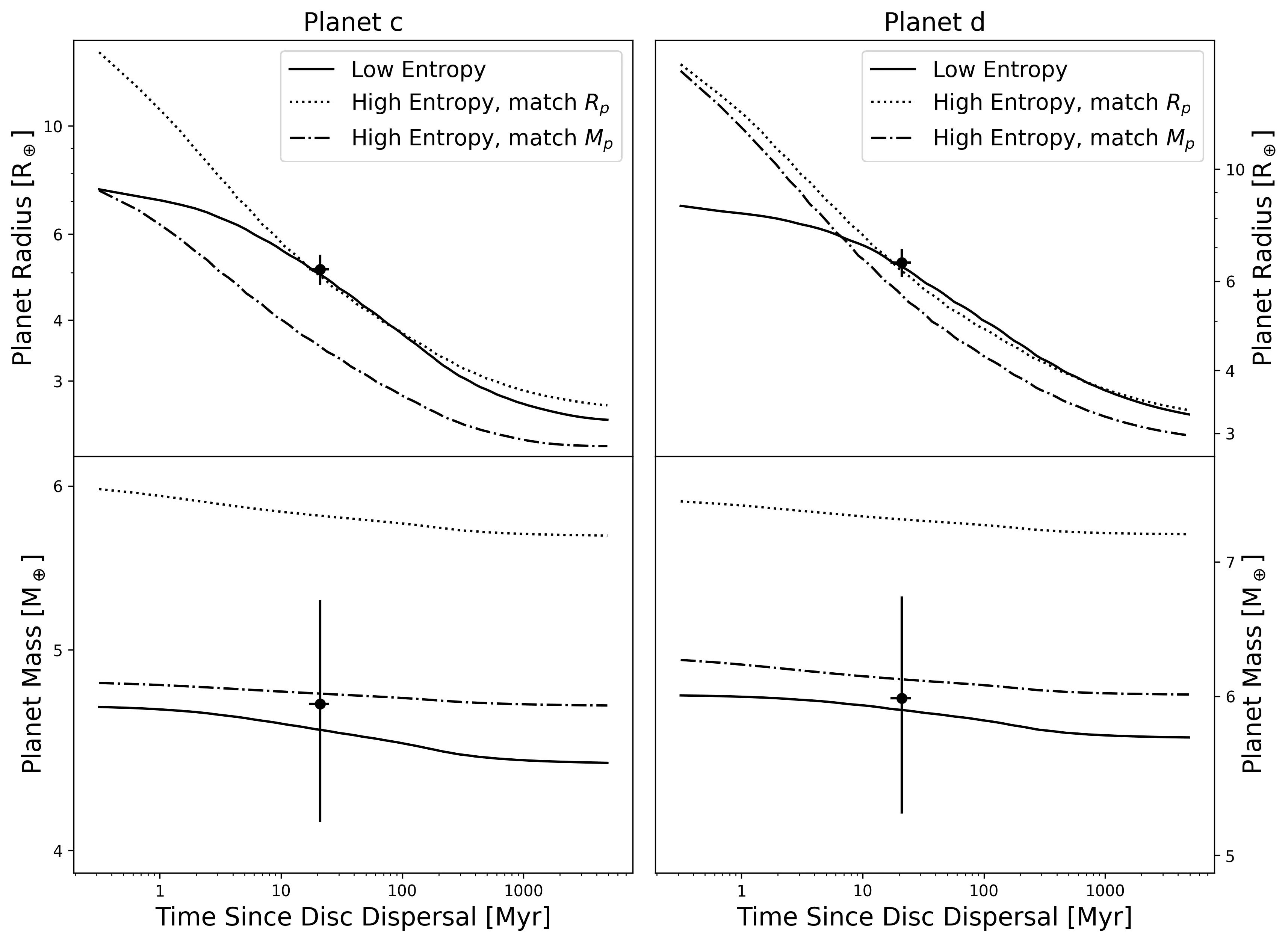
Il s'avère que les orbites sont presque circulaires, ce qui signifie qu'il n'y a pas eu de collisions violentes ni de rencontres avec d'autres corps dans le passé. Les planètes ont grandi tranquillement, comme des arbres dans une forêt paisible. Après la dissipation du disque de gaz qui les a vues naître, elles ont rapidement refroidi. Aujourd'hui, elles sont diffuses, comme des boules de neige, mais avec le temps, elles se contracteront jusqu'à devenir des super-Terres, les planètes les plus courantes de la Galaxie.
Résumé original
tel que rédigé par les auteurs, en anglais arXiv:2601.10598
The Galaxy's most common known planetary systems have several Earth-to-Neptune-size planets in compact orbits. At small orbital separations, larger planets are less common than their smaller counterparts by an order of magnitude. The young star V1298 Tau hosts one such compact planetary system, albeit with four planets that are uncommonly large (5 to 10 Earth radii). The planets form a chain of near-resonances that result in transit-timing variations of several hours. Here we present a multi-year campaign to characterize this system with transit-timing variations, a method insensitive to the intense magnetic activity of the star. Through targeted observations, we first resolved the previously unknown orbital period of the outermost planet. The full 9-year baseline from these and archival data then enabled robust determination of the masses and orbital parameters for all four planets. We find the planets have low, sub-Neptune masses and nearly circular orbits, implying a dynamically tranquil history. Their low masses and large radii indicate that the inner planets underwent a period of rapid cooling immediately after dispersal of the protoplanetary disk. Still, they are much less dense than mature planets of comparable size. We predict the planets will contract to 1.5-4.0 Earth radii and join the population of super-Earths and sub-Neptunes that nature produces in abundance.
Si on plaçait ces planètes dans l'eau, elles flotteraient : leur densité est inférieure à celle de l'eau.