Лунный телескоп увидит тени далёких чёрных дыр экспресс
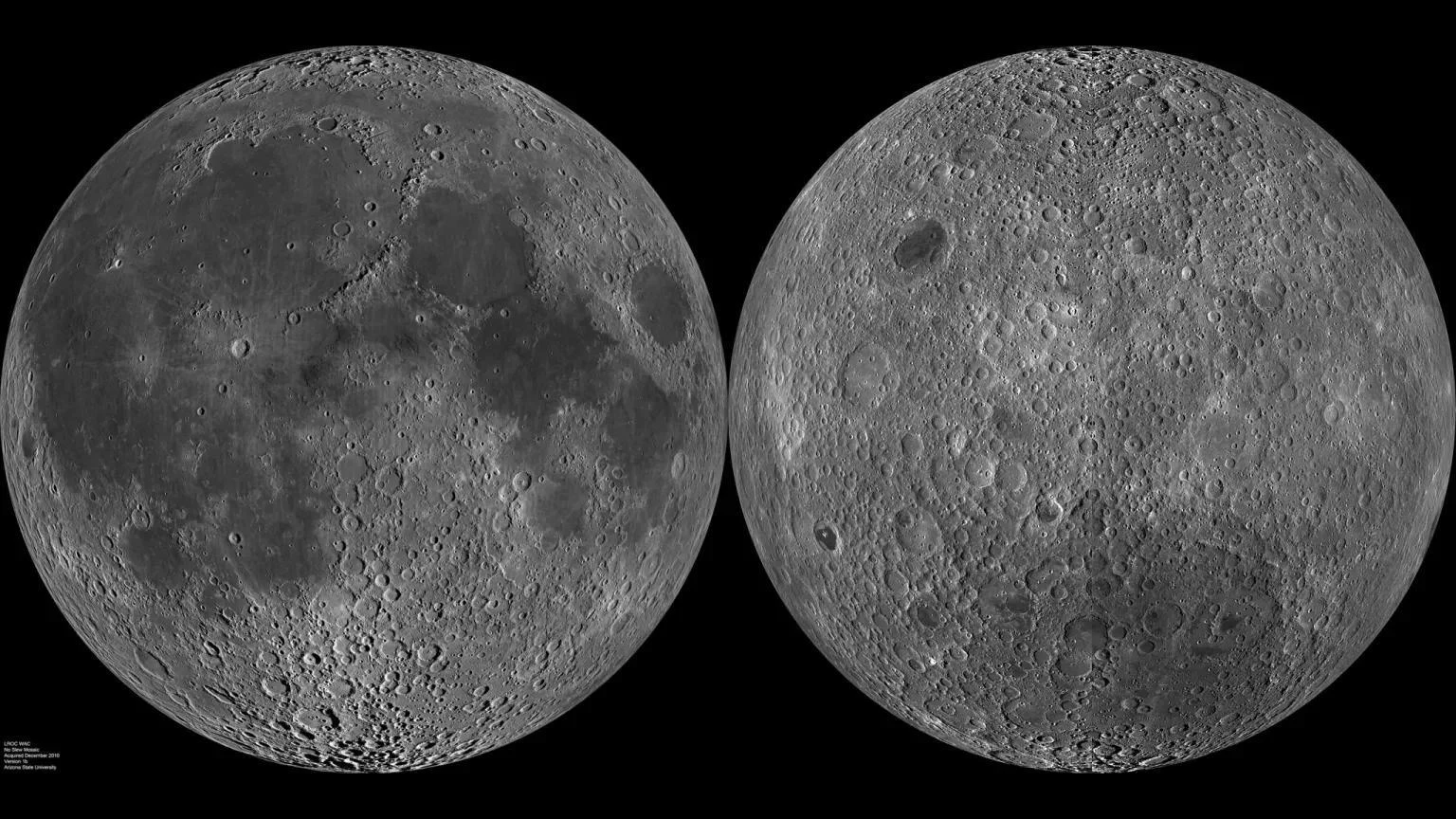
Чем дальше разнесены антенны, тем мельче детали, которые они улавливают. Объединяя сигналы, астрономы превращают несколько приборов в один телескоп размером с расстояние между ними. Добавив к земным антеннам лунную, мы получаем виртуальный глаз диаметром в 384 000 км. Это будто смотреть на космос глазами великана, чьи зрачки разнесены на расстояние от Земли до Луны.
Главный сюрприз — фотонное кольцо. Это тончайший ободок света, рождённый сильнейшим искривлением пространства-времени. Чтобы его разглядеть, потребуются ещё и антенны, парящие в пустоте между Землёй и Луной. Тогда тени чёрных дыр станут резче, и мы проверим законы гравитации там, где они работают на пределе.
Оригинальная аннотация
как её написали авторы, на английском arXiv:2601.02812v2
The 1.3 mm ground-based very long baseline interferometry (VLBI) array Event Horizon Telescope (EHT), is limited by Earth's diameter, restricting its black hole shadow imaging to only M87* and Sgr A*. Extending baselines to the Moon would achieve ~0.7 uas angular resolution at 230 GHz, enabling shadow detection for a much larger sample of supermassive black holes (SMBHs). The concept is motivated by space VLBI missions and lunar exploration, including the ongoing Lunar Orbit VLBI EXperiment (LOVEX) aboard QueQiao-2 (Chang'E-7) and the planned International Lunar Research Station (ILRS). We assess shadow detectability for 31 SMBHs with predicted large angular sizes, exploring different telescope location and antenna size. Assuming a telescope at the lunar antipode, we simulate the Moon-Earth (u,v) coverage and show that sources with direction near the Moon's orbital plane yield projected baselines spanning from short to long, enabling sampling of the first visibility null - a key shadow signature. Using a geometric ring model, we identify six shadow-detectable candidates for Moon-Earth VLBI. Among these, M104, NGC 5077, and NGC 1052 are detectable with a 5 m lunar-based telescope; PGC 049940 requires 10 m; NGC 524 requires 20 m; and NGC 5252 requires 40 m. Furthermore, if space telescopes fill the baseline coverage gaps between Moon and Earth, the n=2 photon ring region is detectable for Sgr A*, M87* with a 10 m lunar-based telescope, and 12 candidates are detectable for the n=1 photon ring region using a lunar-based telescope of up to 40 m. These results provide a clear scientific and technical motivation for lunar-based telescopes in future black hole shadow studies.
Угловое разрешение такой системы — 0,7 микросекунды дуги — сравнимо с тем, как если бы мы могли разглядеть апельсин, оставленный на поверхности Луны, стоя на Земле.
Как в «Интерстеллар», только точнее: лунный телескоп обещает показать тени далёких чёрных дыр с киношной детализацией.