الأعاصير الغبارية على الكوكب اليتيم سريع
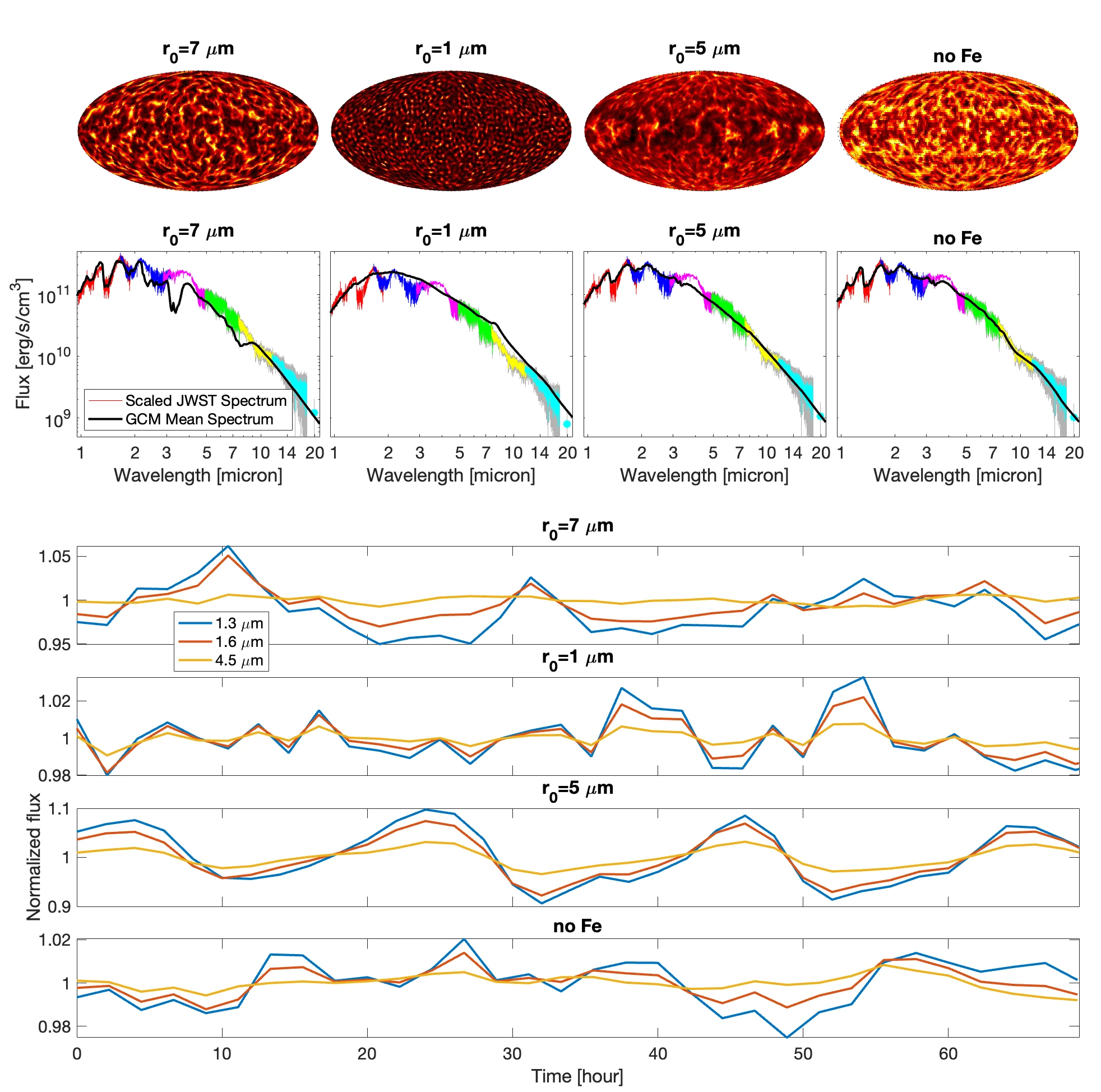
بعيدًا خارج النظام الشمسي، يهيم عالم VHS 1256B — كوكب عملاق بلا نجم. طالما حار علماء الفلك في تفسير سبب قفز سطوعه بنسبة 40% تقريبًا خلال أيام. جاء الجواب بواسطة تلسكوب جيمس ويب: تبين أن عواصف هائلة من غبار السيليكات تغطي الكوكب كله. إنه ليس مجرد سحب منفصلة، بل ستار متصل من الرمال الملتهبة، يغلف الكرة بإحكام تارة، ويتمزق إربًا تحت ضغط رياح تفوق سرعة الصوت تارة أخرى. أظهرت المحاكاة الحاسوبية كيف تتدحرج الرمال كالأمواج من خط الاستواء إلى القطبين، مسببة فوضى تستمر أسابيع. عند 1000 درجة مئوية، لا ينصهر الغبار بل يبقى بلورات كوارتز صلبة — عوالق متلألئة. وهي التي تمنح الكوكب لونه المحمر الملحوظ في أطياف الألوان. يبحث العلماء الآن عن ستائر غبارية مماثلة لدى مليارات العوالم الهائمة الأخرى، ليفهموا أي طقس يسود في الليل الكوني الأبدي.
الملخص الأصلي
كما كتبه المؤلفون، بالإنجليزية arXiv:2511.23163
Large-amplitude variations are commonly observed in the atmospheres of directly imaged exoplanets and brown dwarfs. VHS 1256B, the most variable known planet-mass object, exhibits a near-infrared flux change of nearly 40%, with red color and silicate features revealed in recent JWST spectra, challenging current theories. Using a general circulation model, we demonstrate that VHS 1256B's atmosphere is dominated by planetary-scale dust storms persisting for tens of days, with large patchy clouds propagating with equatorial waves. This weather pattern, distinct from the banded structures seen on solar system giants, simultaneously explains the observed spectra and critical features in the rotational light curves, including the large amplitude, irregular evolution, and wavelength dependence, as well as the variability trends observed in near-infrared color-magnitude diagrams of dusty substellar atmospheres.
الغبار هناك لا ينصهر عند 1000 درجة مئوية، لأن درجة انصهار السيليكات تتجاوز 1700 درجة مئوية — وحبيبات الرمل تتلألأ كخرز زجاجي.
هذه العواصف تشبه كوكب أراكيس الأبدي في فيلم ’الكثيب‘، لكن على نطاق الكوكب بأكمله وبدون الديدان العملاقة.