تنشأ الصلابة الفائقة عند حدود السوائل سريع
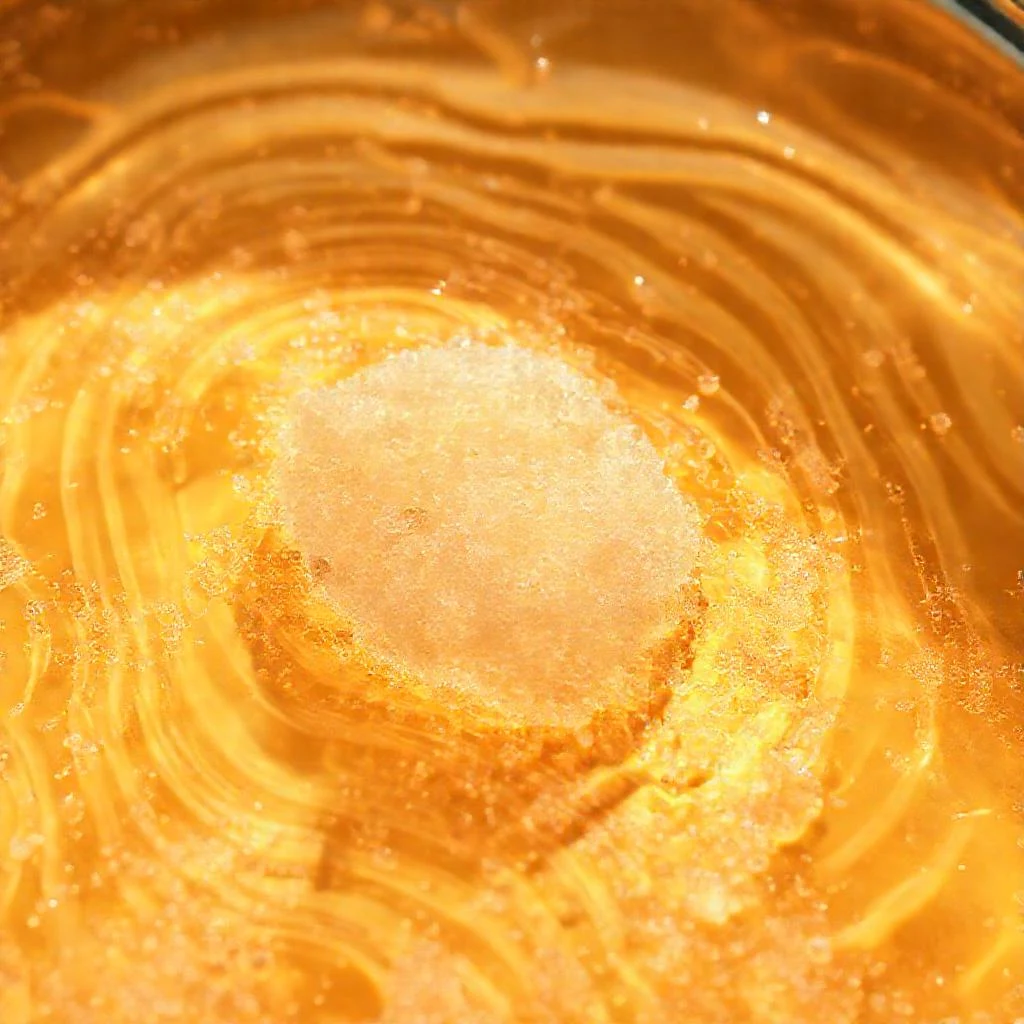
الجسم فائق الصلابة هو جليد يتدفق. مثل بركة مغطاة بقشرة، لكن بعمق سائل دون احتكاك. عادةً، تُنشأ هذه القشرة بتغيير خصائص السائل في كامل حجمه. وجد فريق من الباحثين في الهيليوم طريقة أبسط: جعلوا السطح يهتز بموجات خاصة، فاكتسب السائل بنفسه «جلدًا» صلبًا.
اتضح أن الاهتزازات لم تكن مجرد تموجات، بل دوامات كمية — روتونات، كشف عن طبيعتها فاينمان. وعند ارتباطها بالحركة، فإنها تُرتّب الذرات عند الحدود في بلورة. في مكثفات بوز–أينشتاين، يظهر هذا التأثير عندما يتطابق طول الموجة مع حجم المصيدة. والنتيجة مادة يحافظ سطحها على الشكل، بينما يتدفق باطنها بحرية. ولا يُستبعد أن عمليات مشابهة تجعل قشرة النجوم النيوترونية صلبة.
الملخص الأصلي
كما كتبه المؤلفون، بالإنجليزية arXiv:2512.08739
Supersolidity, combining superfluid and crystalline orders, has been realized in dipolar Bose-Einstein condensates by tuning interatomic interactions. Here we show that supersolidity can also emerge from mode coupling at a superfluid-solid interface, without modifying bulk interactions and for a broad class of superfluids. Using an analytical and numerical treatment of the coupled superfluid and phonon fields, we derive the criterion for a density-modulation instability driven by interfacial coupling and dependent on dimensionality. In superfluid helium, the instability first appears at the roton mode, while in a Bose-Einstein condensate with contact interactions it occurs at the lowest accessible wave vector set by the system size. Beyond the threshold, the ground state acquires an interfacial density modulation while the bulk remains superfluid, forming a hybrid superfluid-supersolid phase. Our results identify interfacial mode coupling as a promising route to supersolidity, enabling the simultaneous exploitation of interfacial supersolid and bulk superfluid quantum properties.
عمر فكرة الصلابة الفائقة يتجاوز نصف قرن، لكنها لم تتحقق إلا في عام 2017 بحبس ذرات فائقة البرودة في قفص ليزري.