مأزق الأكسجين عند القزم الأحمر سريع
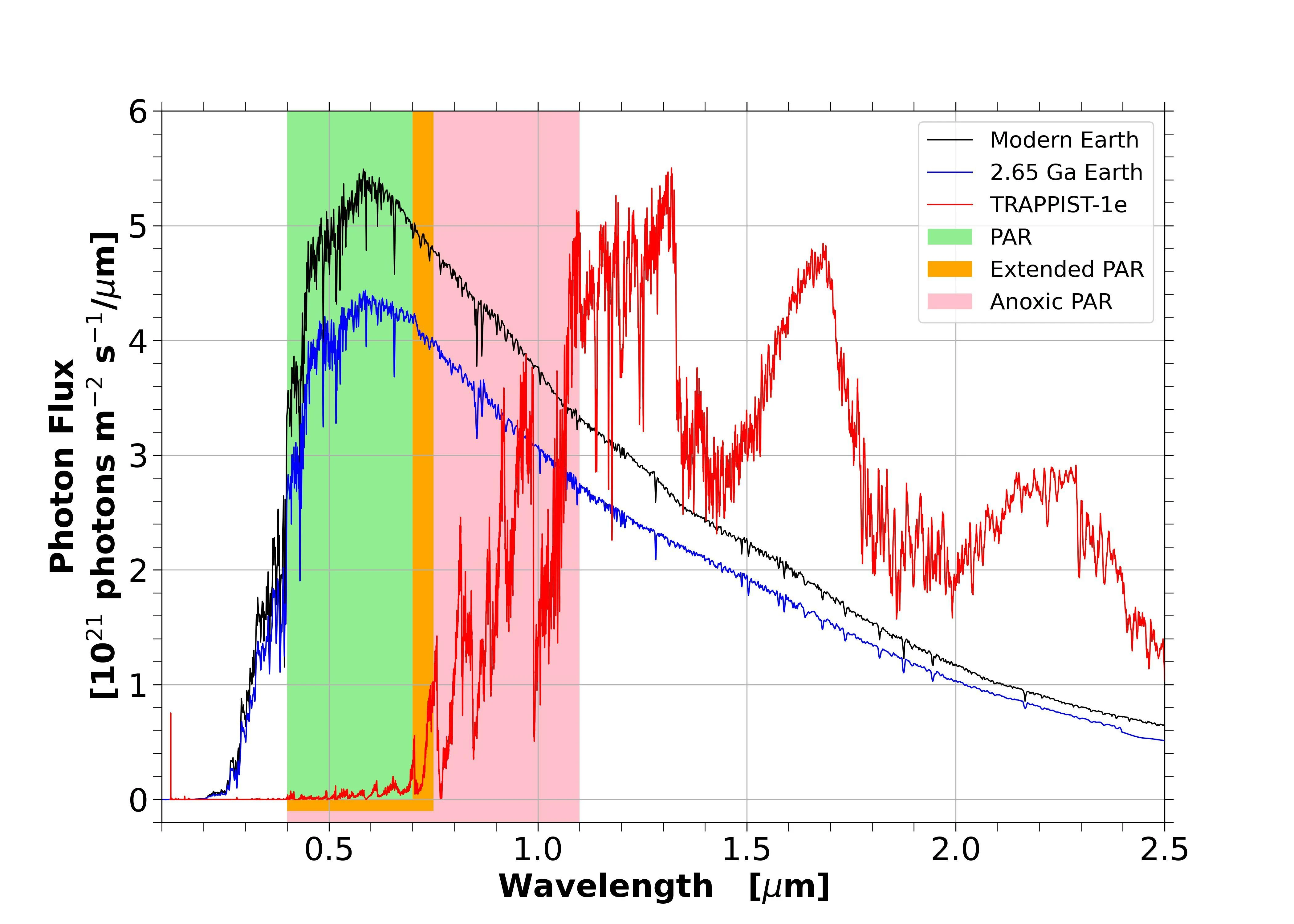
عند TRAPPIST-1، يخسر البناء الضوئي الأكسجيني السباق. هذا النجم القزم يشع بشكل رئيسي بالأشعة تحت الحمراء، لا بالضوء المرئي، على عكس الشمس. النباتات الأرضية، بأسرها الضوء بألوان محددة، راكمت الأكسجين، لكن هنا هذه الأشعة شحيحة جدًا. لوحده، لاستغرق الأمر 63 مليار سنة — أكثر من عمر الكون. مع الأخذ بالاعتبار أن فائض الضوء يضر الخلايا والنطاق المسموح به أوسع، يتقلص الزمن إلى 1–5 مليارات سنة. لكن تدخل السباق بكتيريا لا تنتج الأكسجين، لكنها ترى الأشعة تحت الحمراء بوضوح حتى 1100 نانومتر. عند TRAPPIST-1، تزيد كميته 22 ضعفًا عن الضوء المرئي. ستسيطر على المحيطات، وتمنع الموارد عن المنافسين. وبدلًا من الخضرة، بحار أرجوانية. بدون الأكسجين، لن يحدث الانفجار الكامبري — طوفان الكائنات المعقدة. لذلك، معظم الكواكب الشبيهة بالأرض حول الأقزام الحمراء، المكتشفة بفضل ويليام بوروكي وديفيد شاربونو، ستبقى عالَمًا من الميكروبات إلى الأبد. مصير المحيط الحيوي لا تقرره فقط المسافة إلى النجم، بل أيضًا لون ضوئه.
الملخص الأصلي
كما كتبه المؤلفون، بالإنجليزية arXiv:2601.02548v1
The rise of oxygen in the Earth's atmosphere during the Great Oxidation Event (GOE) occurred about 2.3 billion years ago. There is considerably greater uncertainty for the origin of oxygenic photosynthesis, but it likely occurred significantly earlier, perhaps by 700 million years. Assuming this time lag is proportional to the rate of oxygen generation, we can estimate how long it would take for a GOE-like event to occur on a hypothetical Earth-analog planet orbiting the star TRAPPIST-1 (a late M star with Teff 2560 K). Although in the habitable zone, an Earth-analog planet located in TRAPPIST-1e's orbit would receive only 0.9% of the Photosynthetically Active Radiation (PAR) that the Earth gets from the Sun. This is because most of the star's light is emitted at wavelengths longer than the 400-700 nm PAR range. Thus it would take 63 Gyrs for a GOE to occur. But the linear assumption is problematic; as light levels increase, photosynthesis saturates then declines, an effect known as photoinhibition. Photoinhibition varies from species to species and depends on a host of environmental factors. There is also sensitivity to the upper wavelength limit of the PAR: extending just 50 nm increases the number of photons by a factor of 2.5. Including these and other factors greatly reduces the timescale to roughly 1-5 Gyrs for a GOE. However, non-oxygenic photosynthetic bacteria can thrive in low-light environments and can use near-IR light out to 1100 nm, providing 22 times as many photons. With this huge light advantage, and because they evolved earlier, anoxygenic photosynthesizers would likely dominate the ecosystem. On a late M-star Earth-analog planet, oxygen may never reach significant levels in the atmosphere and a GOE may never occur, let alone a Cambrian Explosion. Thus complex animal life is unlikely.
على الأرض، لا تزال البكتيريا الكبريتية الأرجوانية التي تستخدم الضوء تحت الأحمر تعيش في الينابيع الحارة — ربما هكذا بدت الحياة في المحيطات القديمة قبل ثورة الأكسجين.