نافورة أحادية الجانب من نجم فتي سريع
النجم الفتي، الذي لم يُشعل بعد فرنه النووي الحراري، محاط بقرص دوار من الغاز والغبار. ولكي يكتسب كتلة، عليه أن يتخلص من الدوران الزائد – وإلا فلن يسقط الغاز على النجم، بل سيستمر في الدوران في مداره. عادةً، يحمل هذا الفائض نفاثتان ضيقتان من الغاز تنطلقان من قطبي النجم في اتجاهين متعاكسين، مثل نافورتين.
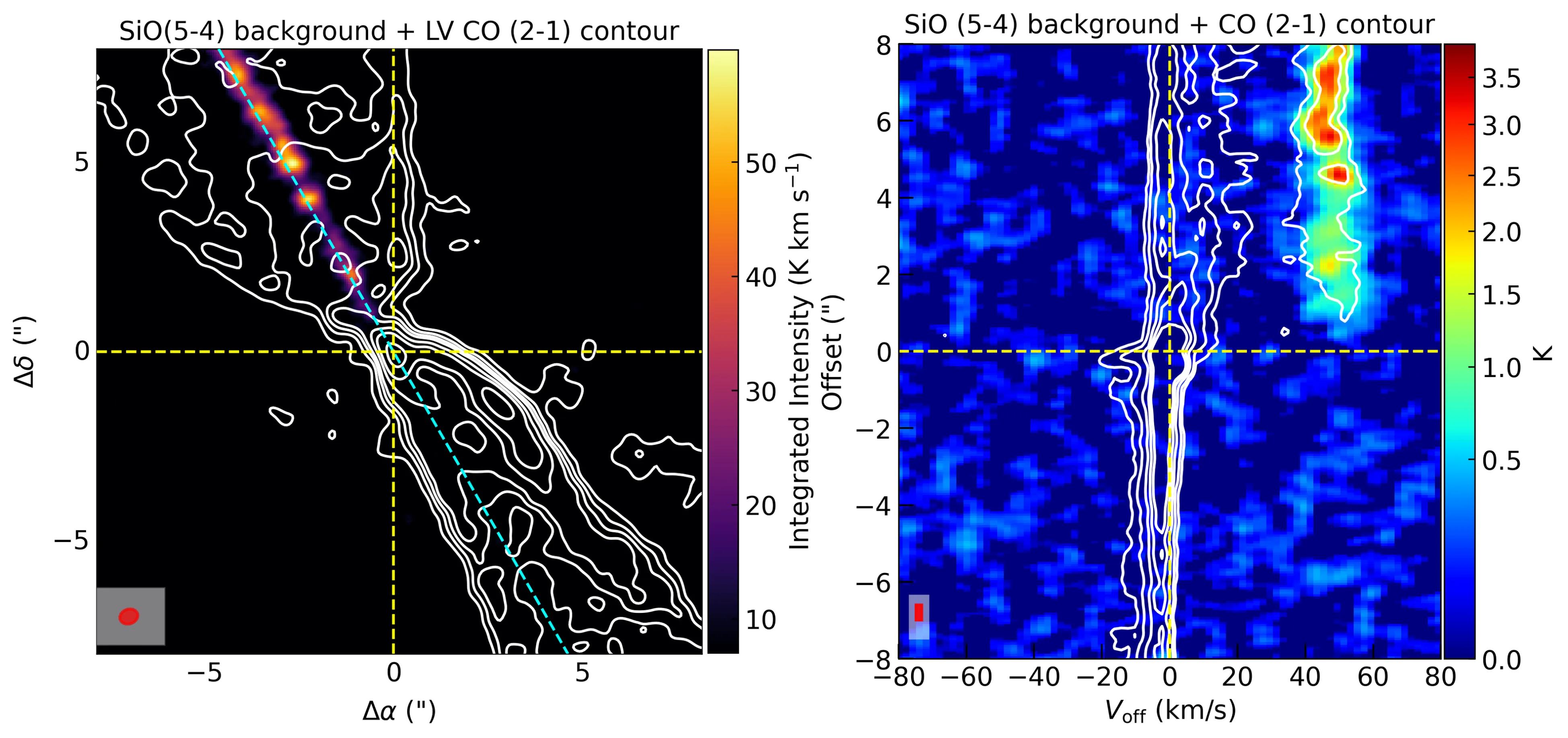
لكن بالنسبة للنجم الأولي HOPS 10 في كوكبة الجبار، رأى تلسكوب ALMA نافورة واحدة فقط. النفاثة عالية السرعة، التي تتراوح سرعتها بين +44 و+66 كم/ث، موجهة في اتجاه واحد فقط، بينما النصف الثاني غائب. وفي الوقت نفسه، يُلاحظ التدفق البطيء للغاز (من -20 إلى +30 كم/ث) في كلا الاتجاهين، كما هو متوقع. القرص موجه بحافته نحونا تقريبًا، والغبار في الطريق قليل، لذا لا يمكن أن تكون النفاثة الثانية مختبئة خلف سحابة. آثار موجة الصدمة في جزيئات SiO تؤكد أن النفاثة حقيقية وليست سحابة غاز عشوائية.
يقترح علماء الفلك أن خطوط المجال المغناطيسي للقرص محملة بالمادة بشكل غير متساوٍ: على أحد الجانبين يقع عليها غاز أكثر، وهذا الغاز هو الذي يُقذف على شكل نفاثة. الأمر يشبه بندقية مزدوجة الماسورة تطلق طلقة واحدة فقط – لأن الشحنة كانت في ماسورة واحدة فقط. هذا التباين يمكن أن يخبرنا الكثير عن كيفية جمع النجوم الفتية للكتلة وفقدانها للدوران.
الملخص الأصلي
كما كتبه المؤلفون، بالإنجليزية arXiv:2602.09404
A fundamental challenge in star formation is understanding how a protostar accretes mass from its circumstellar disk while removing excess angular momentum. Protostellar jets are widely invoked as the primary channels for angular momentum removal, yet the mechanism by which they are launched and extract angular momentum remains poorly constrained. Here we report high-resolution ALMA Band 7 (345 GHz) and Band 6 (230 GHz) observations of CO (3-2), CO (2-1), and SiO (5-4) emission from the protostar HOPS 10 (G209.55-19.68S2). The combined data trace both the entrained outflow and the collimated jet with excellent spatial and velocity resolution, revealing a uniquely monopolar protostellar jet, the clearest example reported to date. The system exhibits a distinctly unipolar high-velocity jet with velocity offsets of +44 to +66 km s-1, unlike the predominantly bipolar morphology characteristic of most protostellar jets. While the low-velocity outflow, with velocity offsets of -20 to +30 km s-1, is detected in both directions, the high-velocity jet appears only on one side, and this monopolarity is consistent across all tracers. Given the nearly edge-on geometry and low submillimeter extinction, comparable emission would normally be expected from both lobes. The shock tracer SiO emission confirms a genuine, highly collimated jet rather than cloud contamination, and no ambient structure is capable of obscuring a counterjet. We argue that intrinsically asymmetric mass loading along the disk magnetic field lines provides the most plausible explanation for the observed monopolarity.
تصل سرعة نفاثة HOPS 10 إلى 66 كم/ث – وهي أسرع من رصاصة بندقية، لكنها أبطأ بمئات المرات من سرعة الضوء.