كيف يولد السياناميد على الجليد سريع
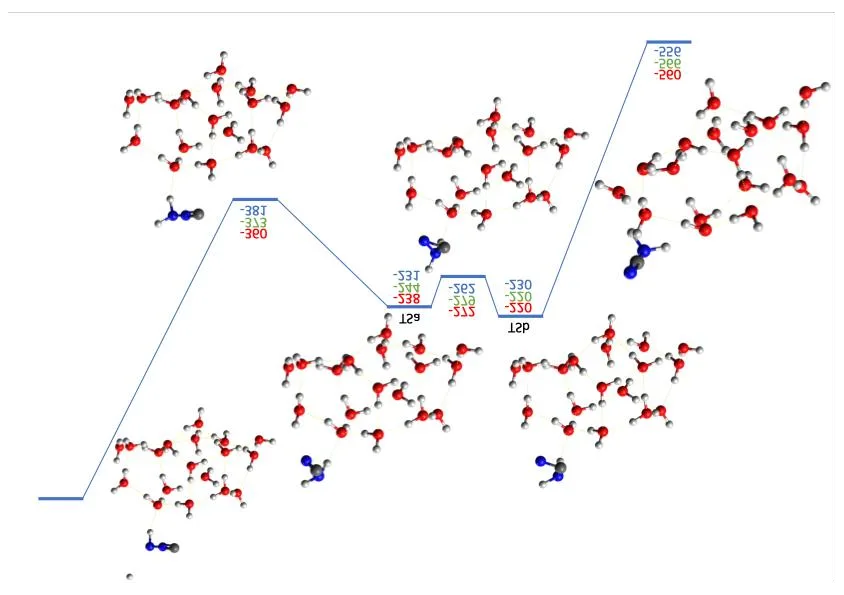
في السحب الباردة بين النجوم، تُغطى الحبيبات بالجليد كما تُغطى النوافذ بالصقيع في الشتاء. وعلى هذه القشرة الجليدية تجري تفاعلات كيميائية لا تحدث في الغاز. أحدها هو لقاء ذرة الكربون مع جزيء النيتروجين. في الغاز لا يتفاعلان تقريبًا، أما على الجليد فيتحدان فورًا دون حاجز طاقي.
الجزيء الناتج CNN يلتقط بعد ذلك ذرات الهيدروجين. الأمر يشبه تركيب مكعبات البناء: أولًا نثبت كتلتين، ثم نضيف المزيد. في النهاية تنكسر الرابطة بين ذرتي النيتروجين، وتُعاد هيكلة السلسلة إلى هيكل N-C-N — الأساس للسياناميد (NH2CN) ومتصاوغه الكاربودييميد (HNCNH). أظهرت الحسابات أن جميع الخطوات تتم بسهولة وبحواجز منخفضة.
عندما أُضيفت هذه التفاعلات إلى نموذج تطور النجوم الأولية، اتضح أن الطريق الجليدي هو المورد الرئيسي لهذه الجزيئات. الكربون والهيدروجين على الغبار الكوني يفعلان ما لم يكن ممكنًا تفسيره لسنوات.
الملخص الأصلي
كما كتبه المؤلفون، بالإنجليزية arXiv:2604.15930
Reactions occurring on the ice-covered surfaces of interstellar dust grains are considered to be among the most important sources of complex species in the interstellar medium. Despite this, molecules such as cyanamide, NH2CN, are largely underpredicted by current astrochemical models suggesting that the network of reactions currently used to describe this species and its tautomer carbodiimide, HNCNH, are incomplete. Here, we performed a theoretical investigation of the reaction of ground state atomic carbon C(3P) with molecular nitrogen N2 in both the gas-phase and on the surface of amorphous solid water (ASW) clusters to examine its potential importance in the formation of NH2CN and HNCNH. We show that the reaction of gas-phase C-atoms with N2 molecules already present on the ASW surface results in the barrierless formation of CNN. Following exothermic hydrogenation reactions, the N-N bond of the C-N-N bearing intermediates is broken allowing the formation of molecules with N-C-N backbones through cyclic intermediates over low barriers. To test the importance of these processes to NH2CN and HNCNH formation, these reactions were included in a three-phase astrochemical model of low-mass protostellar evolution employing a reaction network that was updated to better describe the formation and destruction pathways of related small nitrogen bearing molecules. These simulations demonstrate that the ice surface reaction between C and N2 represents by far the dominant source of NH2CN and HNCNH in protostellar environments and in dense clouds.
السياناميد مركب بسيط، لكنه على الأرض يُستخدم كسماد ومادة خام للأدوية، وفي الفضاء ربما كان أحد اللبنات للكيمياء ما قبل الحيوية.
في رواية كارل ساغان «الاتصال»، تحتوي الإشارة الفضائية على جزيئات معقدة — ربما بما فيها السياناميد المولود على الجليد.