لماذا «ترفض» الثقوب السوداء أن تزن 45 شمسًا سريع
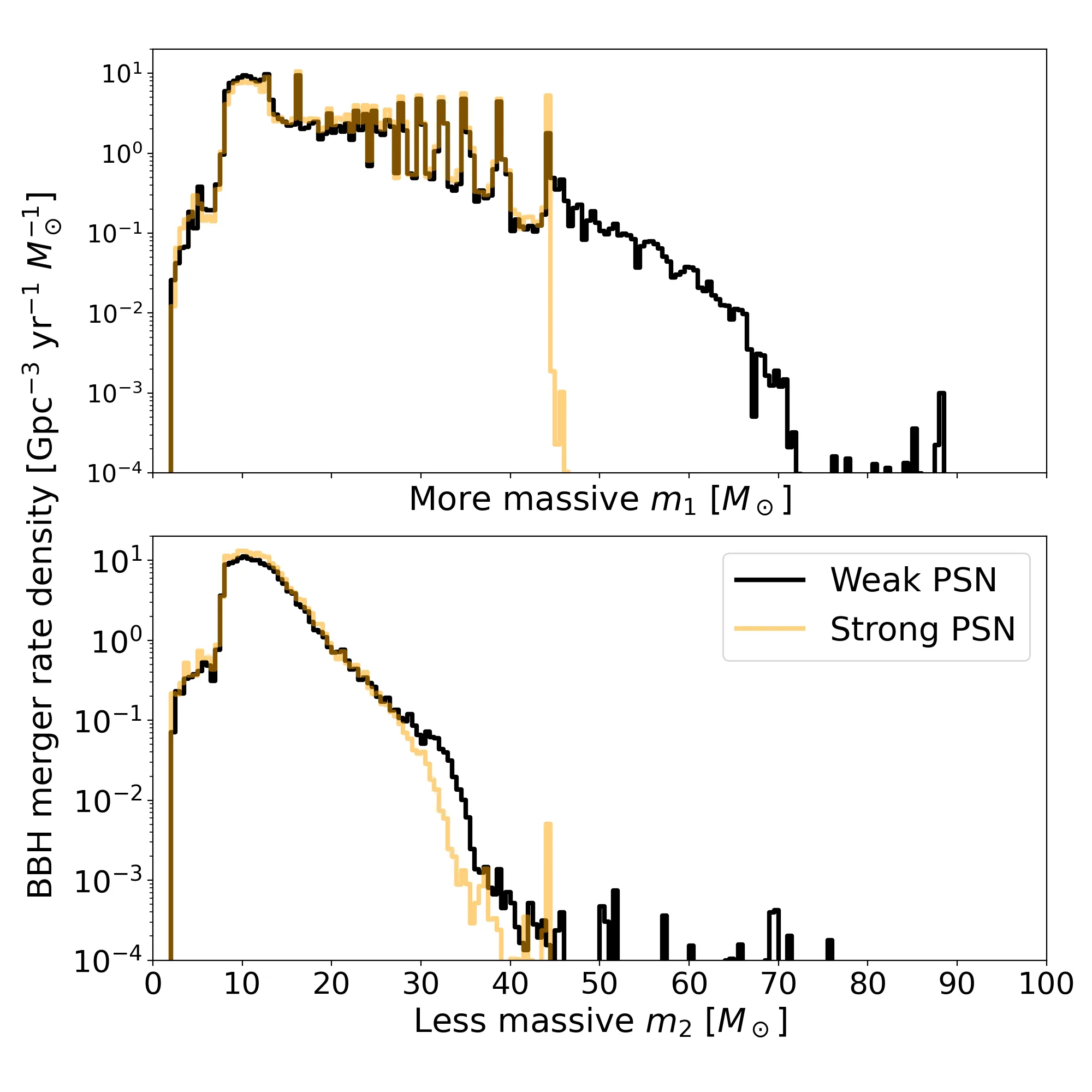
جلب الحصاد الجديد لموجات الجاذبية لغزًا. رصدت كاشفات LIGO وVirgo وKAGRA عشرات الإشارات من اندماج ثقوب سوداء، وعلى الرسم البياني لكتلها تظهر فجوة واضحة: لا توجد تقريبًا أجسام أثقل من 45 كتلة شمسية، وما يوجد منها يدور بسرعة مريبة. يقول البعض إن النجوم العملاقة تنفجر بشكل «نظيف» للغاية، فلا تترك خلفها شيئًا. لكن هناك فكرة أخرى: الثقوب السوداء تفقد وزنها قبل ولادتها، في رقصة حميمة مع جارتها.
يدور نجمان قريبان من بعضهما مثل متزلجين يتكاتفان. يتمدد أحدهما، وتنتقل طبقاته الخارجية إلى جاره. إذا كان النقل سخيًا — أي أكثر من نصف المادة يذهب — يبقى النجم الأول نواة عارية. ثم ينكمش ليصبح ثقبًا أسود، لكنه خفيف بالفعل: ليس 50 كتلة شمسية، بل 30 كتلة شمسية إن حظي بذلك. الفصل الثاني هو نقل عكسي، لكنه بخيل، بلا خسائر تقريبًا. يكتسب النجم الثاني كتلة، لكن سقفه تحدده قاعدة أخرى — تلك «الانفجار الانتحاري» الذي لا يترك خلفه شيئًا أثقل من 45 كتلة شمسية.
في النهاية، نادرًا ما يوجد في الثنائي ثقبان أسودان ثقيلان. فالأصغر نادرًا ما يتجاوز 45 كتلة شمسية — فقد «أُكل» في طفولته. أما الأكبر فيمكن أن يصل إلى الحد الأقصى، لكن ليس أكثر. هكذا تولد «فجوة كتل» زائفة تشبه إلى حد كبير أثر الانفجارات الخاصة. ستساعد الإشارات المستقبلية في التمييز بين السيناريوهين: إذا وُجدت في الفجوة ثقوب سوداء تدور بسرعة في اتجاه واحد، أو على العكس، تدور ببطء — فالأمر لا يتعلق بالانفجارات، بل بكيفية اقتسام النجوم للمادة.
الملخص الأصلي
كما كتبه المؤلفون، بالإنجليزية arXiv:2604.18676
The recent O4a release from the LIGO-Virgo-KAGRA collaboration, which significantly increased the number of gravitational-wave (GW) detections, reveals features with potentially important astrophysical implications. One notable example is a hint of the so-called pair-instability mass gap. In particular, the observed decline in the number of black holes (BHs) with mass above 45 Msun, together with indications of possibly higher spins for BHs above this threshold, has been interpreted by Antonini et al. and Tong et al. as evidence for pair-instability supernovae. In this work, we investigate whether mass transfer in binary systems can produce BH components' mass distribution that mimics the pair-instability limit. We use both the population synthesis code StarTrack and a simple semi-analytical framework to highlight the impact of mass transfer efficiency on the BH masses. We find that efficient mass transfer (over 50%) during the first Roche-lobe overflow, followed by a highly non-conservative second mass transfer phase, naturally limits the mass of the first-born BH and produces a cutoff that mimics a mass gap. While the upper mass limit for the more massive BH is increased through accretion during the first mass-transfer phase and is ultimately set by the pair-instability limit, the less massive BH is limited to the stripped primary mass. As a result, the fraction of systems in which the less massive BH exceeds 45 Msun is negligible. While the pair-instability mass gap is a plausible interpretation of current GW data, similar features can naturally arise from binary evolution. Future detections will help distinguish between these scenarios. In particular, a predominance of positive effective spins or low-spin events within the gap would challenge the pair-instability interpretation and instead support a binary-interaction origin for high-mass BHs.
تُسمى فجوة الكتل بين 45 و60 كتلة شمسية «فجوة عدم الاستقرار الزوجي»: في هذا النطاق، يسخن النجم قبل موته لدرجة أن نواته لا تنكمش فحسب، بل تمزق نفسها دون بقايا.