مصيدة لجسيمات المادة المظلمة سريع
لا تزال المادة المظلمة تفلت من المراقبة المباشرة، رغم أن جاذبيتها تمسك المجرات معًا. إحدى الفرضيات: أنها تتكون من أكسيونات — جسيمات خفيفة جدًا تنبأت بها النظرية.
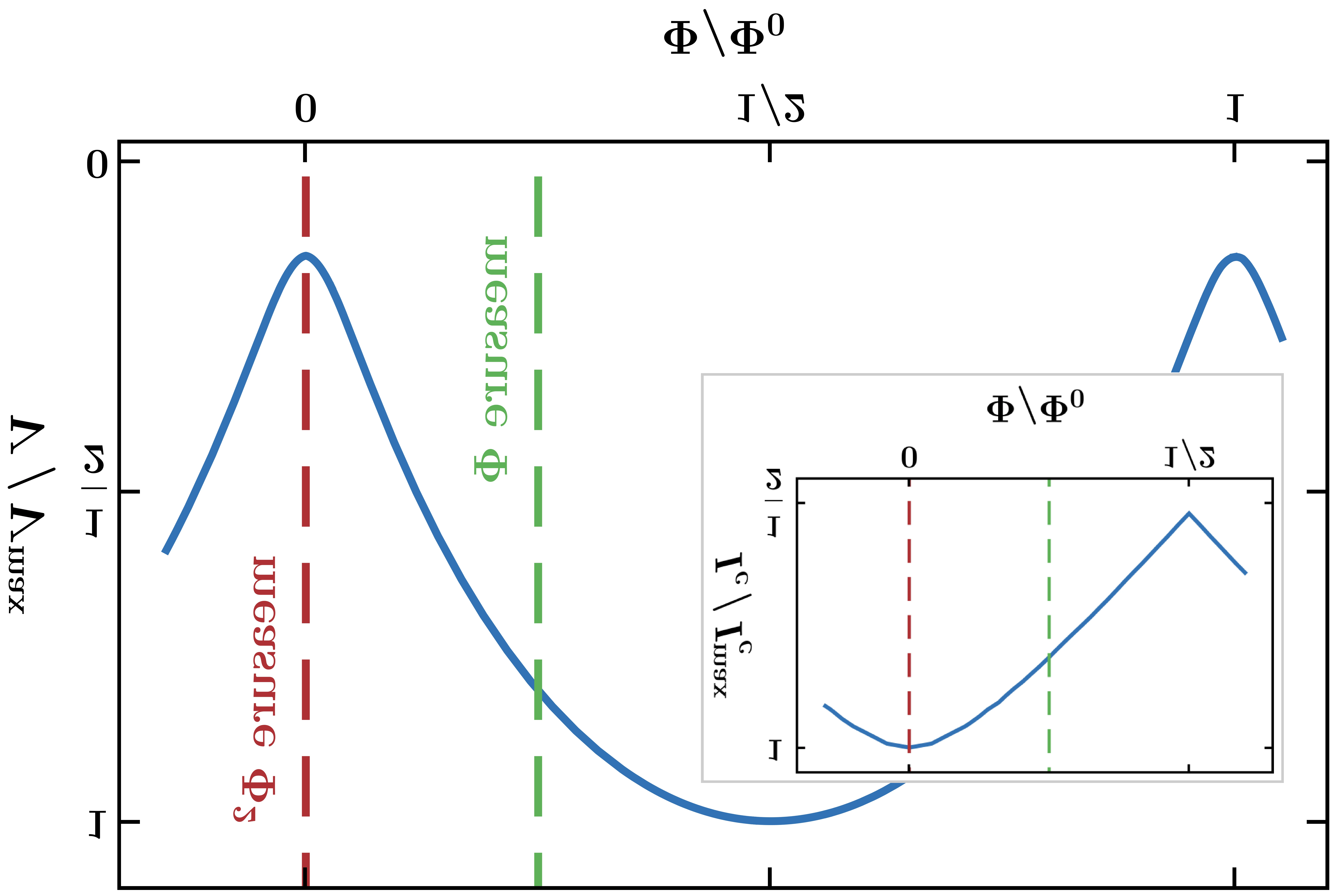
تستخدم الطريقة الجديدة مستشعرًا مغناطيسيًا كموميًا (SQUID) يشعر بأدق تغيرات الحقل — كهوائي يستمع إلى همس كوني. ولتصفية التشويش، يُعدَّل الحقل بطريقة خاصة: عندها تظهر إشارة الأكسيون كتموج خافت على خلفية الضوضاء. لكن الحيلة الأساسية هي نطاق المسح الهائل. يمسح الجهاز فورًا فاصلًا ضخمًا من 'الترددات'، يغطي كتل الأكسيونات الممكنة بعامل 10¹⁵ — وهذا يشبه البحث عن إبرة ليس في كومة قش، بل في كامل النظام الشمسي. للمقارنة: يغطي مستقبل الراديو العادي نطاقًا بعامل مليون فقط. هذا النهج يحول الكاشف إلى نوع من مطياف المادة المظلمة، يحلل ليس الضوء، بل الاهتزازات المغناطيسية. الحساسية المتوقعة تفوق التجارب الحالية بمراتب، ولا تعتمد تقريبًا على كتلة الأكسيون. الجهاز قادر أيضًا على البحث عن مرشحين آخرين، مثل الفوتونات المظلمة.
الملخص الأصلي
كما كتبه المؤلفون، بالإنجليزية arXiv:2605.11078
We propose a novel broadband strategy to search for axions by leveraging observables controlled by the axion field squared. We present a practical implementation of this concept for probing the axion--photon coupling. This is done by operating a dc SQUID at the flux sweet spot, where the voltage depends quadratically on the magnetic flux, and using lock-in modulation to evade low-frequency noise. The proposed setup is ultra-broadband, spanning over 15 orders of magnitude in axion mass, with further expansion of the mass range possible. The projected sensitivity is $$|g_{a\gamma\gamma}| \gtrsim 10^{-16} \text{ GeV}^{-1}$$, orders of magnitude better than current bounds, and largely independent of axion mass. We discuss the sources of systematic background and a nulling technique to reduce them to an acceptable level. We also discuss how our strategy could be adapted to probe the axion-fermion coupling, as well as to detect other dark matter candidates such as dark photons.
الأكسيونات خفيفة لدرجة أن كتلتها أقل من كتلة الإلكترون بتريليونات المرات. لكن إذا كانت تملأ الكون، فإن وزنها الكلي يفسر بالضبط لماذا تدور المجرات أسرع مما ينبغي.