دوران الكوكب يكشف أسراره النارية سريع
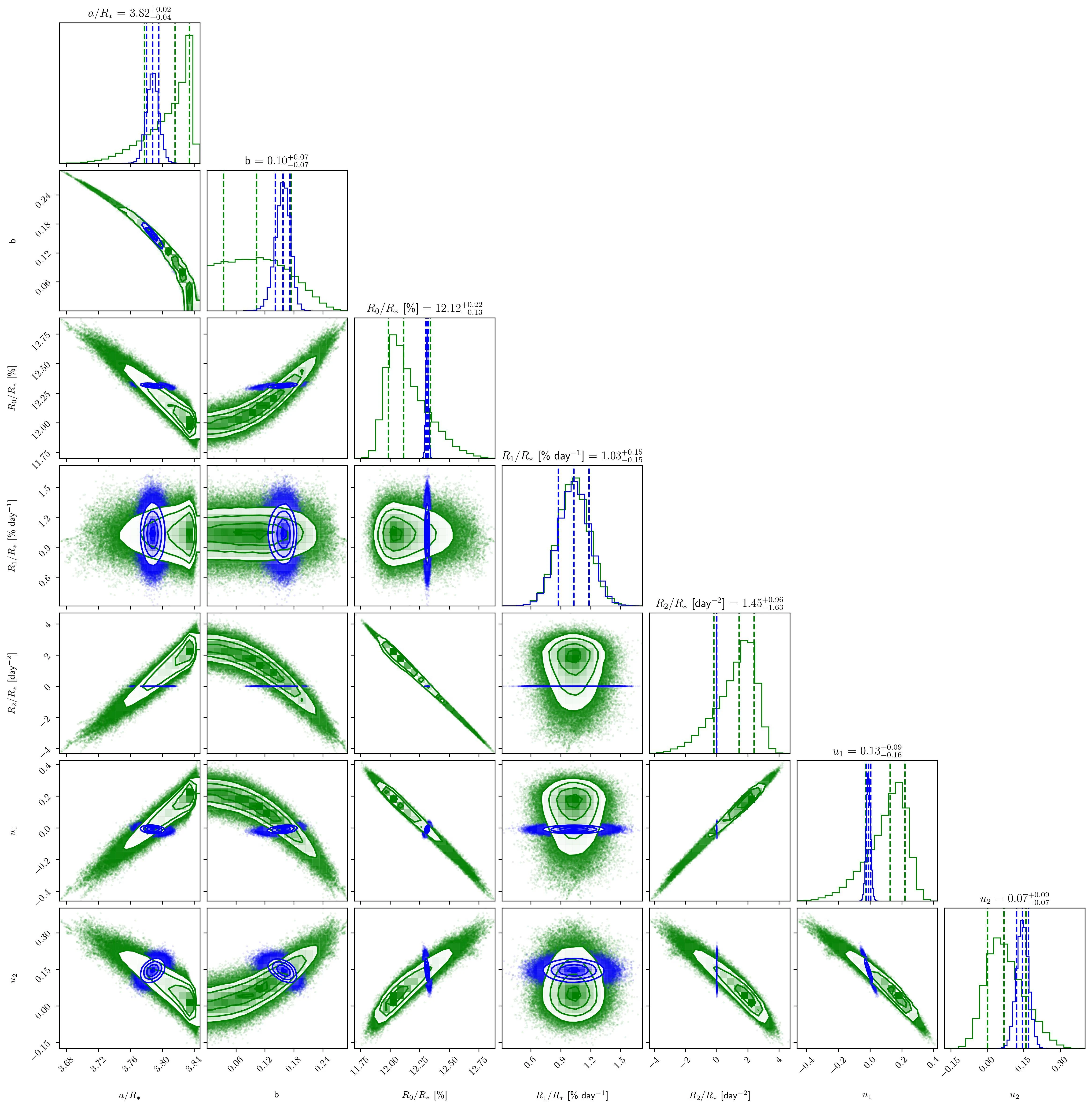
كوكب WASP-121 b هو عملاق غازي تصل حرارته إلى 2500 درجة مئوية. إنه يواجه النجم بوجه واحد على الدوام، مثل كرة أرضية ثابتة تحت مصباح. ولكن عندما يعبر أمام قرص النجم، يكشف دورانه لنا جوانب مختلفة — كما لو أن هذه الكرة الأرضية تدور ببطء لتسمح لنا بإلقاء نظرة على كل زواياها.
باستخدام تلسكوب جيمس ويب، طبق العلماء تقنية تحليل الضوء إلى ألوانه ولاحظوا أمراً غريباً: خلال العبور، يضعف الضوء الممتص بواسطة بخار الماء، بينما يقوى الضوء الممتص بواسطة أول أكسيد الكربون. السر هو أن الجانب الشرقي من الكوكب أكثر سخونة، مما يؤدي حرفياً إلى تمزيق جزيئات الماء. بينما يتحمل أول أكسيد الكربون هذه الحرارة الشديدة.
يحوّل هذا الأسلوب ظاهرة العبور إلى ماسح حراري: في السابق كنا نرى حدود النهار والليل فقط، أما الآن فنرى تغيرات درجات الحرارة عبر كامل السطح. هذه طريقة جديدة لقراءة الطقس على عوالم بعيدة.
الملخص الأصلي
كما كتبه المؤلفون، بالإنجليزية arXiv:2606.19487
Close-in exoplanets are tidally locked to their host star and thus exhibit extreme atmospheric temperature gradients. It has been theorized that the fraction of star light absorbed by such planets during transit changes as a function of orbital phase as progressively hotter or colder atmospheric gas rotates into view, but this effect has not been observed so far. Here, we show that two transits of the ultra-hot Jupiter WASP-121 b, acquired with JWST/NIRSpec and NIRISS, exhibit asymmetric transit light curves caused by the planet's rotation during transit. We observe increasing CO absorption and slightly decreasing H$$_2$$O absorption in the transmission spectrum, as the planet rotates. These results are indicative of a stronger longitudinal temperature gradient across the evening than across the morning terminator, consistent with higher temperatures in the eastern half than in the western half of the dayside. The observed changes of the transmission spectrum with orbital phase are in line with the temperature increase causing thermal dissociation of H$$_2$$O, while CO remains abundant. The observation of longitudinal gradients of atmospheric temperature and chemistry from the planet's rotational transit provides a new probe for constraining atmospheric heterogeneity using JWST beyond differences between morning and evening terminators from limb asymmetries.
تنقل الرياح القوية الحرارة من أكثر النقاط سخونة نحو الشرق، لذا يكون الجانب الشرقي دائماً أشد حرارة من الجانب الغربي — كما لو أن مجففاً هوائياً عملاقاً ينفخ عليه باستمرار.