قد يكون الكون قد تجمد في بداية حارة سريع
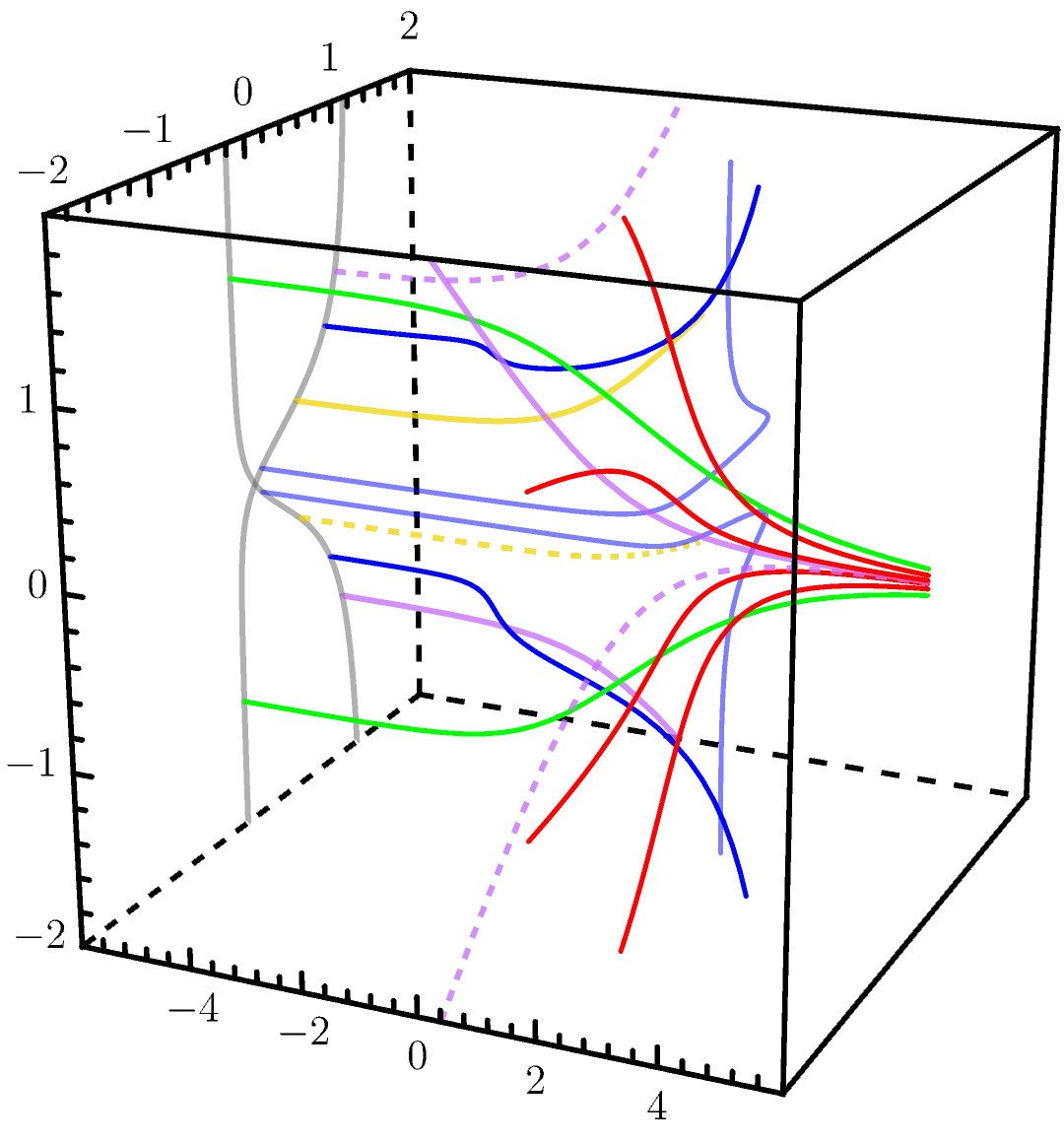
الكون يتوسع، وهذا التوسع يتسارع. ولكن ماذا لو كانت الجاذبية تعمل بشكل مختلف في اللحظات الأولى بعد الانفجار العظيم؟ أضاف مؤلفو العمل الجديد مجالًا غير مرئي إلى معادلات أينشتاين، يعترض الطاقة من المادة العادية والإشعاع. بدلًا من انحناء الزمكان، تذهب هذه الطاقة إلى المجال — كما لو كان نابضًا ينضغط دون أن يدفع الجدران.
في الكون المبكر، كان هذا المجال قادرًا على إيقاف التوسع تقريبًا. كان للضوء الوقت الكافي لعبور الحجم المتاح بأكمله عدة مرات، مما يخلط درجة الحرارة حتى تصبح متجانسة. هذا يحل لغز الأفق: المناطق المتقابلة من السماء تبدو متشابهة، على الرغم من أنها وفقًا للحسابات العادية لم تكن أبدًا على اتصال. أُطلق على السيناريو اسم «الكون الحار الساكن المبكر» — على عكس التضخم، حيث توسع الفضاء أسرع من الضوء.
كما حاولوا تطبيق المجال على مشكلة الثابت الكوني — وهي الطاقة المظلمة نفسها التي تدفع الكون الحديث إلى التباعد. نظريًا، يمكن للمجال أن يمتصها، مما يجعلها غير ملحوظة لانحناء الفضاء. لكن النموذج لا يعرف بعد كيفية الانتقال من هذه المرحلة إلى التوسع الحار المعتاد — فهو عالق في الماضي، مثل أسطوانة على مسار واحد.
الملخص الأصلي
كما كتبه المؤلفون، بالإنجليزية arXiv:2608.07318v1
Gravitational caloric theory (GCT) extends general relativity by introducing a vector field $$S_\mu$$ that is sourced by and non-minimally coupled to the fluid sector, while preserving covariant conservation of the standard fluid energy-momentum tensor. The initial motivation is to trigger early dark energy (EDE) using the total fluid equation of state that encodes the cosmic radiation-matter transition, thereby addressing the associated coincidence problem. The EDE dynamics are analyzed in detail by recasting the background evolution equations as a two-dimensional dynamical system. Poincar\'e compactification probes the global structure of this system and illustrates the role of critical points at infinity in shaping the phase portrait. There are two cosmological applications beyond EDE, both belonging to a broader family of energy-cancelling solutions in which conventional energy components (e.g., the cosmological constant $$\Lambda$$ or an ideal fluid) preferentially excite $$S_\mu$$ rather than sourcing spacetime curvature. First, the $$\Lambda$$-cancelling solution corresponds to the so-called self-tuning mechanism proposed to address the old cosmological constant problem. A major limitation is that our present realization cannot enter the standard hot Big Bang phase and therefore should not be regarded as a complete self-tuning solution. Second, inspired by a nontrivial critical point at infinity in the EDE phase portrait, we propose an \textit{Early Static Hot Universe} in which $$S_\mu$$ offsets the gravitational effect of ordinary hot gas, yielding quasi-static expansion with a decreasing comoving Hubble radius that can address the horizon problem. This scenario offers an alternative to inflation. This paper opens several avenues for further investigation of GCT, including cosmology, gravitational waves, and compact objects. (Abstract abridged to meet arXiv limits.)
الأفق في علم الكونيات ليس حافة هاوية، بل مجرد المسافة التي قطعها الضوء منذ بداية الزمن. إذا كان الكون قد توقف تقريبًا في وقت ما، فإن الأفق كان سيغطي كمية أكبر بكثير من المادة مما لو كان التوسع سريعًا.
في رواية «السؤال الأخير» لآسيموف، يبحث البشر عن طريقة لعكس الموت الحراري للكون — هنا، الكون المبكر يجد توازنًا مؤقتًا بنفسه، كما لو كان يعلق قبل الانطلاق.