Chaos Without Disorder: Why Entropy Doesn't Grow express
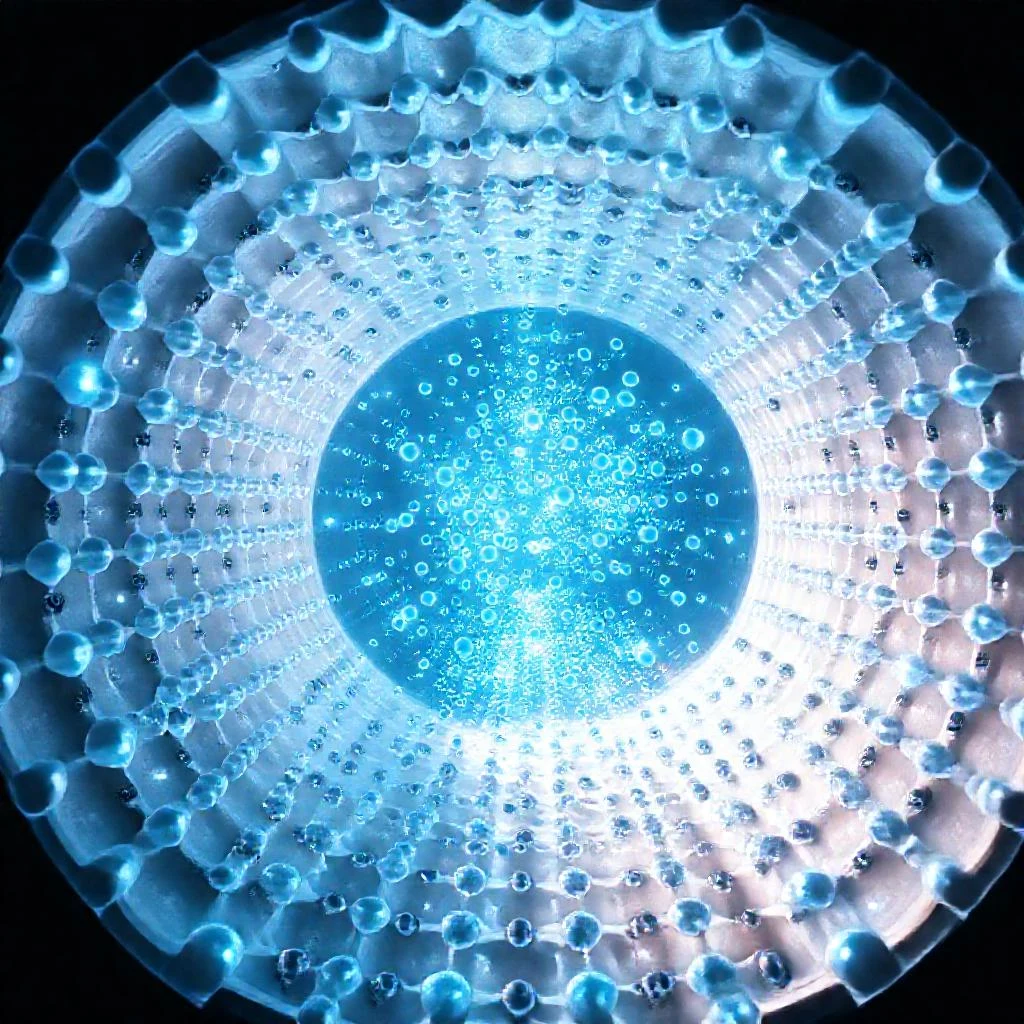
Hundreds of cooks in a kitchen — total chaos. Usually disorder grows. In quantum physics, the measure of such disorder is called entropy John von Neumann. For a many-particle system, entropy typically increases with their number. But scientists have found an exception.
The secret lies in a strict rule: two cooks cannot enter the same aisle at the same time. This blockade is familiar from Rydberg atoms: neighboring particles cannot occupy the same state. Because of this, the entropy does not exceed ln 2 (about 0.7), as if a huge kitchen behaves like a tiny nook.
The result changes the view on quantum chaos. Not only energy is important, but also the geometry of the space where particles live. The authors propose building systems with a given limit of entropy, which opens the way to new quantum devices.
Rydberg atoms, which inspired this work, are giant atoms swollen to the size of bacteria. Their electrons are so far from the nucleus that the atoms can 'feel' each other at huge distances.
The idea that complex systems can hide rigid constraints is reminiscent of Liu Cixin's novel 'The Three-Body Problem,' where outwardly unpredictable chaos obeys hidden laws.