Muonium: How Antimatter Falls in Gravity ⚡ экспресс
Original: "Synthesis of a high intensity, superthermal muonium beam for gravity and laser spectroscopy experiments"
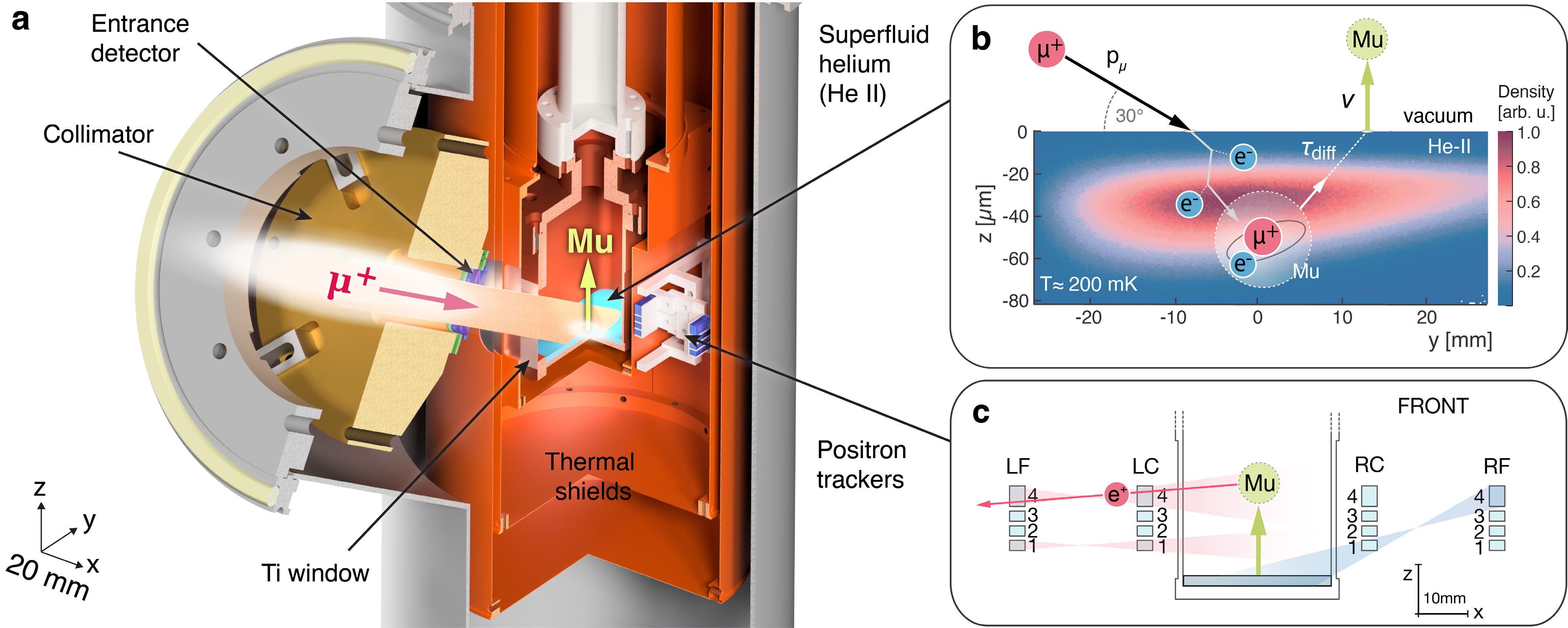
A dense, even beam of exotic atoms has been created — to test for the first time how antimatter feels gravity.
Links in the knowledge graph 1
Muonium lives for two microseconds, but physicists made it shoot out in a dense jet from superfluid helium. The particle velocities are almost equal — like bullets in a queue. Now, for the first time, we can measure the acceleration at which second-generation antimatter falls. If it behaves differently from ordinary matter, the law of universal gravitation itself would be called into question.
🎯 Superfluid helium flows through pores without friction, pulling out the short-lived muonium into a neat beam — like a quantum illusionist.