Fibers That Soak Up Blood express
A drop of blood falls onto a bandage made of ultra-thin polymer fibers. Usually, it just sits on the surface like a dewdrop on wax paper. The material repels water, so the blood doesn't soak in — meaning the bandage doesn't adhere to the wound.
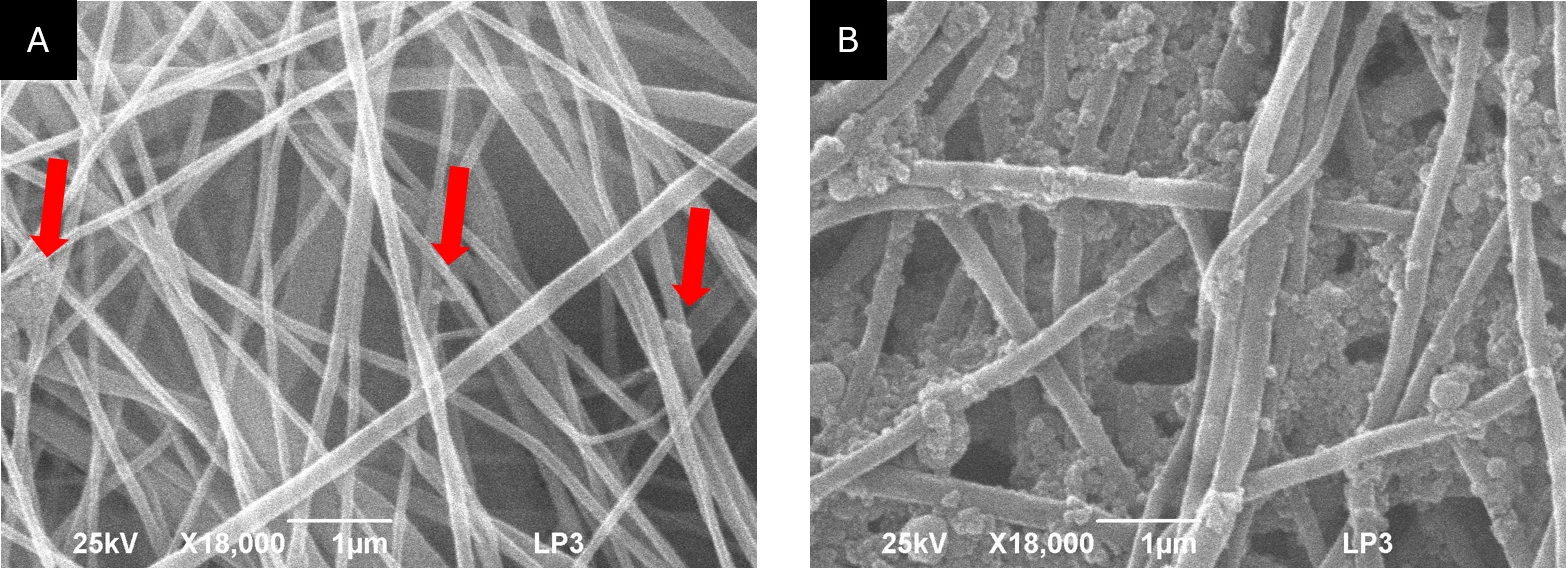
Scientists modified the fiber surface. They added tiny silicon particles to the polymer — a thousand times thinner than a human hair. The particles were made with a laser in liquid, without any adhesive additives, so they remained "bare" and active. In one version, the particles were hidden inside the fibers; in another, they were exposed on the surface, like sesame seeds on a bun.
The results were different. Fibers with particles inside only wet slightly better: the blood drop spread a bit wider but stayed compact. But when the particles stuck out, the drop flattened into a thin pancake. The contact angle dropped below 20 degrees — almost like on wet glass. Under a microscope, you could see a clear zone of plasma spreading around the red core of blood cells. The fibers, like a sponge, sucked in the liquid part of the blood, leaving the cells on top.
Such a material could become the basis for smart bandages: they quickly soak up blood, adhere tightly to the wound, and even separate blood into components. It's a step toward dressings that don't just cover a wound but actively interact with it.
A contact angle below 20 degrees means the blood drop spreads almost like water on clean glass: it becomes flat rather than dome-shaped.