A Robot That Grows Films and Watches Them Get Wet express
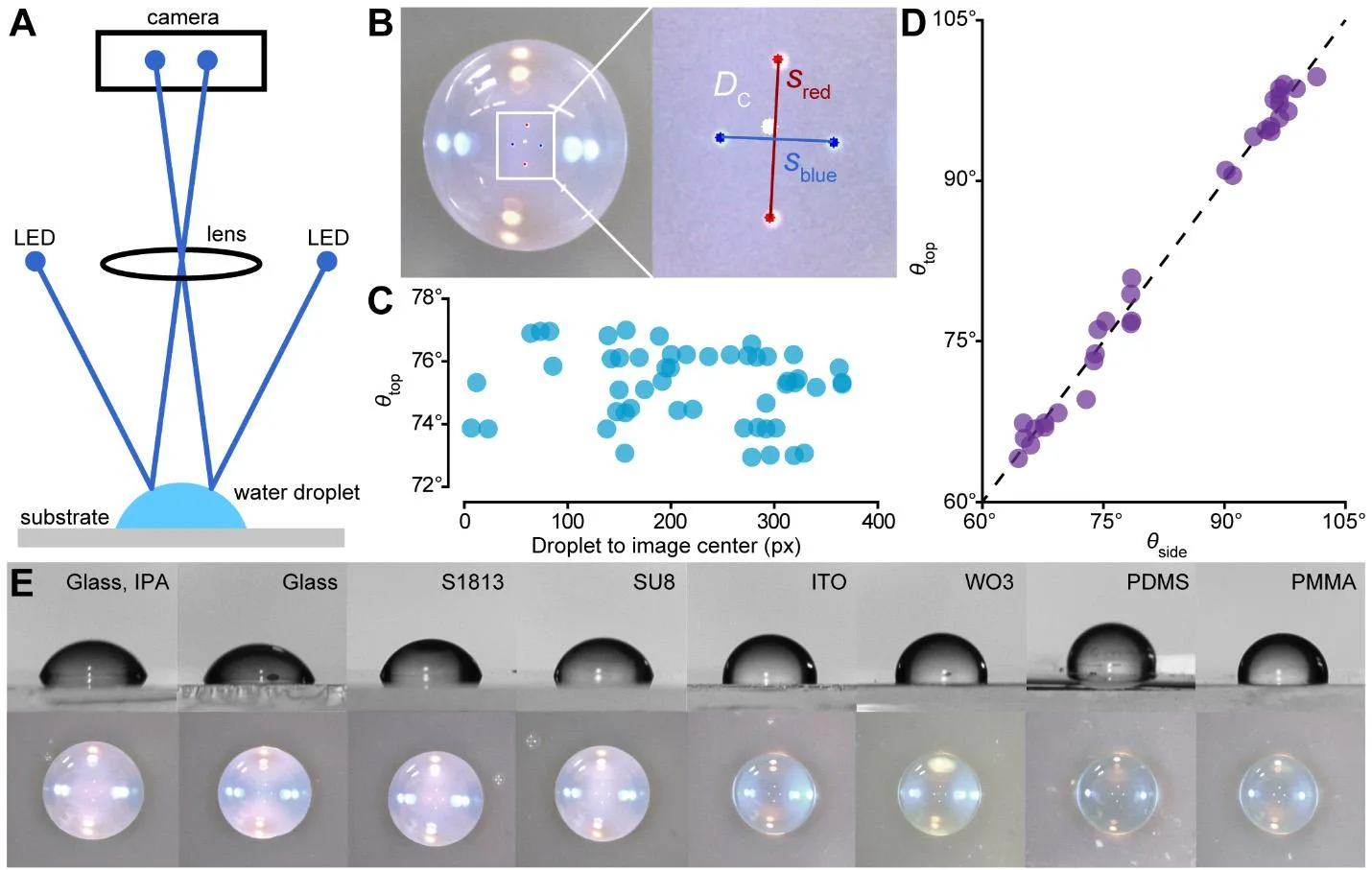
A water droplet on a fresh polymer film behaves like a guest on new furniture: sometimes it spreads out, sometimes it beads up. This behavior tells you how ready the surface is to repel dirt or, conversely, to hold paint. Previously, such tests were done by hand, one film at a time.
Now there's a robot called PANDA-film. It mixes solutions itself, passes a current to deposit a polymer network onto a plate, then drops water on top and watches how it reflects. The whole setup is built on a cheap movable frame like a 3D printer's, so almost any lab can replicate it.
The robot was tested on the polymer PAMA: it applied the film itself, measured the contact angle itself, and produced the result. Such an assistant can run through dozens of formulations overnight and find the best coating composition faster than a human could in a week.
The contact angle is the angle between a droplet and the surface. If the droplet is almost flat, the angle is less than 90 degrees — the surface likes water. If the droplet stands up like a ball, the angle is greater than 90—the surface repels water.
In the series 'Westworld', robot hosts create new materials in automated workshops — PANDA-film is taking the first steps toward such factories, but only on the scale of a lab bench for now.