A Quantum Eye Spots Impurities in a Crystal express
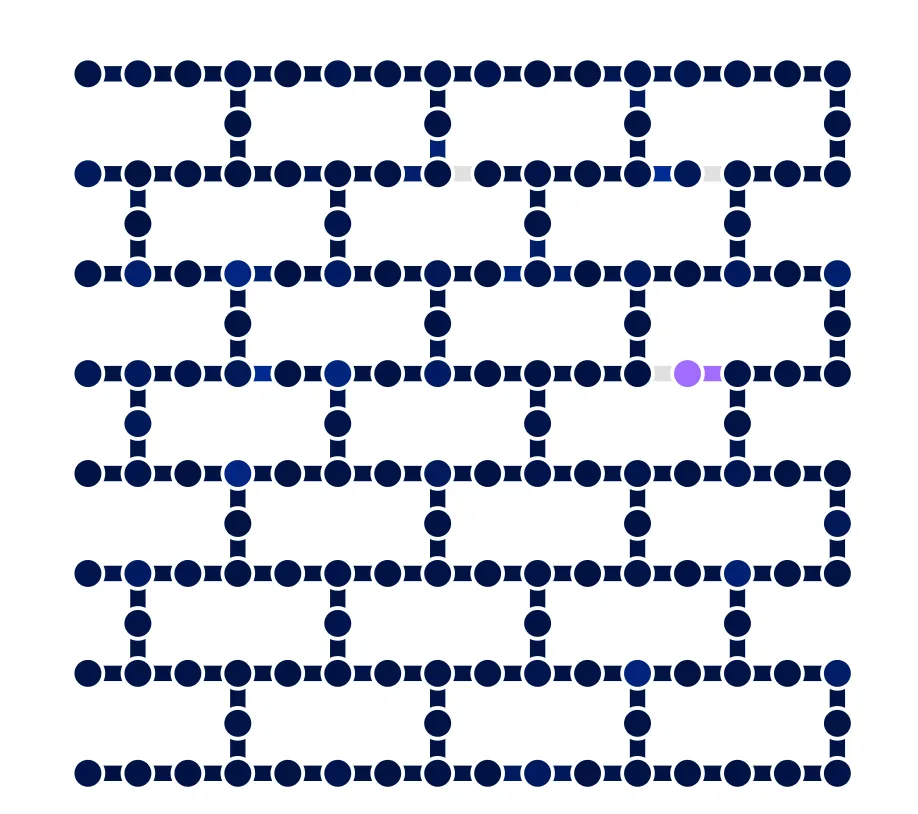
A fluorite crystal looks like clear glass, but add a few erbium atoms and it starts transmitting light differently — absorbing some colors more strongly and others more weakly. This "optical signature" reveals whether the crystal contains an impurity.
The authors calculated how light interacts with two kinds of crystals: pure and erbium-doped. They built computer models of tiny crystal fragments and computed how much light of each energy gets absorbed. That gave fifteen hundred data points for each type. These data were then used to train a computer.
Quantum computers still lag behind classical ones in accuracy, but their advantage may show up in more complex tasks. What matters here is that the quantum model could actually learn from real data and produce a meaningful result. It's like a child who has just started reading being able to recognize not just letters but whole words.
Such methods could help quickly check material purity in industry. And quantum computers might learn to spot even the subtlest differences that ordinary ones can't handle.
Erbium is added to optical fibers to boost light signals — the same atom in the crystal from this work helps the internet run faster.
In Liu Cixin's novel "The Three-Body Problem," aliens use unfolded protons to observe Earth — here, tiny quantum systems learn to distinguish atoms in a crystal.