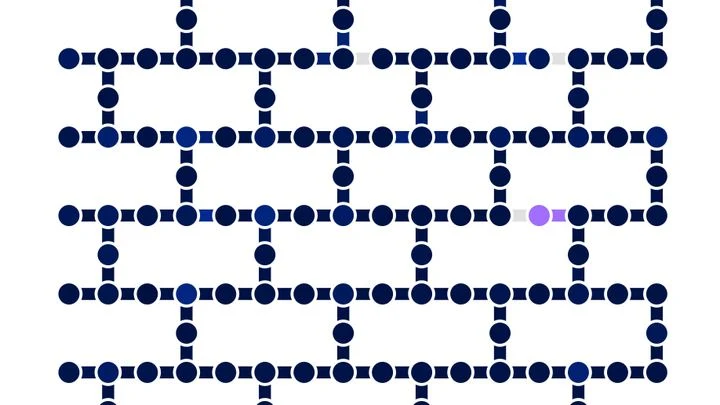
The Variational Quantum Eigensolver (VQE) is a hybrid quantum-classical algorithm designed to find the ground state energy of a quantum system—the lowest energy state, which determines many of the system's properties. It is a leading candidate for near-term quantum computing because it works with the noisy, limited-scale quantum hardware available today. VQE is particularly relevant for quantum chemistry, where it can simulate molecular structures and reactions that are intractable for classical computers, and for condensed matter physics, where it helps study strongly correlated materials.
History
The algorithm was proposed in 2014 by Alberto Peruzzo and colleagues, building on earlier ideas of quantum variational methods. It has since become a cornerstone of the Noisy Intermediate-Scale Quantum (NISQ) era.
How it works
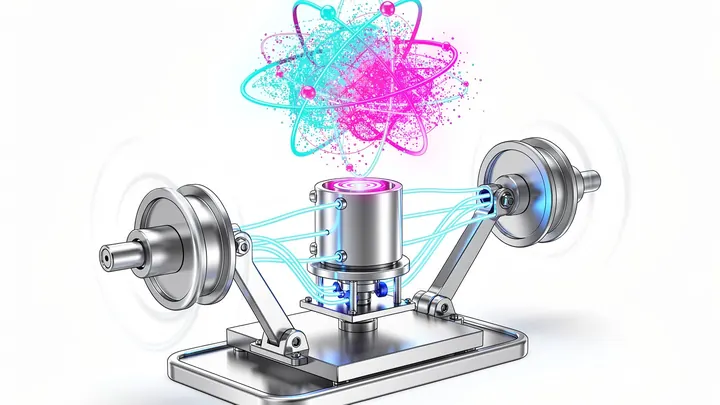
VQE uses a parameterized quantum circuit, often called an ansatz, to prepare a trial quantum state. The circuit's parameters are adjusted by a classical optimizer. For each set of parameters, the quantum computer measures the expectation value of the system's Hamiltonian—the operator representing total energy—on the prepared state. This measurement is fed back to the classical optimizer, which tweaks the parameters to minimize the energy. The process iterates until convergence, at which point the circuit prepares a state approximating the ground state, and the measured energy approximates the ground state energy.
In practice
VQE is used in quantum chemistry simulations, such as calculating molecular ground states for drug discovery and materials design, and in optimization problems that can be mapped to finding ground states of quantum Hamiltonians.
Fun fact
VQE was one of the first algorithms to demonstrate a quantum advantage for a chemistry problem when it was used in 2017 to compute the ground state of a beryllium hydride molecule on a superconducting quantum processor.
A ship in a bottle is assembled from the inside, not the outside: masts and sails are pulled through the narrow neck, and once inside the glass they settle into the right pose on their own. Chemists have done something similar with a single cobaltocene molecule, which they pulled into the gap between layers of a two-dimensional crystal.
An electrical grid stuffed with power electronics resembles a huge orchestra without a conductor. Each converter, each line adds its own note, and sometimes the instruments start playing out of tune.
A phase transition is like the moment water turns into ice. In the quantum world, such transitions occur at absolute zero, and seeing them directly is nearly impossible. Usually, this requires building extremely complex computer models that demand enormous resources.
The Delta-VQE method offers a workaround.
A quantum computer is like a finicky musical instrument: the slightest change in temperature, humidity, or string tuning, and the melody sounds different.
A complex financial contract is like a wager: the payout depends on exchange rates and accrued interest. Physicists would call this uncertainty entropy — a measure of the spread of possible outcomes. To assess the risk, you need to run through all scenarios, like finding every trap-filled dead end in a vast maze.
Deep inside the detector at the Large Hadron Collider, protons collide, and for a fleeting moment something heavy is born. It instantly shatters into two Higgs bosons — particles that, like nesting dolls, each hide two pairs of b-quarks.
A quantum computer measures a molecule's energy much like an old tape measure that only has markings every meter. If the actual length of a table is 2.37 meters, the tape shows “two and a bit,” and you can't do better. Physicists call this resolution: the step of the grid, finer than which you cannot go.
The authors of the new work turn this flaw into an advantage.
Quantum vacuum resembles a sea, constantly rippling with tiny splashes. An electron in an atom moves in this sea, and its path slightly changes due to the waves. Previously, such corrections were accurately calculated only for hydrogen-like ions with a single electron. But in highly charged ions with several electrons, the picture becomes more complex.
The lungs are not two bags but millions of tiny sacs where air enters and blood flows close by. To see how they work, doctors sometimes use MRI without contrast: the scanner picks up weak signals from the tissues themselves. But these signals are like a radio in a thunderstorm — breathing is irregular, pulse jumps, and the image falls apart.
Two tiny dust grains hover at the crossing of laser beams. Each is held by its own 'tweezer'—a focused beam that keeps the particle from falling. Inside a mirrored cavity, light bounces between the walls, and its oscillations are coupled to the trembling of the grains.
A water molecule resembles a tiny dumbbell: two hydrogen atoms attach to an oxygen atom at an angle. This dumbbell doesn't stay still: it stretches, compresses, and rotates. Each such motion has its own energy, like steps on a ladder.
IBM's Heron R3 quantum computer handled a task that made a classical method back down. The challenge was finding the ground state, the lowest energy level, of a system of 49 quantum bits.
Batteries usually have two terminals — an anode and a cathode. Engineers are trying to remove the anode from solid-state batteries (with solid electrolytes) to make them lighter and more capacious. During charging, metal should deposit itself as a layer on the contact, and then vanish completely during discharge. But after a few cycles, capacity drops.
An ordinary proton consists of three quarks, like a three-legged stool. But nature does not forbid assembling a 'chair' from four quarks, if two of them are heavy beauty quarks and two are light. Such particles are called tetraquarks, and until now they have been studied mainly at large accelerators, by colliding particles and sifting through the debris.
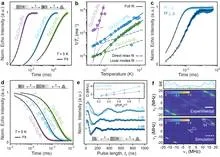
A fluorite crystal looks like clear glass, but add a few erbium atoms and it starts transmitting light differently — absorbing some colors more strongly and others more weakly. This "optical signature" reveals whether the crystal contains an impurity.
The authors calculated how light interacts with two kinds of crystals: pure and erbium-doped.
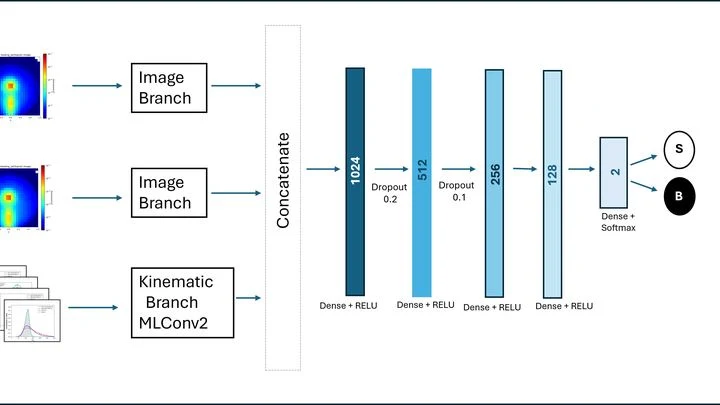
In a collider detector, each proton collision leaves a trail of dozens of particles, like the splash from a stone thrown into water. Making sense of that splash and understanding what exactly happened at the moment of impact is a task that humans can no longer handle alone.
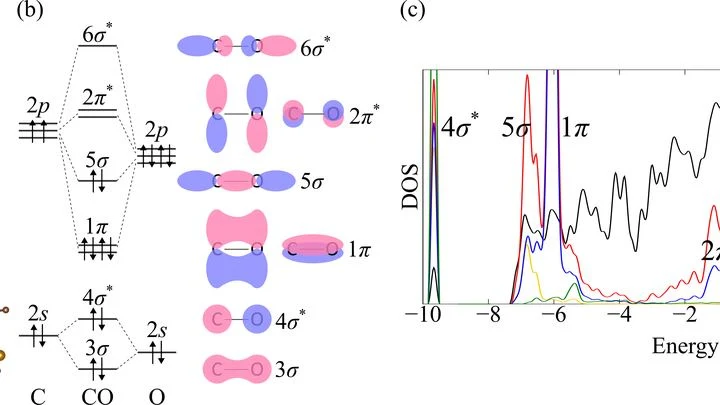
In every handful of fertile soil, there are bacteria that do something no factory can: they take nitrogen straight from the air and turn it into fertilizer. The secret lies in the enzyme nitrogenase, and its working core, a cluster of iron and molybdenum atoms, looks like a tiny factory floor.
Chemists have long tried to understand how this factory works from the inside.
All bodies fall the same: this was first observed by Galileo. Einstein elevated the observation to the equivalence principle: gravity and acceleration are indistinguishable, giving birth to curved spacetime.
Deep inside a cryostat, beneath layers of superconducting coils, lies a stack of hundreds of semiconductor layers. Each layer is just a few nanometers thick: gallium arsenide, then aluminum gallium arsenide. The electrons within these layers are confined to a plane, like ants on a sheet of paper.
At the hilltop of classical physics, a particle is frozen in unstable equilibrium. The slightest nudge — and it rolls down with increasing speed. In the quantum universe, no nudge is needed: the uncertainty principle itself acts as an all-pervading wind, blowing the particle off the peak.
Among the fundamental symmetries of nature, mirror parity holds a special place. The Standard Model already knows one violation of it, in the weak interaction, but hypothetical long-range forces that don't conserve left and right could reveal a lot about dark matter.