Quantum error detection refers to methods that identify when errors have occurred in a quantum system, without necessarily correcting them on the spot. Unlike full quantum error correction, which requires many physical qubits to encode a single logical qubit and actively fix errors, error detection is lighter: it uses parity checks or other measurements to flag that an error has happened, so that the computation can be restarted or the affected part discarded. This is especially useful in near-term quantum devices where resources are limited and full correction is not yet feasible.
History
The concept emerged alongside quantum error correction in the mid-1990s, with early work by Peter Shor and Andrew Steane. The distinction between detection and correction was formalized in the late 1990s, and recent experiments on superconducting and trapped-ion platforms have demonstrated real-time error detection.
How it works
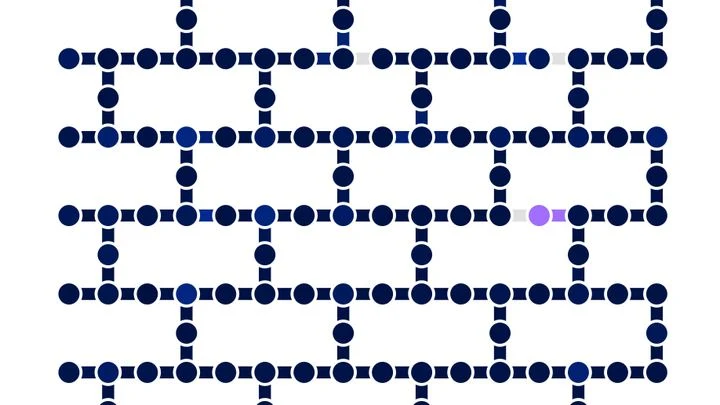
The approach typically involves entangling the data qubits with auxiliary 'ancilla' qubits. By measuring the ancillas, one can infer whether certain types of errors (like bit flips or phase flips) have occurred on the data qubits, without disturbing the quantum information itself. If an error is detected, the system can be reinitialized or the specific operation repeated. The key is that the measurement collapses only the ancilla, not the data, so the quantum state survives unless an error was actually present. This is often implemented using stabilizer codes, where the ancilla measurements correspond to checking the eigenvalues of stabilizer operators.
In practice
Error detection is used in current quantum processors to validate the output of computations, especially in algorithms like variational quantum eigensolvers, where a detected error can trigger a re-run of the circuit.
Fun fact
In 2023, a team at Google Quantum AI demonstrated a quantum error detection protocol that caught errors in just 384 nanoseconds—faster than the time it takes for a typical error to propagate, allowing them to discard faulty runs before they corrupt the result.
At night on a volcano summit, six telescopes stare at the same speck of light. Each catches its own copy of the wave, and if you combine their signals, you get an image that no single instrument could produce alone. But there's a catch: light captured by different stations cannot simply be added like photographs.
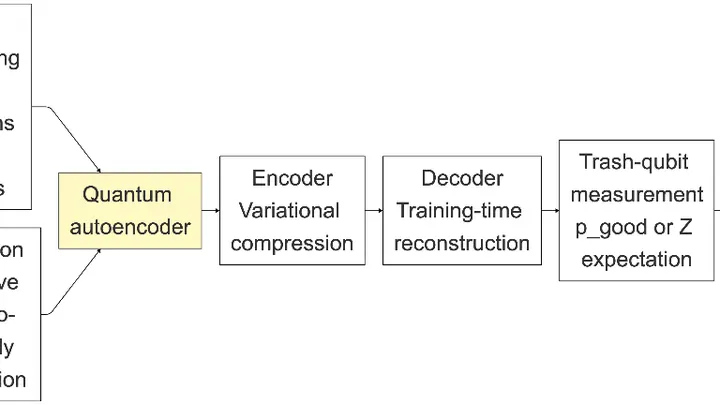
A cook spends years honing the skill of reducing a recipe to three or four essentials and recreating the dish from them. If the ingredients are familiar, the expected meal lands on the plate. A foreign ingredient disrupts compression, and you get something unrecognizable. The Quantum Compressor does the same with medical scans.
A quantum computer is like an orchestra where each musician plays their part, but one wrong note can ruin the entire symphony. To prevent this, you need a listener who instantly catches the false note without interfering with the performance.
In a quantum computer, a qubit is like a tightrope walker: any puff of wind and balance is lost. Errors accumulate, and the computation falls apart. Usually, they are corrected by comparing neighboring qubits, but that's like asking the tightrope walker to glance at his neighbors — extra movements and risk.
Imagine reality as an undeveloped photograph: until the moment of measurement, it exists only as a cloud of probabilities — a superposition of all possible states. Only the act of observation, like developing film, forces a particle to acquire definite properties.
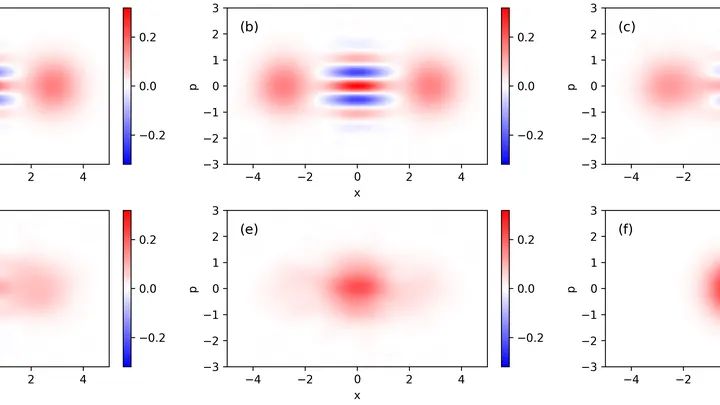
Light can be more than just a stream of particles; it can be a wave with a specific shape over time. Sometimes this shape changes so rapidly that capturing it is like photographing a bullet in flight. Scientists have devised a way to measure such fleeting quantum states of light.
For this, they use a device called a balanced homodyne detector.
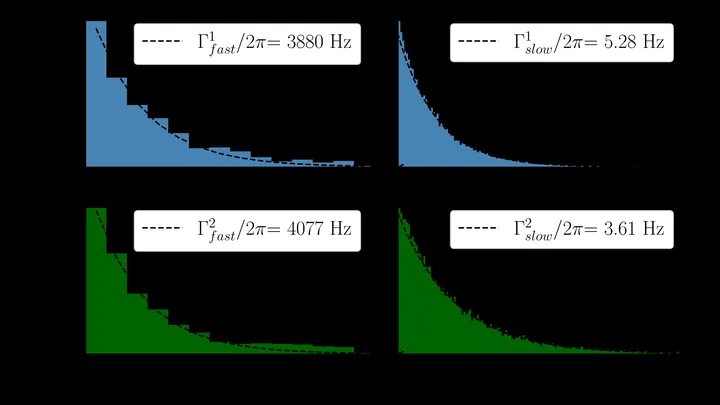
In the superconducting circuits that make up quantum computers, extra particles, quasiparticles, are born from time to time. They are like random passersby who barge into the processor's work and spoil the calculations.
A fluorite crystal looks like clear glass, but add a few erbium atoms and it starts transmitting light differently — absorbing some colors more strongly and others more weakly. This "optical signature" reveals whether the crystal contains an impurity.
The authors calculated how light interacts with two kinds of crystals: pure and erbium-doped.
A quantum computer is like an orchestra where every musician plays their part, but the slightest thing throws them off. Errors in qubits happen constantly: an instrument goes out of tune, a musician misses a note. Usually, the conductor has to guess who made the mistake, and that's really hard.
Genetic diagnostics is like comparing two photos taken with different cameras. If one camera slightly shifts the colors, the image will show "defects" that don't exist in reality.
Detecting a faint signal against a noise background is like trying to hear a distant bell in a storm. Ordinary amplification only makes the din more deafening. Quantum error correction solves the problem in an unexpected way.
Ice clouds can masquerade as water clouds. A satellite lidar sends a short laser pulse downward and catches the reflection. If flat ice plates hang horizontally in the cloud, they act like tiny mirrors: light bounces back almost without loss. To the instrument, such a flash looks just like a reflection from water droplets.