Light That Stays on Track express
A light wave is like a crowd where everyone waves a flag in their own direction. To get such a crowd through a narrow corridor without losing order, you need guides. In optical fibers, polarization, the strict direction of the light wave's oscillation, plays that role. A regular hollow fiber filled with gas lets light through but doesn't control its polarization: what comes out is a jumble.
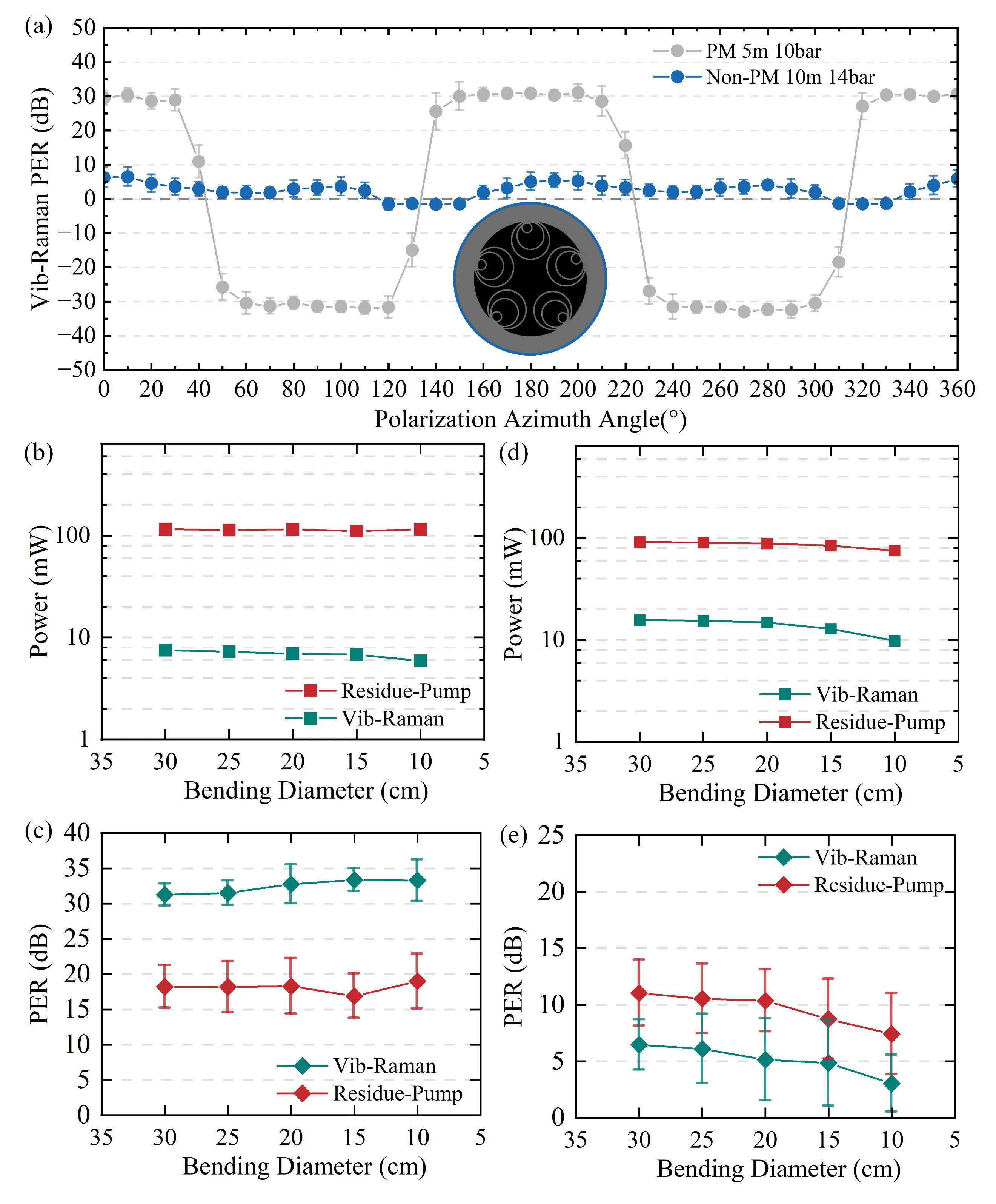
The researchers used a fiber with internal glass ridges running along the entire tube. These ridges create two distinct paths for the light, like two parallel corridors where you can only walk straight. When a laser pulse makes nitrogen molecules emit new, frequency-shifted light (a process called stimulated Raman scattering), the ridges prevent this light from mixing. As a result, even a crooked input beam with haphazard polarization emerges as an almost perfectly aligned beam. Measurements showed that polarization purity reaches 35 decibels, whereas at the input it was only 2 decibels. It's as if a chaotic crowd turned into a column marching in step.
Such stability is crucial for devices where the light beam must be perfectly predictable: precision clocks, quantum communication, sensors. Previously, this required bulky crystals and lenses; now everything can fit into a flexible fiber.
Polarization of light can be compared to the direction of teeth on a comb: if all teeth point the same way, the comb easily passes through a narrow slit, but if they point in different directions, it gets stuck.