The Crystal That Catches Light express
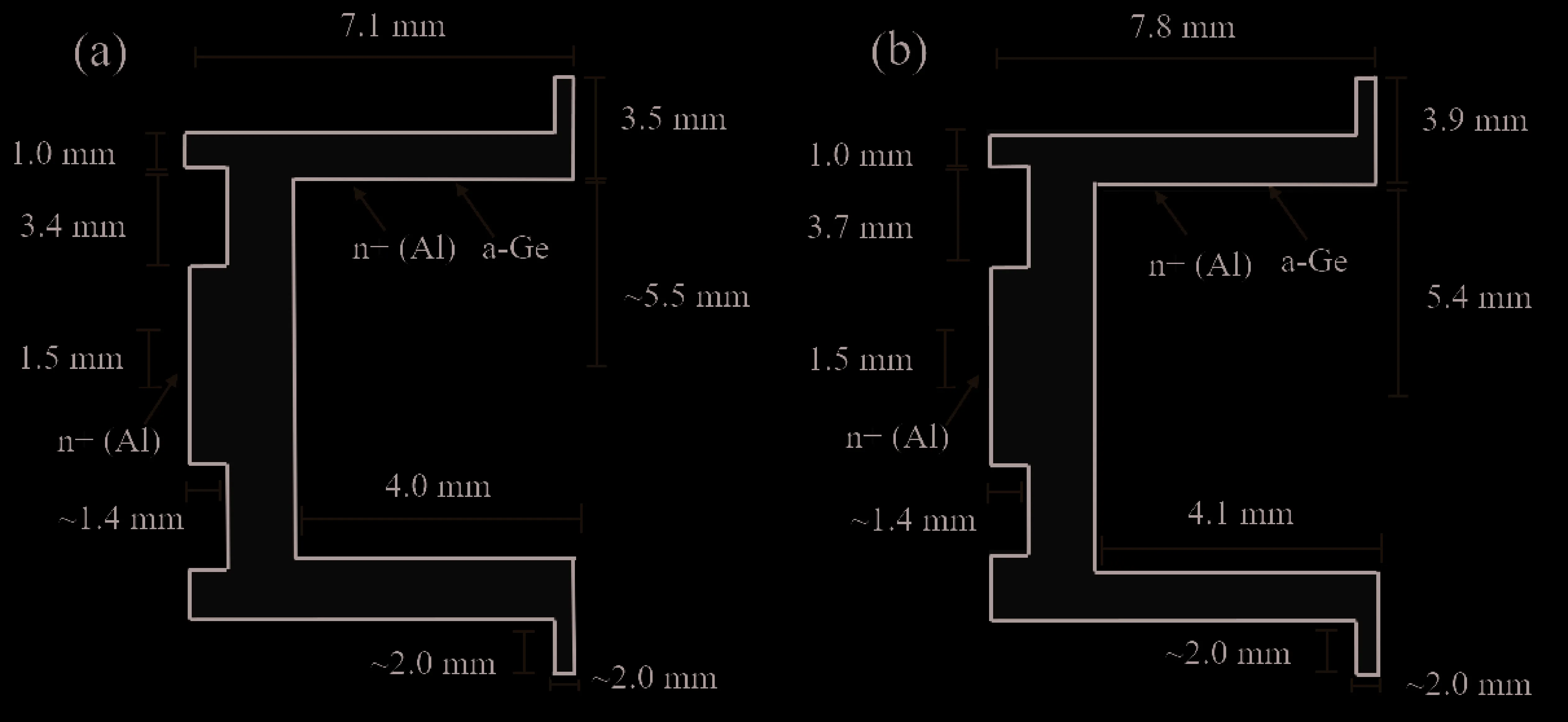
A germanium crystal the size of a fist sits in liquid nitrogen at minus 196 degrees Celsius. When a gamma quantum hits it, a cloud of charges is born inside. The detector must collect every charge without losing a single one — otherwise, the picture blurs.
A razor-thin layer of amorphous germanium, a glassy form of the same element, is sputtered onto the crystal's surface. This layer acts like a turnstile: it keeps charges from escaping the crystal but lets gamma quanta pass through with almost no loss. Previously, such contacts were made thicker, and they ate up part of the signal. Now the layer is hundreds of times thinner than a human hair.
The two detectors, SAP16 and SAP17, were made from crystals of the same purity but slightly different shapes. The result was surprising: one distinguishes gamma rays with an energy of 59.5 keV with 2.42% accuracy, and for 662 keV—0.36%. The second is slightly worse but works more stably at high voltage. Even a millimeter difference in geometry changes how charge drifts toward the contacts.
Such detectors are needed where every quantum matters: dark matter searches, radioactivity monitoring, medical imaging. Thin amorphous germanium contacts pave the way for more sensitive and precise instruments.
Germanium for these detectors is purified to such an extent that for every trillion germanium atoms, there is less than one atom of impurity. That's like finding a single grain of salt in twenty Olympic-sized swimming pools.