Scientist

Rudolf Mossbauer

1929-2011 · Nuclear Physics, Solid State Physics, Spectroscopy
German physicist who discovered the Mössbauer effect — the recoil-free emission and absorption of gamma rays in a crystal lattice. Nobel Prize laureate in Physics (1961). The effect enabled the creation of ultra-high resolution spectroscopy.

Biography

Born in Munich. Studied at the Technical University of Munich. In 1958, while a graduate student, made his discovery. Worked at Caltech and Munich. Awarded the Nobel Prize at the age of 32.

Key discoveries

💡 The discovery was so unexpected that the first paper about it was rejected by a scientific journal.
Concepts
spectroscopyquantum measurement
Laws
Mössbauer effect
Scientists
Robert HookeJohann Jakob BalmerJocelyn Bell BurnellArno PenziasCharles TownesJames Clerk MaxwellErwin SchrödingerCecilia Payne-Gaposchkin

Related articles

nlin.AO2021-07-023 minarXiv:2107.00843
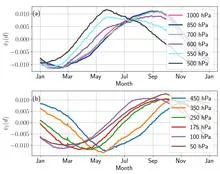
Ozone Sings in Many Voices: How Climate Stratifies by Altitude
In the vast concert hall of the atmosphere, ozone plays a part that changes from tier to tier. Near the surface, its notes sound alarming, for there it is a pollutant that irritates lungs and leaves. At 25 kilometers up, the same gas becomes a protective shield that absorbs harsh ultraviolet radiation.
Whisper in the Hall: How to Build a Material That Silences Sound at Two Frequencies at Once
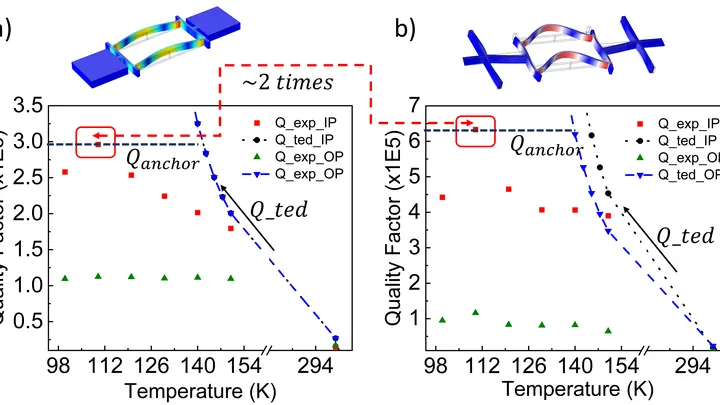
A steel plate with an 8×8 grid of cells dampens elastic waves in two frequency corridors at once. This is not a lucky accident but the outcome of a calculation using a new scheme: first a coarse template for the low frequency, then fine-tuning within free pixels for the high frequency.
A Sprint Without a Run-Up: How Heat Flies Through Aluminum Nitride Films
Thirty nanometers is the distance over which a phonon sprinter hasn't yet had time to accelerate. In thin aluminum nitride films, thermal resistance remains almost unchanged up to this thickness: heat transport proceeds in the ballistic regime, where phonons (quanta of crystal lattice vibrations) fly…
A Whisper Through a Warm Pipe
In a dilution refrigerator cooled to 170 millikelvin, a coherent state of the microwave field is born. This is laser light with minimal uncertainty: its amplitude and phase are defined as precisely as quantum mechanics allows.
Quantum Physics2025-10-172 minarXiv:2510.15724express
Chip Royal: How Optomechanics Tamed Thermal Noise and Turned Phonons into Error-Free Qubits
In the world of microchips, where streams of photons, quanta of light, carry information, a fundamental problem arises: light passing through matter inevitably heats it. This heating spawns thermal fluctuations — chaotic, unpredictable jostling of atoms that disrupts precise device operation.
Quantum Gases2025-12-091 minarXiv:2512.08739express
Supersolidity Is Born at the Liquid Boundary
A supersolid is ice that flows. Think of a pond with a frozen crust, but beneath it, a liquid depth without friction. Usually, creating that crust means changing the liquid's properties throughout its entire volume.
Materials2026-01-041 minarXiv:2601.01326express
Crack-Free Alloys: How to Pick a Composition That Won't Tear Under Heat
Bricks of different sizes laid in a single wall leave cracks in it. Atoms in superalloys behave much the same way: when two different metals form a common crystal lattice and their atoms differ slightly in size, stress appears inside the material. It accumulates and eventually destroys the alloy when heated.
High Energy2026-01-071 minarXiv:2601.04129express
How a Crystal’s Hidden Order Sharpens Gamma-Ray Telescopes
Throw pebbles along a tight row of posts: they ricochet into a dense spray. Throw at an angle, and they scatter. Gamma rays in a crystal do the same: they spawn particle cascades that spread out unless the crystal’s atomic rows are perfectly aligned. Align them within a hair’s width, and the cascade sharpens into a tight beam. A small crystal then outperforms a large one.
Nuclear Experiment2026-01-142 minarXiv:2601.09106express
Muon stops in silicon — and the nucleus answers with particles
A muon is like an electron, but about 200 times heavier. When it stops in a piece of silicon, it gets pulled into the atomic nucleus like a nail to a magnet. The nucleus gains extra energy and starts to "boil": various particles fly out — protons, deuterons, tritons, and alpha particles.
Materials2026-01-171 minarXiv:2601.12151express
The Layer That Blocks Heat
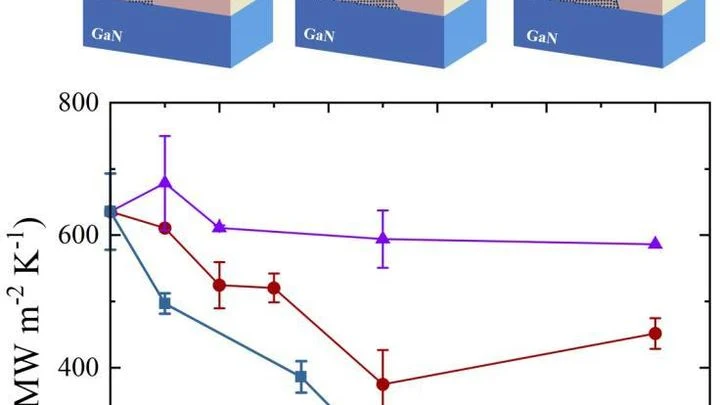
Inside a high-power transistor, heat escapes through junctions between different crystals, like water through narrow locks. For aluminum and gallium nitrides, key materials in power electronics, that lock is often a thin layer of their alloy. It is added deliberately or forms on its own during crystal growth.
physics.acc-ph2026-01-272 minarXiv:2601.19579express
Mirror Bounces Light Back and Creates Gamma Rays
In a particle accelerator, electrons race around a ring at nearly the speed of light. When such an electron collides with a photon, a particle of light, the photon bounces off like a ball hitting a moving truck and flies away with much greater energy.
The Crystal That Catches Light
A germanium crystal the size of a fist sits in liquid nitrogen at minus 196 degrees Celsius. When a gamma quantum hits it, a cloud of charges is born inside. The detector must collect every charge without losing a single one — otherwise, the picture blurs.
Quantum Physics2026-02-041 minarXiv:2602.04646express
Single Photons from an Optical Cavity
A laser pulse enters a tiny cavity made of a transparent crystal. Inside, light bounces between mirrors, and occasionally one photon splits into a pair: one goes one way, the other goes another. One becomes the signal, and the other acts as a 'bell' announcing that a single photon is ready.
Materials2026-02-081 minarXiv:2602.07976express
Heat Breaks Magnetic Order
A thin film of the compound of manganese, bismuth, and tellurium resembles a layered cake: each layer is an atomic plane, and the magnetic moments within the layer are aligned like compass needles. At room temperature, these needles hold formation, but just heating the sample to 45°C makes the order start to fall apart.
Optics2026-02-102 minarXiv:2602.09408express
Microwaves from a Shoebox: A Quiet Signal for Future Tech
A microwave signal that doesn't jitter from interference is needed in both radar and telecommunications. Until now, a clean signal was obtained on bulky setups where lasers and resonators sat on an optical table. Now engineers have packed everything into a box the size of a cup—166 milliliters.
Materials2026-02-102 minarXiv:2602.09460express
Turning Heat into Electricity: An Iron-Silicon Film
Heat one end of a conductor and keep the other cold, and electrons start flowing from hot to cold. Usually, this creates a voltage along the conductor, like water running down a tilted trough. But in some materials, electrons veer sideways, and the voltage appears across the conductor.
Light Instead of Wires: How to Send a Signal Out of a Freezer
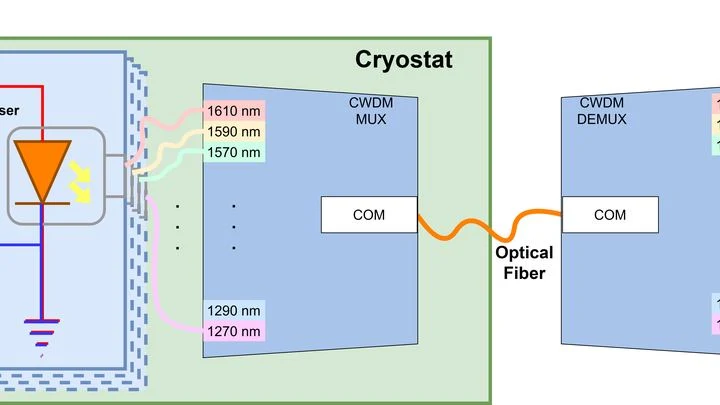
A thermos of liquid xenon cooled to minus 100 degrees Celsius. Inside are sensitive sensors that catch rare signals from dark matter particles. To bring these signals out, copper cables are usually used. But over the long haul, the signal weakens, and adjacent cables start 'cross-talking' — that's called crosstalk.
High Energy2026-02-151 minarXiv:2602.14212express
A Century-Old Beam from a Black Hole
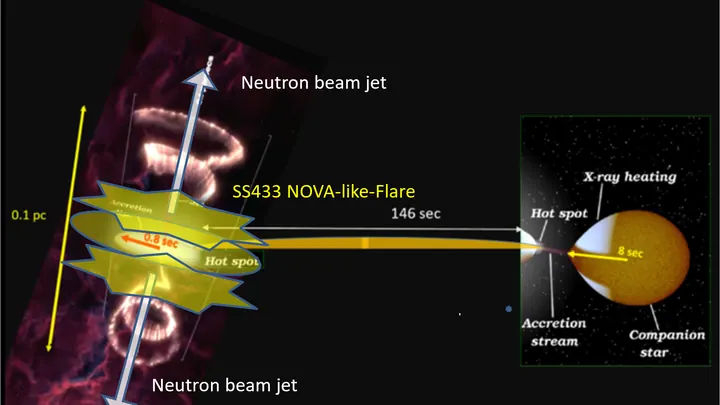
The binary system SS433 is known for its black hole stripping matter from a neighboring star. Some of the gas falls into the hole, while the rest is ejected in two narrow jets that wobble like a spinning top. These jets are visible in radio and X-rays.
Materials2026-02-161 minarXiv:2602.15002express
Layers That Conduct Heat Differently
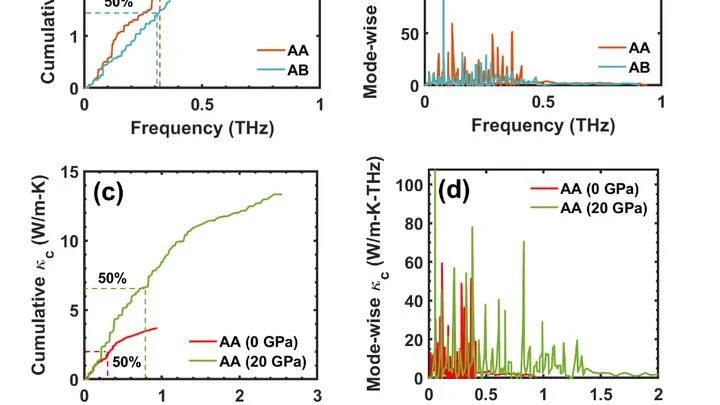
Heat dissipates poorly in thin layered materials, like a crowd in a narrow corridor. In ReS2 crystals, layers lie on top of each other, and heat can travel across them. Scientists measured how quickly this happens and found a surprise: when the layers are stacked directly one above the other, heat passes almost twice as fast as when they are shifted.
Biological Physics2026-02-161 minarXiv:2602.15127express
Living Motors and Heat
A cell is a city where tiny motors work nonstop. They carry cargo, move cilia, and make muscles contract. All this work generates heat, just like a car engine warms up. But measuring the heat from a single motor a few nanometers in size is no easy task. Stochastic modeling helps us peek into this world.
Fluid Dynamics2026-02-202 minarXiv:2602.18236express
A Boiling Pot Reveals the Whims of Turbulence
A pot of water heated from below is a simple example of turbulence. Hot fluid rises, cold fluid sinks, and the flow spontaneously breaks into rotating cells that look like horizontal rolls. In a new study, physicists took a wide rectangular container (ten times longer than its height) and tracked how many such rolls appear.
Materials2026-02-211 minarXiv:2602.18840express
Heat in Layers: Measuring the Invisible
A stack of thin plates made of different materials lies on a table. If you heat it from below, heat will rise, but will it spread sideways just as quickly? In layered semiconductors, the answer is no: heat runs faster along the layers than across them. This is like water in a stack of paper: it spreads easily along the sheets but seeps through the stack with difficulty.
Materials2026-02-211 minarXiv:2602.18979express
Metal Cocktail: How to Predict Its Heat and Current
A metal alloy is like a cocktail: mix a few elements and you get a material with new properties. But while a bartender tastes the drink, engineers need to know in advance how an alloy will behave in service.
HEP Experiment2026-02-241 minarXiv:2602.21177express
Radon Hides Dark Matter
A dark matter detector is like a room where you're trying to hear a whisper while static electricity crackles nearby. This crackle is produced by radon atoms — a radioactive gas that seeps out from materials and air.
Biological Physics2026-03-031 minarXiv:2603.02708express
How to Measure Heat Inside a Living Cell
Heat inside a cell is like traffic in a city: on some streets the lanes are wide and traffic flows fast, while in narrow alleys everything gets stuck. Scientists have found a way to map such 'traffic jams' for heat without opening the cell. They took tiny diamonds, so small they are invisible to the naked eye, and placed them on a thin gold plate.
Strongly Correlated2026-03-041 minarXiv:2603.03635express
Sound Magnet: How Atoms Twist Sound into a Spiral
In a solid, atoms vibrate, transmitting sound. Sometimes this wave doesn't run straight but curls into a spiral, like a corkscrew entering a cork. In ordinary crystals, such 'sound vortices' are known, but in magnetic materials they had long eluded detection.
Mesoscale2026-03-061 minarXiv:2603.06796express
How Bosons Help Superconductors Beat the Heat
Certain materials, near absolute zero, superconduct: electricity flows without loss. The critical temperature starts this. John Bardeen and colleagues explained that atomic vibrations glue electrons into Cooper pairs.
Materials2026-03-072 minarXiv:2603.07115express
How to Cool a Chip: A Film That Wicks Away Heat
The microchips inside smartphones and computers are getting denser: billions of transistors are packed onto a sliver of silicon the size of a fingernail. When they work, they give off heat like tiny stoves. If that heat isn't drawn away, the chip overheats, starts glitching, or fails outright.
Optics2026-03-112 minarXiv:2603.10900express
Light Carves Pathways for Heat in the Nanoworld
A light beam inscribes a pattern on a thin crystal, and heat runs along that pattern in the desired direction, like water along a dug channel. This is how the new method works to control energy flows over distances of tens of nanometers — hundreds of times thinner than a human hair.
The Climate Has Become Worse at Shedding Heat
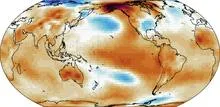
Imagine a radiator in a room: it heats up, but if its surface is clogged with dust, heat escapes less efficiently. Something similar is happening to our planet. Earth receives energy from the Sun and must radiate the excess back into space, otherwise temperatures rise. Scientists call this ability to shed excess heat radiative feedback.
Materials2026-03-141 minarXiv:2603.13920express
Machine-Made Cool Metals
The transistor in your phone works like a faucet: open it and electrons flow, close it and they stop. But an ordinary metal faucet always leaks a little: even when closed, current seeps through. That drains the battery and heats up the chip. A cool metal is a faucet with a perfect seal. Its electronic structure has a gap near the level where electrons can move freely.
Mesoscale2026-03-161 minarXiv:2603.15893express
Sound Trapped in a Crystal
Sound in a solid is waves of compression and rarefaction rippling through atoms, like ripples across a spring mattress. If you place obstacles with just the right spacing, waves at certain frequencies can't pass: they bounce back. Such a periodic structure is called a phononic crystal, and it works for sound the way a multilayer mirror works for light.
Strongly Correlated2026-03-182 minarXiv:2603.17937express
Phonon dampers break the usual physics of metals
A metal is a sea of electrons that move almost freely, colliding only occasionally. But in some materials, this sea suddenly becomes viscous and unpredictable: electrons stop behaving like independent particles. Physicists call this state 'non-Fermi liquid,' and it remains a puzzle.
Materials2026-03-201 minarXiv:2603.19905express
Heat Reveals the Strength of Aluminum
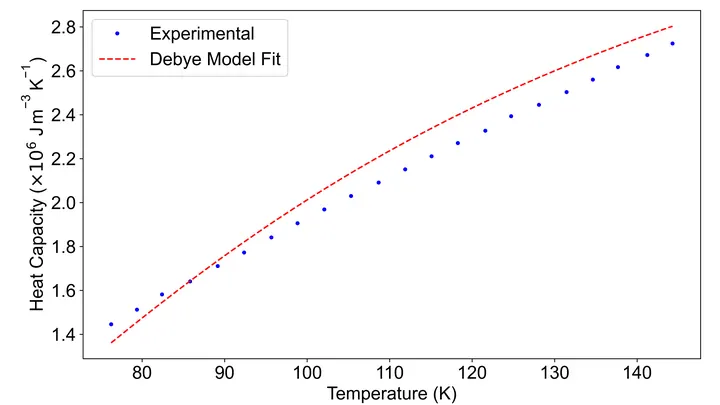
A piece of aluminum alloy is heated, and it quietly tells you about its strength. You just need to listen to that story in how the metal absorbs heat. The usual way to find out how strong an alloy is — pull it until it breaks. That takes time and destroys the sample.
Mesoscale2026-03-221 minarXiv:2603.21405express
A Thin Film That Switches Heat
A thin film of nickel oxide, tens of nanometers thick, is like a sheet of paper folded hundreds of times thinner. At room temperature, it conducts electricity, but cool it slightly and it becomes an insulator.
Mesoscale2026-03-231 minarXiv:2603.21924express
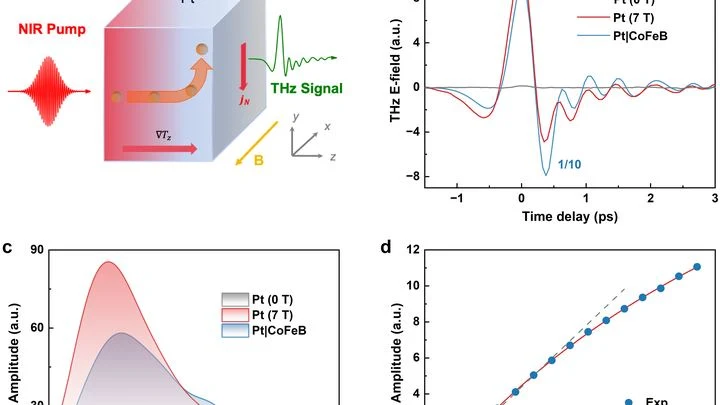
Platinum film generates terahertz pulse on its own
Usually, to generate terahertz waves (light between microwaves and infrared), researchers build a sandwich of different metals. One layer acts as the source, another as the receiver of charges. In such designs, platinum was assigned the role of a simple conductor. But it turns out it can work alone.
Superconductivity2026-03-292 minarXiv:2603.27674express
Pressure alters superconductivity in a palladium-tellurium alloy
An alloy of palladium and tellurium with a small amount of gold added behaves like a wire that loses its resistance when cooled. At ambient pressure, the three samples with different gold contents had superconducting transition temperatures of 2.7, 4.1, and 4.6 kelvin — colder than a freezer, roughly like deep space.
Materials2026-04-011 minarXiv:2604.00369express
One Film, Two Fates
Bismuth is a metal used to make low-melting alloys and additives to steel. But when you sputter it onto a substrate in a very thin layer, its behavior depends on how cold the substrate is. Physicists compared two methods: one at ordinary room temperature, the other at liquid nitrogen temperature, about −196 °C.
Singing Bubbles: How Soft Spheres Hush Sound
A gas bubble in water sings loudly — this is Minnaert resonance: the heavy liquid prevents the bubble from compressing quickly, forcing it to vibrate. In air, there's no such effect: air is too light. But if you dress the bubble in a soft silicone shell, like rubber, it plays the role of the water mass. You get an 'elasto-bubble'.
Materials2026-04-041 minarXiv:2604.03547express
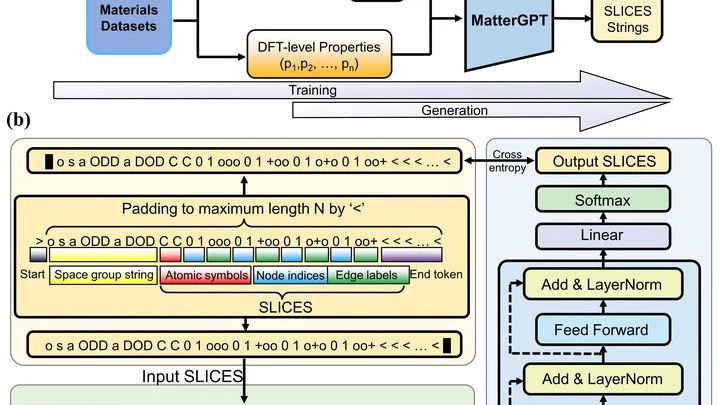
AI Finds Materials That Barely Conduct Heat
Heat flows through matter like water through pipes: sometimes fast, sometimes barely. Engineers seek materials that almost don't let heat pass — like clogged pipes. Such insulators are vital for energy saving and devices that turn heat into electricity. The neural network KappaFormer quickly evaluates the "throughput" of an atomic structure.