A Point in a Crystal That Lights Up on Command express
Inside a boron nitride crystal, defects sometimes occur — places where atoms are knocked out or sit where they shouldn't. One such defect, the B-center, can emit light: it absorbs energy and releases it as a single photon. It's like a tiny light bulb that only lights up when asked, without any stray glow.
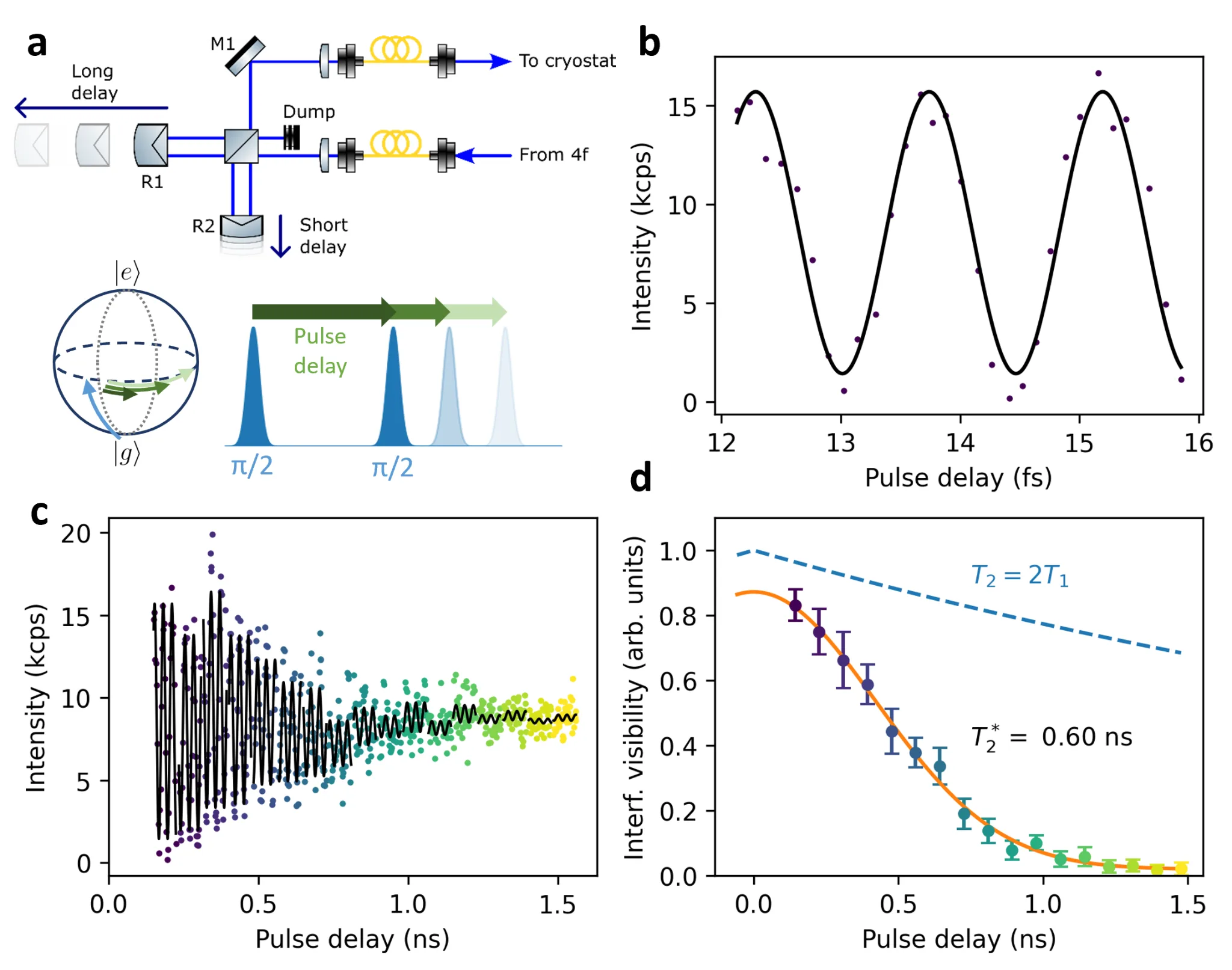
Researchers aimed short laser pulses at the B-center and found they could toggle it between 'bright' and 'dark' states. If the pulse is precisely tuned, the defect can 'swing' into an excited state and back, emitting one photon. This is called coherent control — light is used to flip a switch, much like a hand flipping a toggle.
However, the defect quickly loses its 'setting': after 0.6 nanoseconds, it forgets which state it was in. It's like a swing that comes to a stop almost immediately after a push. But even that brief time is enough to use the B-center as a source of photons on demand — for example, in quantum computers, where each photon carries a bit of information.
Such defects in boron nitride can be embedded into tiny optical circuits on a chip. Then, instead of bulky lasers and mirrors, we get compact devices where light is born and controlled right inside the crystal. It's like building a single-photon factory the size of a dust speck.
Boron nitride is the same material found in super-hard ceramics and lubricants, but it's the defects in its crystal lattice that turn it into a source of single photons.