The photon is like a tiny clot of light, the smallest portion of energy emitted, for example, by a glowing ember or a distant star. Imagine a raindrop — seemingly a single droplet, but together they form a downpour. So too photons, flying out in billions, paint the entire visible world for us: from the blue of the sky to the colors of sunset.
History
The concept of the discrete nature of radiation originated in 1900 when Max Planck introduced energy quantization to explain the spectrum of a black body. Albert Einstein in 1905 developed the hypothesis, suggesting that light is not only emitted but also exists in the form of quanta, successfully explaining the photoelectric effect. In 1923, Arthur Compton experimentally confirmed the corpuscular nature by observing the scattering of X-ray photons on electrons. The term 'photon' was proposed by Gilbert Lewis in 1926. The subsequent development of quantum electrodynamics (Feynman, Schwinger, Tomonaga) ultimately established the photon as the exchange particle of the electromagnetic field. From the provided list, James Clerk Maxwell, whose equations describe electromagnetic waves, and Alain Aspect, who conducted experiments with photons to test Bell's inequalities, are associated with the photon.
How it works
A photon is emitted when a quantum system (e.g., an electron in an atom) transitions from a higher energy state to a lower energy state, carrying away the energy difference. Conversely, absorption of a photon excites the system to a higher energy state. The photon always propagates at speed c in a vacuum, which is a consequence of the principle of the constancy of the speed of light. In an electromagnetic wave described by Maxwell's equations, the photon represents the elementary excitation of the field modes. Its energy and momentum are given by the formulas E = hν and p = h/λ; thus, the higher the frequency (shorter the wavelength), the greater the photon's energy. According to the Heisenberg uncertainty principle, it is impossible to simultaneously measure the arrival time of a photon and its energy precisely. Photons obey Bose-Einstein statistics and can accumulate in a single quantum state, which underlies the operation of lasers. Interaction with matter leads to phenomena such as Hawking radiation near black holes and gravitational lensing — the curvature of photon trajectories in gravitational fields.
Fun fact
Every second, about 100 million photons pass through the pupil of your eye from just one 100-watt light bulb. And from the Sun, about 100 billion of these tiny travelers strike every square centimeter of skin per second!
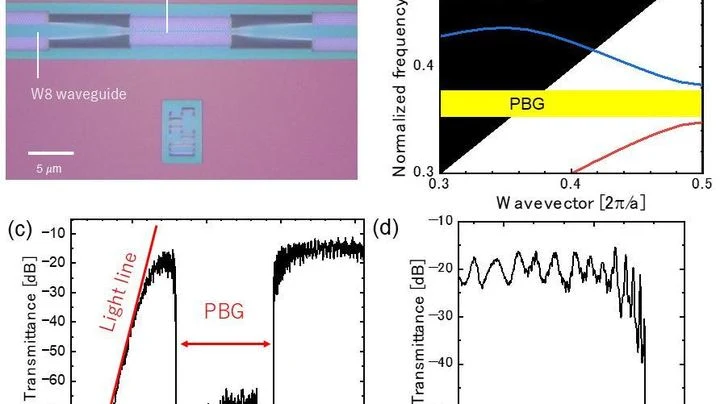
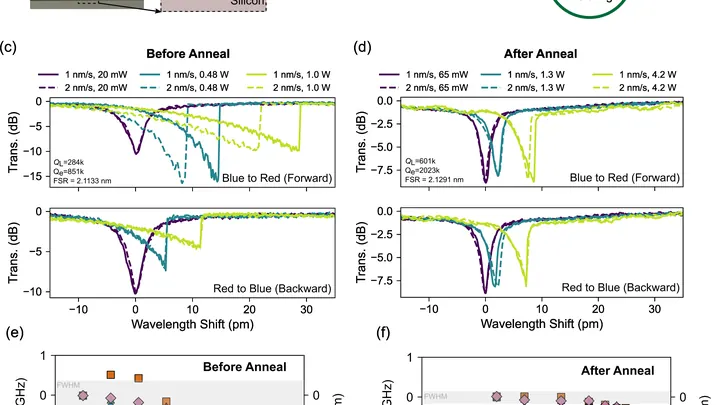
In an ordinary room, light vanishes the moment you switch off the lamp. In a tiny silicon nitride cavity, a photon can bounce between the walls 80,000 times before it gets lost. It's like a ball thrown into a room that rebounds off the walls with almost no loss of speed.
To probe deeper into the workings of the universe, physicists accelerate electrons and smash them together. An ordinary electron is like a spinning top that wobbles randomly. For delicate experiments, you need particles whose spins all point in the same direction: this is called polarization.
A thrown stone sends ripples across water. A gravitational wave is the same kind of ripple, but in spacetime. It is produced, for example, by the merger of two black holes. In classical physics, this ripple is eternal: once created, it travels through the Universe without fading.
In 2021, the LHAASO observatory registered gamma quanta with energies above a petaelectronvolt from sources like the Crab Nebula — a supernova remnant with a pulsating neutron star at its heart.
A surfer glides across the ocean surface until a big wave comes, and then they're flying forward. Similarly, a free electron interacts with light: usually the energy exchange is barely noticeable, but if the surrounding medium begins to oscillate rhythmically, each wave crest pushes the particle harder and harder.
In very dim light, photons arrive one by one, like drops from a leaky faucet — never in pairs. This effect, predicted by Roy Glauber and confirmed by Leonard Mandel, directly proves that light is made of particles.
A billiard game would be strange if the balls had no mass. They wouldn't collide but would pass through each other, ignoring obstacles. That's roughly what it looks like to imagine light as a stream of classical particles — tiny elastic bodies flying in straight lines. A new proof puts an end to that picture.
Understanding the photoelectric effect — where light knocks electrons out of a material — is like learning to cook without a recipe. That’s where digital tools help: games provide intuition, and simulations provide precision.
When an electric charge moves with acceleration, it emits electromagnetic radiation, i.e., light — a familiar phenomenon in physics. However, researchers have found that when moving along a specially chosen trajectory, the radiation acquires unusual properties.
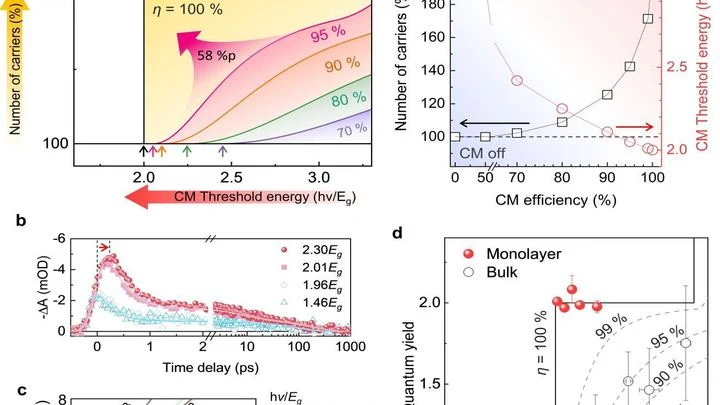
Sunlight hits a material, and each photon knocks out one electron. That's the usual order of things, which is why ordinary solar cells can't convert more than a third of the energy into electricity — the rest is lost as heat. But there's a process akin to a billiard shot where one ball splits into two: carrier multiplication.
In the quantum world, light and matter constantly exchange energy. Previously, they were described statically, like frozen poses. The new approach follows the dance itself: the transitions between states, like a continuous sequence of movements.
Hydrogen is the most common element. Its atoms are like antennas: they emit and absorb light at very specific frequencies. Einstein predicted that spacetime can ripple: these are gravitational waves.
Before assembling a huge puzzle, you need to stamp out the pieces — otherwise the picture won't come together. In fusion-based quantum computers, the role of such pieces is played by tiny clumps of light — photonic resource states. They are collided and measured to gradually grow the computational fabric.
A black hole is like a perfect vault: everything that falls in disappears without a trace. But in the 1970s, Jacob Bekenstein and Stephen Hawking discovered that the horizon carries an indelible "sticker" — entropy (a measure of hidden information about swallowed matter).
A swing only gets going if you push it in rhythm. Miss the beat, and your effort is wasted. Light interacts with an atomic nucleus in much the same way: a photon is usually absorbed only when its energy exactly matches the gap between nuclear levels. But what if the photon's energy doesn't fit? The authors of a new study have found a workaround.
An ordinary camera flash lasts thousandths of a second. An attosecond pulse is a trillion times shorter — in the time it takes, light travels a distance smaller than the size of an atom. Such flashes act as an ultra-high-speed shutter: they freeze the motion of electrons, letting us see them jump between orbitals or take part in a chemical reaction.
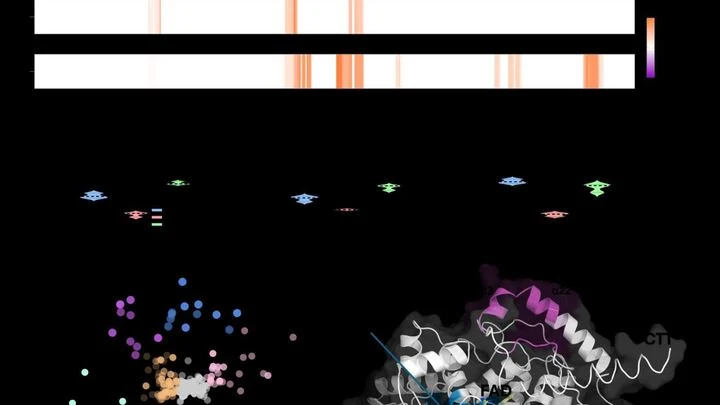
Every autumn, a robin weighing as much as a pat of butter lifts off from a branch somewhere near St. Petersburg and flies south toward the Mediterranean, never once checking a map. It is believed that its eye contains a built-in magnetic compass, and the main component of this device is the protein cryptochrome 4a.
Light is the fastest courier, but it can't wait. For quantum computers to exchange messages, we need memory that can catch a photon and hold it until the recipient is ready. In warm metal vapor, atoms buzz around like bees in a hive, and each movement scrambles the recording. As a result, stopped light quickly turns into mush.
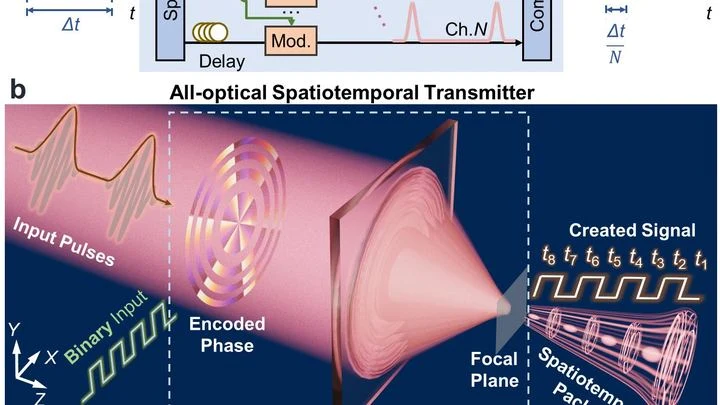
An ordinary envelope has a rectangular shape, and the letter inside does not change the envelope's properties. With photons, particles of light, the situation is different: their 'shape' in time can vary, and this shape itself carries information.
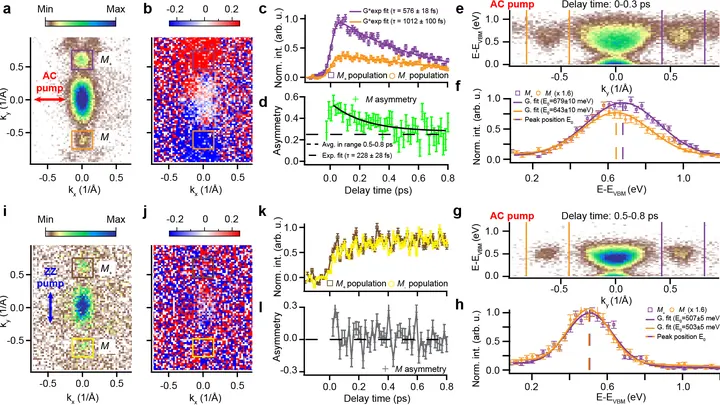
An ordinary sheet of black phosphorus looks like a layered cake of atoms. If you shine a regular lamp on it, nothing special happens: the electrons sit still, like spectators in a dark theater. But a short laser flash lasting millionths of a billionth of a second shakes up that theater.
Light can carry information faster than any electronics. But usually, between a computer and a laser sits a digital-to-analog converter — a device that turns zeros and ones into electrical signals. It's the bottleneck.
The new transmitter does away with this middleman.
Light usually pushes an atom straight ahead, like wind pushing a sail. But if the beam is twisted into a corkscrew, the picture changes: the atom can fly off to the side, as if caught by a spinning wheel. In the new work, physicists calculated that such a vortex photon can transfer almost all of its rotation to the atom — up to 100 percent.
Imagine a tap that doesn't pour a stream but releases water strictly one drop at a time: that's the single-photon source the authors describe. In ordinary light, photons travel in a crowd, like water from an open tap.
Two laser beams of different colors strike a crystal, and inside it, triplets of light particles are occasionally born, like three coins popping out of the same vending machine slot. For the first time, this process has been made efficient enough: 11.6 triplets per second.
The beams were green and invisible infrared.
At night in a dark room, the human body emits a barely perceptible glow. This light is so faint that only highly sensitive detectors can catch it. Some researchers thought this glow from the head could tell us about brain activity — no scanners or wires needed.
But when put to the test, the story changed.
Light in an optical fiber is a stream of photons, and quantum communication requires single photons that can be sent one at a time. But making them emerge quickly while remaining indistinguishable from one another is a tough challenge.
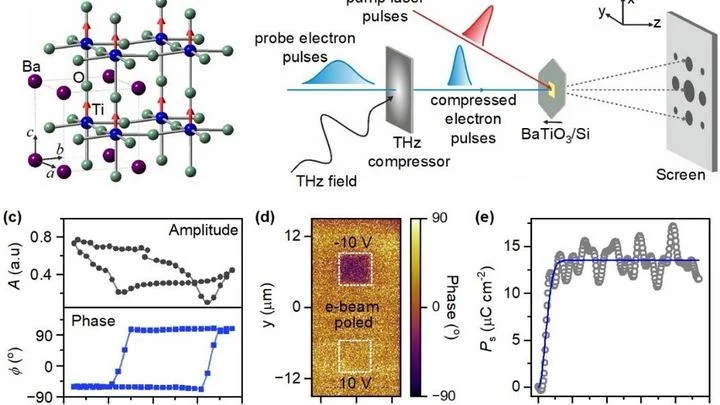
Inside a barium titanate crystal, there's a built-in electric field, like a permanent magnet, but for charges. When a flash of light hits it, electrons are knocked loose and start darting around, colliding with atoms. But the crystal isn't the same in all directions: it has an axis along which the field is strongest.
According to ordinary mechanics, an electron in an atom should spiral into the nucleus and crash into it, like a surfer losing speed and falling off the board. But atoms live for billions of years. Because space isn’t empty. Even in absolute vacuum, an invisible electromagnetic sea ripples — the zero-point field. Its waves continuously nudge the electron.
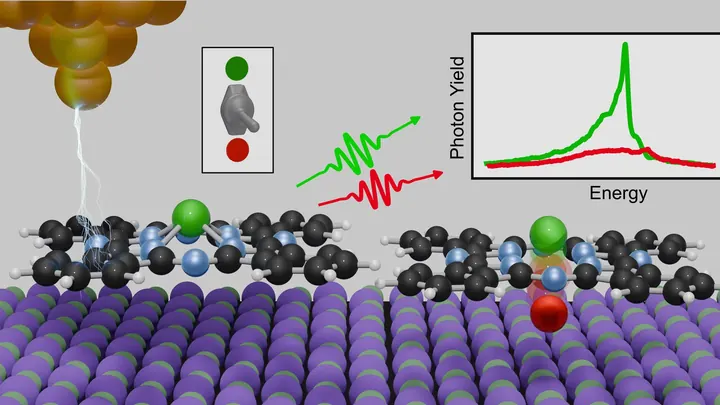
A glowing dot the size of a molecule. Run a current through it, and it flashes like a tiny lightbulb. That's what the experiment with dye molecules on a thin salt film looks like.
When current enters a molecule, one electron hands it energy. The molecule immediately gives that energy back, as light. It's like a swing: give it one push, and it rocks and then stills.
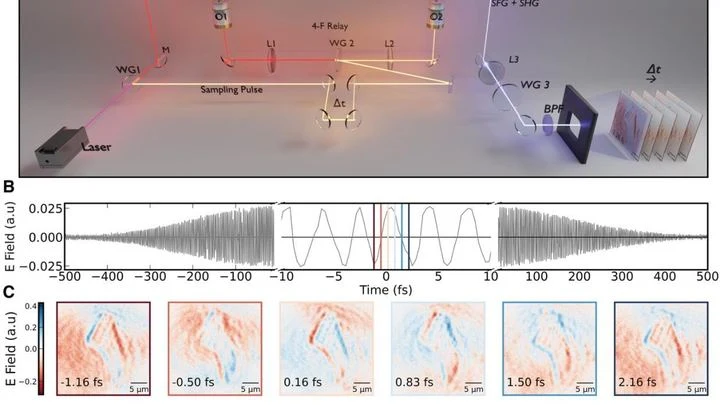
Light is not just a beam but a wave with an electric field that changes at a speed unimaginable to ordinary clocks. Until now, this field could only be measured at a single point, like taking temperature with a single thermometer. Now researchers have created a method that shows the entire field at once, like a thermal imager showing a heat map.
A proton can't be seen as a simple ball. If you hit it with a photon, it can absorb energy and jump into an excited state, like a bell that starts ringing at a certain frequency after being struck. These states are called nucleon resonances, and they live very briefly before decaying into other particles.
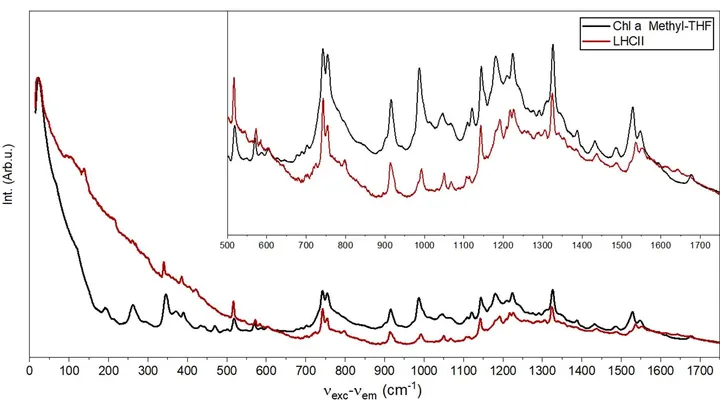
When a sunbeam hits a leaf, a relay race begins inside it. The energy of light passes from one chlorophyll molecule to the next until it reaches the reaction center — the place where the chemistry of life kicks off. This relay runs with astonishing accuracy: nearly every quantum of light finds its way.
The hydrogen atom is like a tiny clock, ticking with a precision engineers can only dream of. When an electron jumps between orbits, it absorbs or emits light at a strictly defined frequency: that's the 'tick.' In the new work, physicists caught one such transition, between the 2S and 6P states, and measured its frequency with an…
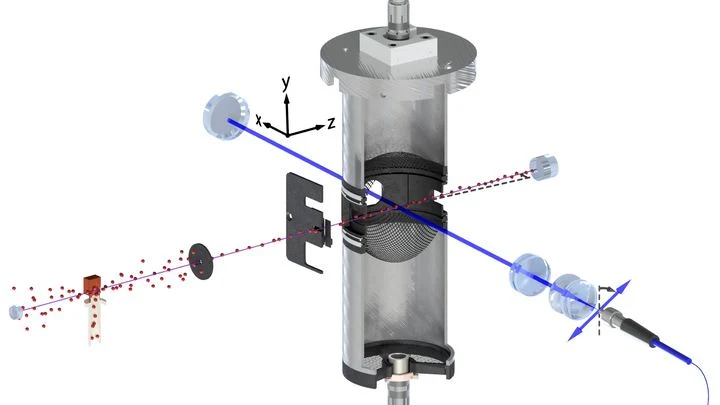
An electron beam can be compared to the light from a laser pointer: if it diverges, the spot on the wall quickly spreads out. In the lab, physicists created such a narrow beam that it remained thin over a long distance, like the beam of a good pointer.
A sheet of graphene is a lattice of carbon atoms arranged like a honeycomb. Electrons in it zip around so fast they seem to have no mass, just like light. When a powerful laser pulse hits such a sheet, the electrons get a kick and start accelerating. Their path can be compared to a road with occasional barriers — the forbidden zones.
If light could be bottled, scientists would have the perfect assembly line: one bottle — exactly one photon, no stray drops. Such single particles of light are needed for quantum computers and secure communication: they carry information that cannot be eavesdropped on unnoticed.
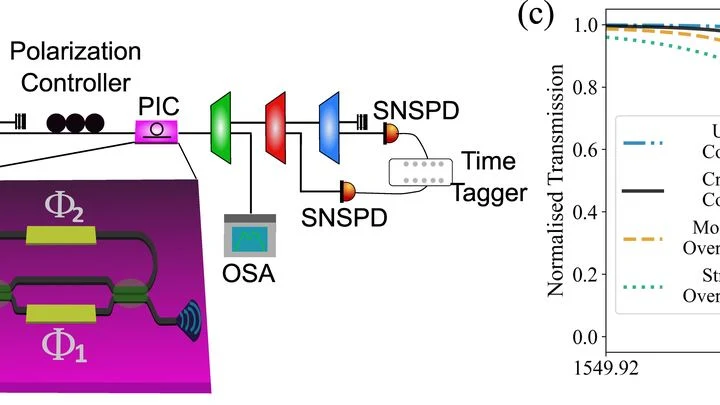
A laser pulse enters a tiny cavity made of a transparent crystal. Inside, light bounces between mirrors, and occasionally one photon splits into a pair: one goes one way, the other goes another. One becomes the signal, and the other acts as a 'bell' announcing that a single photon is ready.
The proton is not a smooth ball but a tangle of smaller particles in constant motion. To peek inside, physicists fire electrons at protons and watch how they bounce off. The new machine, the Electron-Ion Collider, will do this with unprecedented accuracy.
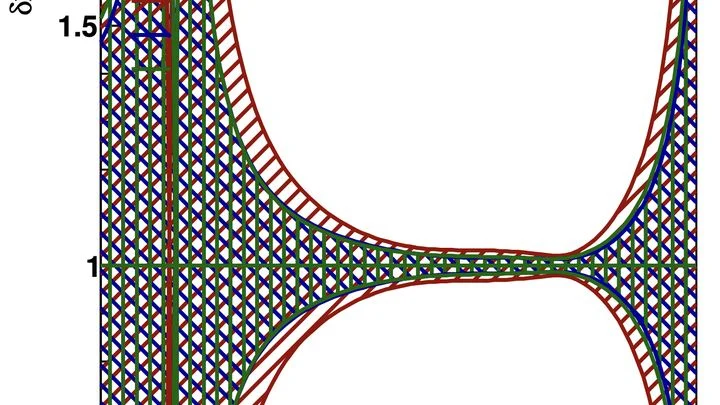
Scientists have run simulations to see what would happen if data were collected at different energies.
Light in a tiny ring is like water in a closed channel: if you push the flow too hard, the walls start to shake and the channel changes shape. In optical microrings, the water is played by a laser beam, and the walls are a crystalline track thinner than a hair.