How Hydrogen Ions Flow Through a Solid Crystal express
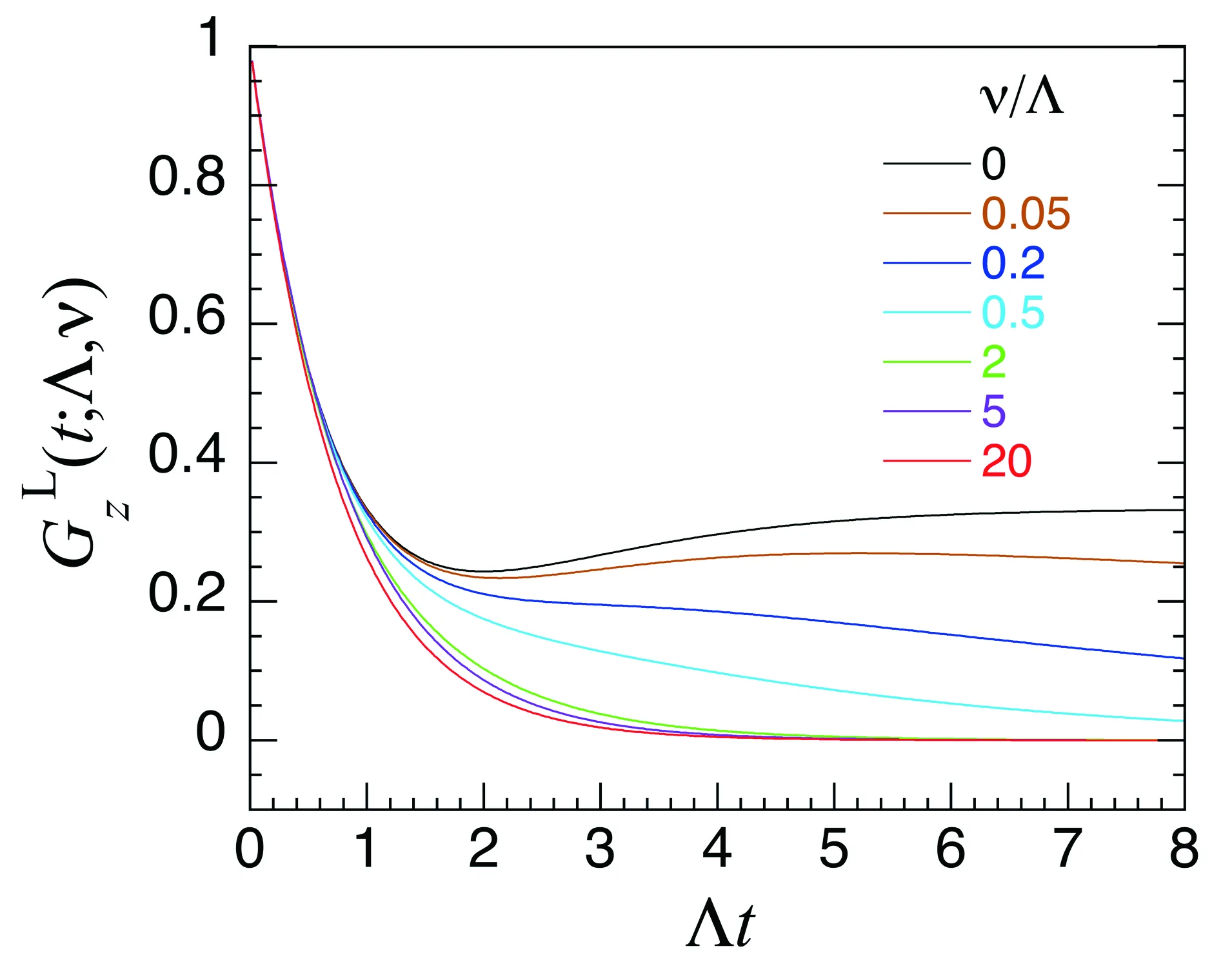
In a solid crystal resembling a layered cake of lanthanum, oxygen, and hydrogen atoms, electricity is carried not by electrons but by hydrogen ions themselves. Usually, an ion in a crystal sits in its own cell like a pea in a pod, occasionally hopping to a neighboring empty cell. But in this material, things are different.
Physicists bombarded the crystal with subatomic particles, muons, which nestled between atoms and 'felt' the movement of their neighbors. It turned out that around 160 Kelvin (about minus 113 degrees Celsius), hydrogen ions start moving in concert, like molecules in thick molasses. Their jumps depend on the availability of nearby empty sites: no empty cell, no jump.
This discrepancy led scientists to think that upon heating, hydrogen ions stop behaving as individual particles and morph into something like a viscous fluid that 'freezes' upon cooling, much like glass. This behavior explains why the crystal conducts hydrogen ions so well.
Now we better understand how solid electrolytes with hydrogen work. If we can learn to control this 'fluid' inside the crystal, we could create batteries and fuel cells that operate faster and more reliably.
Original abstract
as written by the authors arXiv:2603.00852
We performed muon spin rotation and relaxation ($$\mu$$SR) experiments to investigate the microscopic mechanism behind the high ionic conductivity ($$\sigma$$) exhibited by hydride (H$$^-$$) ions in lanthanum hydroxide LaH$$_{3-2x}$$O$$_x$$. The $$\mu$$SR spectra observed at 5--300 K in a sample with $$x\approx0.25$$ consist primarily of two components which are attributed to muons occupying tetrahedral (Tet) and octahedral (Oct) sites common to H$$^-$$. The spectra also indicate that muons at the Oct sites (Mu$$_{\rm O}$$) appear nearly stationary in the time scale of $$\mu$$SR ($$\sim$$10$$^{-5}$$ s), whereas those at the Tet sites (Mu$$_{\rm T}$$) are subject to the fluctuating local fields. The cusp-like peak in the fluctuation rate around 160 K and the decrease in linewidth at higher temperatures probed by Mu$$_{\rm T}$$ suggest that the jump motion of both Mu$$_{\rm T}$$ (via the vacant Oct sites) and surrounding Oct-site H$$^-$$ contributes to spin relaxation and that the fluctuation frequency is widely distributed. These results indicate that the implanted Mu behave as Mu$$^-$$ and that the jump motion of Mu$$^-$$/H$$^-$$ is restricted by the availability of nearby vacant sites. On the other hand, the activation energy for the jump is estimated to be 0.11(3) eV, which is significantly different from $$\sim$$1.3 eV evaluated from the temperature dependence of $$\sigma$$ at high temperatures ($$\gtrsim400$$ K). In our attempt to resolve this discrepancy, we discuss problems inherent in interpreting $$\sigma$$ using the Arrhenius equation, and demonstrate that the behavior of H$$^-$$ ions can be better explained as a viscous fluid exhibiting a glass transition.
The muon used to 'probe' the crystal lives only two millionths of a second, but in that time it manages to report on the motion of neighboring ions.
In Arthur C. Clarke's novel 'Rendezvous with Rama,' an alien spacecraft uses solid materials with unusual internal fluidity — somewhat akin to this crystal.