How an Enzyme Passes the Signal Along: News From the Outskirts Flows Straight to the Center
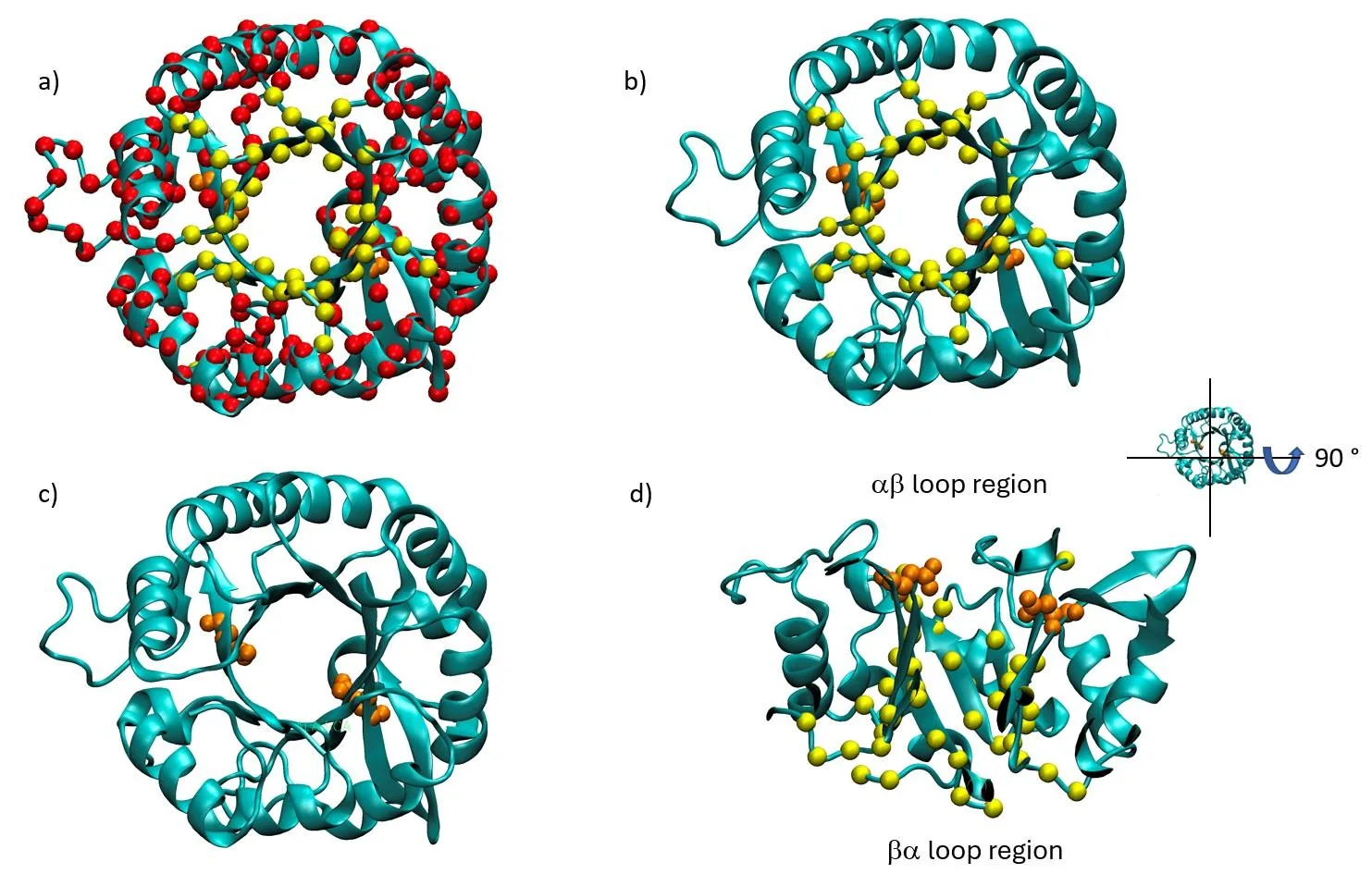
An enzyme is like a railway station where a crowd of passenger atoms is constantly on the move. Deep inside the station there's a ticket window: the enzyme's active site, where the chemical reaction happens. For the window to do its job, it needs to know what's going on out on the far platforms. So how does the news get through the crowd to the window?
Scientists tested this on seven different enzymes. They found that the bustle, or entropy, flows from the edges of the molecule toward its center. The amino acids at the edges (the building blocks of the protein) do a lot of "talking," while those next to the ticket window keep quiet. It's as if passengers on the distant platforms were loudly discussing the news, while right by the window everything stayed silent so the clerk wouldn't be distracted.
The most striking part: the same route shows up if you simply draw a map of the contacts between amino acids. Who touches whom, that's all you need to figure out where the information will flow. No need to run complex calculations of atomic motion. This discovery will help scientists find drugs faster, ones that act on enzymes through remote regions rather than through the active site.
TIM-Barrel is one of the most common protein folds in nature: it appears in at least 15 different enzyme families, from bacteria to humans.