q-bio.BM q-bio.BM

46 articles

articles

cs.CE2026-01-011 minarXiv:2601.00505express
How a Drug's Charge Alters Its Path Under the Skin
After an injection under the skin, a drug doesn't just spread out like ink in water. Antibody molecules carry an electric charge, and that charge makes them interact with surrounding tissues — much like a magnet attracts or repels iron filings.
Pressure Instead of a Syringe: A New Way to Shield Cells from the Cold
The usual way to freeze a living cell is like trying to put a spacesuit on it: you first need to get a protective substance inside, but while it's crossing the membrane, the cell can burst from salt imbalances or get poisoned by the chemicals.
q-bio.BM2026-01-092 minarXiv:2601.14273express
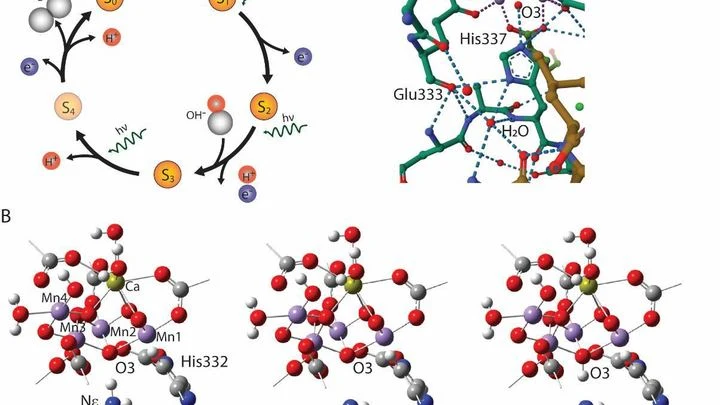
Oxygen from Water: How Plants Build It Brick by Brick
In every leaf, in the light, a factory works that splits water into oxygen and hydrogen. The oxygen goes into the air we breathe, and the plant uses the hydrogen for food. The heart of this factory is a protein complex with four manganese atoms and one calcium atom.
Life from a Test Tube: How a Simple Mixture Assembled Itself into a Cell
Dissolve a few salts and formaldehyde in a glass of water. After a while, the liquid spontaneously separates: droplets with membranes appear, like tiny bubbles. Inside each droplet, chemical transformations occur, and the droplet itself grows, absorbing material from the surrounding solution. These droplets are not just bubbles.
q-bio.BM2026-01-161 minarXiv:2601.11450express
How a client protein reshuffles the contents of cellular droplets
Inside a living cell, there are tiny liquid droplets where proteins gather together, like ingredients in a drop of vinaigrette. Some proteins form the droplet's scaffold, while others, clients, don't create the droplet themselves but happily jump in and change its composition.
Biological Physics2026-01-221 minarXiv:2601.16151express
Switch Proteins: How a Cell Reads DNA
A cell is like a kitchen where thousands of recipes (genes) are collected in one thick book (DNA). The chef-protein Klf4 flips through the pages and decides which recipe to cook today. But how does it find the right line among billions of letters? Previously, researchers thought the protein looked for a short 'password'—a few consecutive letters.
cs.ET2026-01-262 minarXiv:2601.18435express
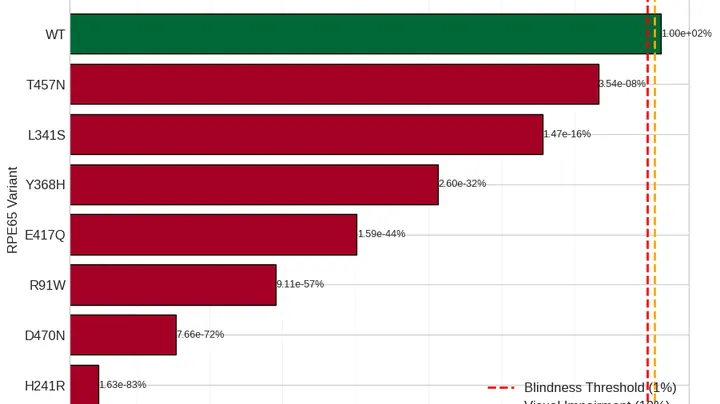
How a Single Atom Decides Whether You See or Not
Deep in the eye, in a thin layer of cells, a tiny molecular machine works. It captures light and turns it into a signal that the brain interprets as an image. But sometimes a typo occurs in the blueprints of this machine — a single letter of the genetic code changes, and a person is born blind.
q-bio.BM2026-01-311 minarXiv:2602.00660express
How Proteins Find Their Minimum
To tell one protein from another, you need to describe its shape and composition. There are dozens of such descriptions: molecular length, charge, solubility. But not all are equally useful. A method called Differentiable Information Imbalance (DII) can pick out the most informative features while discarding the rest.
A Molecular Compass for Drug Discovery
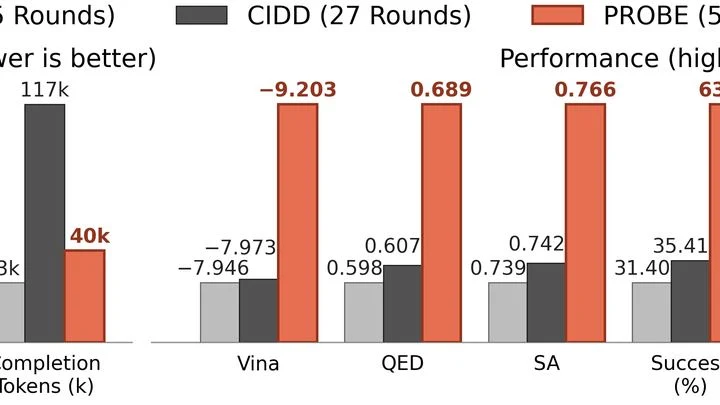
A chemist searching for a new drug is like a cook without a recipe: they have a list of desired properties but millions of possible ingredients. Each trial is costly and time-consuming, so you need to experiment wisely. The new program SEISMO acts like a chef who tastes the dish after every step and immediately decides what to add next.
q-bio.BM2026-01-311 minarXiv:2602.00782express
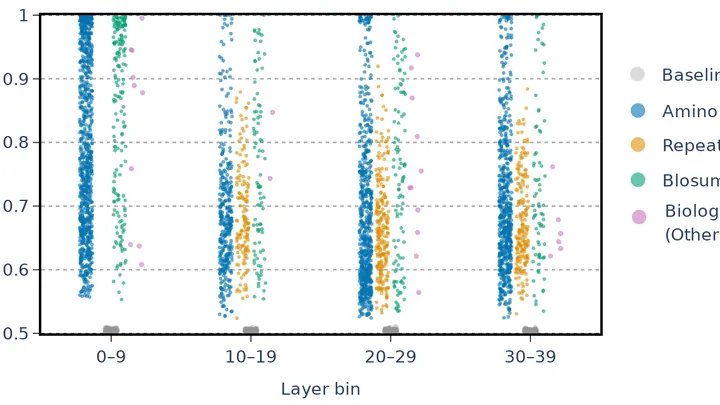
Proteins Without Stuttering
A protein language model is like a chef who learned from thousands of recipes and now invents new dishes. Sometimes he gets carried away and salts every dish because one good cookbook used a lot of salt. In proteins, such repetition isn't just ugly: identical stretches in the chain make the protein fragile, it can't fold into the right shape, and it doesn't work.
Machine Learning2026-02-081 minarXiv:2602.07735express
Protein and Drug: How to Speed Up the Search 26-Fold
Searching for a new drug is like matching a key to a lock. The protein in a cell is the lock, and the candidate molecule is the key. You need to know whether the key fits and how snugly it sits. Previously, the computer would examine every atom in the lock and the key to check this. A single lock could take hours or even days. Checking millions of keys was out of the question.
q-bio.BM2026-02-111 minarXiv:2602.10644express
A Tissue Map from Blurry Images
Our body's tissue is like a city: different neighborhoods are home to different cells, each with its own job. To understand how this city is organized, biologists take images showing which genes are active at each spot. But sharp images are expensive, and cheap ones come out blurry, like a photo of a city from high above, where individual buildings are hard to make out.
Machine Learning2026-02-262 minarXiv:2602.23179express
How Language Models Spot Repeats in Proteins
Proteins are chains of amino acids, and they often contain repeated chunks. Sometimes the repeats are exact, like the same phrase said twice. Sometimes they come with typos: a couple of letters swapped, but the meaning is the same. These repeats matter: they help the protein fold into the right shape and do its job.
Chemical Physics2026-02-281 minarXiv:2603.00614express
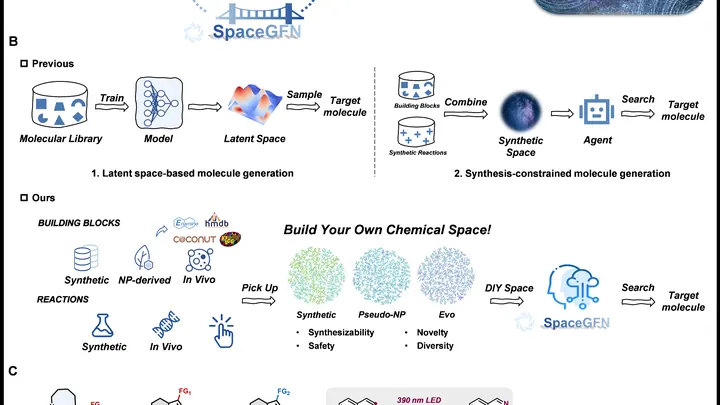
Chemical Space as a Construction Set
Previously, generative models for drug discovery worked like an artist painting without choosing a canvas. They learned from existing molecules and simply produced similar ones, without considering how the space of possible compounds is organized. SpaceGFN changes the approach: now chemical space is a construction set where the user specifies the parts and the assembly rules.
q-bio.BM2026-03-192 minarXiv:2603.19473express
Teaching Old Proteins New Tricks
Capsids are protein boxes that viruses use to carry their genetic material. In gene therapy, these boxes serve as couriers: you put a desired gene inside, and the outside retains the ability to enter cells.
q-bio.BM2026-03-241 minarXiv:2603.23775express
Diagnostics in the Palm of Your Hand: Electricity Instead of Optics
In a hospital, blood from a finger prick usually goes to the lab, and the result comes back the next day. The new method promises to cut that wait to a few minutes. Instead of catching light reflected off a sample, it reads the electrical voltage that arises at the boundary between two media, like the faint tingle you feel when you touch a battery with wet fingers.
q-bio.BM2026-04-091 minarXiv:2604.07844express
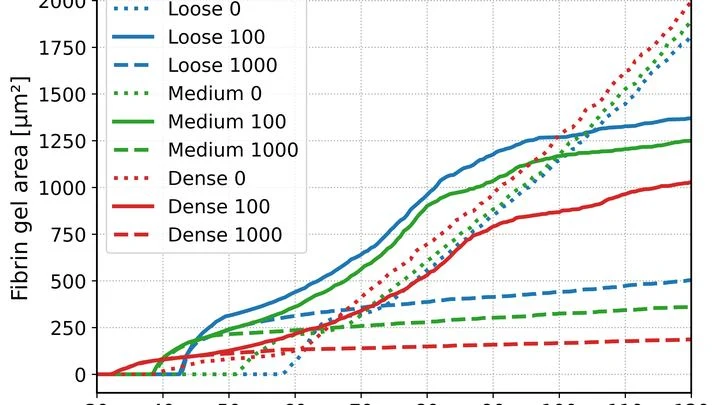
How a Clot Becomes Strong: The Puzzle of Density
A thrombus is not just a clump of cells. When a vessel wall is damaged, platelets stick together into a plug, but it is still fragile. What makes it strong is fibrin — a protein that forms a network of fibers, like rebar in concrete. The model showed that the plug's density decides where this network appears.
Exoplanets2026-04-171 minarXiv:2604.16249express
Ammonia as a Key to Life on Titan
Titan is a cold world with methane lakes and a dense orange atmosphere. But beneath the icy crust, warm puddles may hide, formed after meteorite impacts. In such a puddle, like a chemical flask the size of Selk Crater, simple gases from the air, hydrogen cyanide and acetylene, mix.
Machine Learning2026-04-191 minarXiv:2604.17175express
Language Model Assembles Proteins Like a Puzzle
A protein is like a chain of amino-acid beads that folds into a precise shape, and that shape dictates how the protein works in a cell. Protein designers swap beads to achieve the desired form, but the number of possibilities is enormous.
q-bio.BM2026-05-052 minarXiv:2605.90002
How to Double a Worm's Life at Death's Door
On day 21 of adulthood, three quarters of the worms are already dead, and the survivors barely twitch. That is exactly when the scientists stepped in and gave them another 26 days, even though the control animals lived only four.
q-bio.BM2026-05-191 minarXiv:2605.19252express
The Chemical Signature of Life: How to Find It by Its Elements
From carbon, nitrogen, oxygen, and sulfur, you can assemble 10⁶⁰ different small molecules: that's a 1 with 60 zeros, more than the stars in the visible universe. Life uses only a tiny fraction of this menu, but not randomly.
q-bio.BM2026-05-222 minarXiv:2606.05198express
A Docking Station for Molecules: How to Slip a Drug into DNA or RNA
Imagine a huge garage with hundreds of parking spots. You're driving a tiny car, a future drug molecule, and you want to find the one free bay where it fits perfectly. But these bays aren't concrete; they're woven from DNA or RNA chains, and no one has posted the parking rules.
Teaching AI to Design Drugs Without Compromises
An engineer building a bridge cannot strengthen one beam without affecting the load on adjacent ones. Drug development works similarly: a molecule must fit snugly into the 'pocket' of a target protein, like a key in a lock, while also being safe, stable, and convenient to administer.
q-bio.BM2026-06-071 minarXiv:2606.08647express
Proteins: From Still Pictures to a Living Dance
For a long time, we only saw proteins in their final form — like photographs of dancers frozen in a beautiful pose. Programs like AlphaFold learned to predict that pose from a chain of carbon links. But the real magic is how a protein finds this shape faster than you can blink, performing a swift dance.
Machine Learning2026-06-092 minarXiv:2606.11382express
Teaching Neural Networks to Read Molecules at a Glance
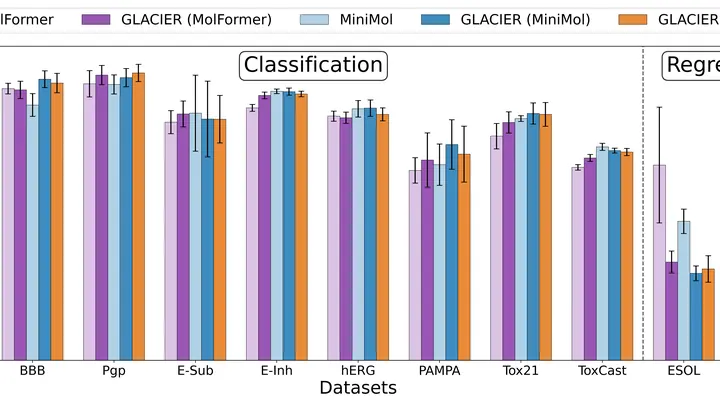
Finding the right molecule among billions of options is like finding a single grain in a sack of rice. To avoid sifting through everything by hand, chemists increasingly turn to neural networks. But large models require powerful computers, while small ones often lack the big picture. GLACIER tackles this problem like a bright student learning from several mentors at once.
A Genetic Anchor for Health
You buy a new kitchen scale, but instead of exact weight, it only shows deviations from some "norm." To find out how much an apple weighs, you first have to weigh dozens of other apples and calculate the average.
How to Design the Perfect Therapeutic Peptide: Three Properties at Once
An engineer tunes an antenna: pull one segment, the frequency drifts; change the angle, the gain drops. Developing therapeutic peptides (short protein chains) works much the same way.
A Cookbook for Proteins
Think of a massive cookbook: each recipe is a protein, and the finished dish is its job in the cell. To whip up a complex treat, you often need to mix several ingredients and let them 'set' into the right shape. Until now, scientist-chefs could only guess how someone else's recipes would fold.
q-bio.BM2026-07-052 minarXiv:2607.04134express
A Protein Dances to the Music of Fourier
A protein in a cell is not a frozen sculpture. It is constantly in motion: bending, breathing, jittering. This motion, its dynamics, determines how the protein works. But peering directly into the dance is hard, and computer simulations often demand enormous computing power. A new approach, named DynaMode, views protein motion as a musical piece.
Machine Learning2026-07-131 minarXiv:2607.11091express
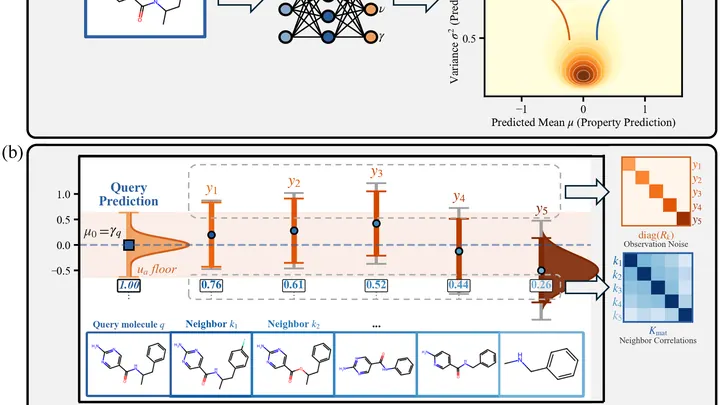
Neighbor molecules improve prediction accuracy
Predicting the properties of a new molecule is like guessing the flavor of an unfamiliar dish. The program works like an experienced chef: it “tastes” similar molecules whose properties are already known, and based on their “flavor,” it refines its guess.
Machine Learning2026-07-141 minarXiv:2607.12771express
AI Masters the Cookbook of Chemical Reactions
Cooking a complex dish requires a clear recipe: first chop, then sauté, add spices at just the right moment. Chemical transformations also follow step-by-step recipes — mechanisms where atoms of carbon and hydrogen rearrange in a strict order. Previously, neural networks often invented nonexistent steps, like a whimsical cook swapping salt for sugar.
Molecule as a Wire: Chemistry Dictates the Current's Path
A molecule works like a marketplace: electron shoppers enter through two gates (contacts) and head for stalls with the most attractive goods — the chemically active spots. Previously, current was thought to spread evenly, but it turns out up to 90% of all flow rushes through these 'hot spots'. Reactive centers become superconducting highways inside the molecule.
Machine Learning2026-07-172 minarXiv:2607.16087express
The neural network that doesn't just predict proteins: it holds their secrets
Imagine a vast library where every book is a precise instruction manual for assembling one protein molecule. AlphaFold2 read millions of such books and learned to instantly produce a ready-made 3D model. But inside this network, in its very 'brain,' something more remained — not just assembly rules, but an entire atlas of possible protein motions, its hidden life.
q-bio.BM2026-07-192 minarXiv:2607.17096express
A Network of Light: How Plants Pass Energy
A sunbeam hits a leaf, and inside, a relay race begins. Energy hops from one molecule to the next until it reaches its goal. In photosystem II (a protein complex that kicks off photosynthesis), the runners are pigment molecules: chlorophylls and pheophytins.
q-bio.BM2026-07-202 minarXiv:2607.17753express
Scout proteins find genes by their energy trail
A protein slides along the DNA strand like a key along a keyring, searching for its lock. One wrong turn and a gene stays switched off. To know where a protein will grip firmly, you need to measure the strength of that grip — the binding energy.
Machine Learning2026-07-262 minarXiv:2607.23518express
Chameleon protein: one chain for many targets
A protein in a cell is not a rigid part but rather a soft glove that can grasp different objects. Until now, protein designers worked like sculptors, crafting a key for a single lock: one target, one shape. But life is more complex: sometimes a protein needs to recognize two different viruses at once or change its contours depending on its neighbors.
Biological Physics2026-08-022 minarXiv:2608.01143express
Protein Folding as a Side Effect of Function
A protein chain folds into a working tool in a fraction of a second, and almost never makes a mistake. For a long time, it was thought that evolution specifically polishes amino acid sequences so that a protein not only works but also easily finds its unique shape. New work turns this idea on its head.
Chemical Physics2026-08-032 minarXiv:2608.02865express
Weak Molecular Bonds Step Out of the Shadows
Inside every cell, things are constantly meeting and parting. Some pairs hold tight, like Velcro, while others barely touch, like pollen on the wind. These fleeting touches, where the binding strength is comparable to a grain of salt dissolving in a glass of water, govern many of the cell's signals and decisions.
q-bio.BM2026-08-182 minarXiv:2608.17759express
A Protein Thread Woven from Noise
Under an electron microscope, a protein looks like a series of blurry shadows — hundreds of thousands of images of the same molecule, but from different angles and with heavy noise. Previously, from these shadows, one first assembled a volumetric 'haze'—a map of how electric charge is distributed inside the protein.
q-bio.BM2026-08-191 minarXiv:2608.18604express
How Protein Engineers Learn from Mistakes
A protein engineer is like a chef trying to make a dish that is tasty, healthy, and cheap all at once. Change one ingredient, and you risk ruining another. In the past, computer assistants could only evaluate protein properties one at a time, missing how they are connected.