Popular

James Clerk Maxwell

1831–1879 · Physics, Mathematics, Electrical engineering
Scottish physicist who unified electricity, magnetism, and optics into a single electromagnetic theory. He predicted the existence of electromagnetic waves and showed that light is a special case of them, thereby establishing the speed of light as a fundamental constant.

Biography

Studied at the Universities of Edinburgh and Cambridge. Worked in Aberdeen, at King's College London, and then returned to Cambridge, where he founded and headed the Cavendish Laboratory. Died at the age of 48 from cancer. His work was underestimated for a long time, but today he is considered one of the greatest physicists.

Key discoveries

💡 Maxwell developed the theory of color vision and took the world's first color photograph by combining three frames through red, green, and blue filters — long before the advent of color photographic materials.
Quote: "A truly great discovery is not an end point but a dotted line."
Links in the knowledge graph 1
Related tags
electromagnetismspectroscopyspeed of light
Related laws
Coulomb's lawMaxwell's equationsPoynting's theoremFaraday's law of electromagnetic inductionAmpere's law
Related scientists
Henri PoincaréRobert HookeJohann Jakob BalmerJocelyn Bell BurnellArno PenziasCharles TownesErwin SchrödingerCecilia Payne-Gaposchkin

Related articles

Dancing Particles in a Pipe: Which Model Is More Accurate?

In industrial pipes, air laced with dust or droplets swirls like dancers in a waltz. But which math model to pick for the simulation? Tests show: the standard approach is more accurate than trendy new ones. This will speed up the design of dryers, filters, and sprayers.
arXiv:2501.00037 · 2024-12-24

Earth as a Dark Matter Detector

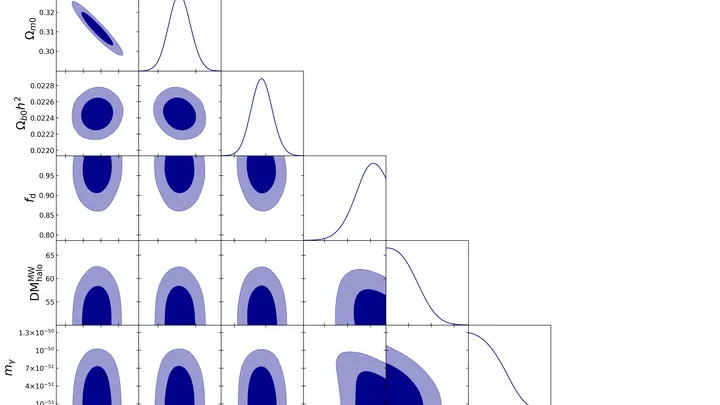
Analysis of years-long records of Earth's magnetic field has set the tightest limits on dark photons — dark matter particle candidates. Using the ionosphere as a giant resonator, scientists amplified faint magnetic fluctuations hundreds of times, but no direct signal has been found yet.
arXiv:2509.15783 · 2025-09-19

How Gravity Helps Us See the Invisible Electromagnetic Echo

As it fades, the electromagnetic field leaves a permanent record in the quantum state of particles — like a photograph capturing a moment. Using gravity, physicists have learned to take such 'snapshots' inside a falling conductor and develop them with a superconductor. A tabletop experiment will for
arXiv:2511.02363 · 2025-11-04

Heat in Reverse: When Hot Freezes from Cold

Usually heat transfers from hot to cold. But in the quantum world, an uncertain order of interactions can reverse this flow. Scientists have created a device that simultaneously cools and performs work, pushing the boundaries of thermodynamics and paving the way for new quantum technologies.
arXiv:2511.04028 · 2025-11-06

Ghost Mode in a Sphere: Mathematics Without Physics

In a hollow metal sphere, light waves can freeze into stationary patterns, like frozen ripples on a pond. But among all possible shapes, one is peculiar: it has zero frequency, and the fields vanish, leaving only a mathematical trace. For a long time, this invisible 'ghost' confused physicists when
arXiv:2512.20123 · 2025-12-23

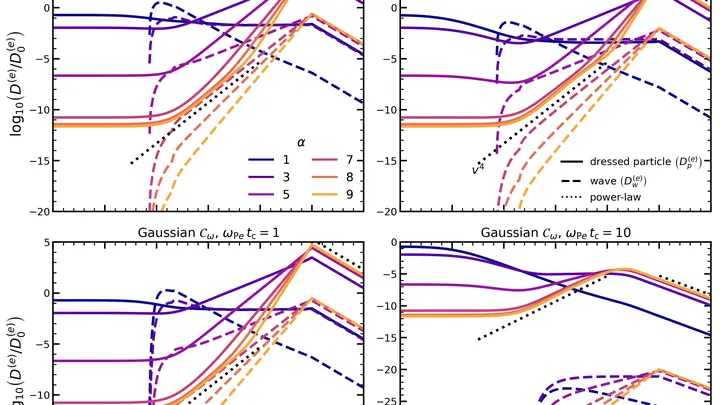
Wind for the swift: how turbulence heats the solar corona

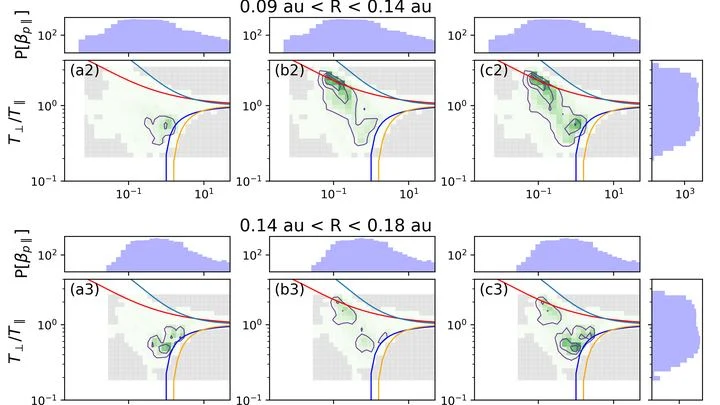
The theory discovered: chaotic electric fields in plasma, like a sieve, sift fast particles from slow ones, forming a universal 'tail' of super-fast particles. The reason lies in the shielding effect: slow particles wrap themselves in charge clouds and become invisible to the field, while fast ones
arXiv:2601.03344v2 · 2026-01-06

Cosmic Fireflies: How Dark Matter Turns into Visible Light

Dark matter may consist of invisible particles that clump into clouds. Once such a cloud finds itself in a magnetic field, it lights up with ordinary light — like a firefly in the night. This effect offers a new way to detect the mysterious substance that makes up 85% of the Universe.
arXiv:2601.05351v2 · 2026-01-08

Magnetic field turns the void into a motor

Normally, rotation in a vacuum requires an asymmetric shape or a special material. But new research shows that a magnetic field and special magnets can induce rotation without any asymmetry. This paves the way for contactless nanomotors.
arXiv:2601.14381 · 2026-01-20

Your Coffee’s Warmth Is a Silent Light Trade

Stable warmth is not stillness but a dynamic balance. Objects constantly emit and absorb light energy. A new calculation shows the average photon in this exchange carries 2.7 times the energy of molecular motion, linking your coffee to the sun’s fiery glow through a universal trade network.
arXiv:2601.22247 · 2026-01-29

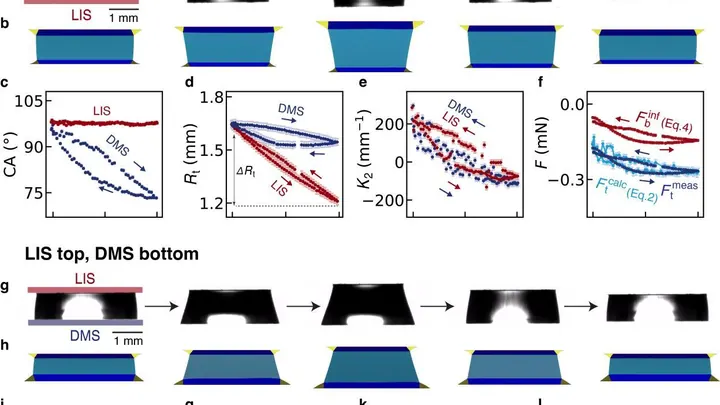
Maxwell's Demon Prefers Indistinguishable Photons

A tabletop experiment with a programmable optical circuit proved that the famous thought demon creates a larger temperature difference when the particles of light cannot be told apart. The result ties together heat, information, and quantum statistics, and will be useful for testing quantum devices.
arXiv:2602.11276 · 2026-02-11

Astrons: Electric Leviathans That Defy Cosmology

Astrons — hypothetical relics of the early Universe with a mass on the order of 10¹² solar masses and a gigantic electric charge — could explain dark energy. However, rigorous analysis crushes the simple hopes: ordinary accretion does not yield the required charge, and phenomenologically interesting
arXiv:2605.10587v1 · 2026-05-11

Cosmic Crystal: How Vacuum Defects Twist Light

The cosmic microwave background not only brings a map of the early universe but also a subtle twist in polarization—just a few thousandths of a radian. For a long time, it was attributed to ultralight axions, but they clash with experiments. A new explanation is more elegant: the rotation arises whe
arXiv:2605.11065v1 · 2026-05-11

Graviton Laser: Translating Gravity into the Language of Light

The main obstacle for a graviton laser is that gravitational waves cannot be reflected: they pass through any substance. The solution lies in the Gertsenshtein effect. Under a powerful magnetic field, gravity particles temporarily become photons, which are easily reflected by ordinary mirrors. The r
arXiv:2605.14050v1 · 2026-05-13

The Magic of Translation: From Black Holes to Electricity

The main formula for a black hole's thermal properties exactly matches the rule for how a charge creates an electric field. Translating from the language of gravity to the language of electricity brings us closer to a unified picture of the world.
arXiv:2605.14707v2 · 2026-05-14

Dance of Photons: When the Solar Sail Becomes Its Own Brake

What happens to a solar sail at near-light speeds? An analysis of three components of light pressure — incident, specular, and diffuse — revealed a critical threshold. The relativistic Doppler effect weakens the mirror-like thrust, and after v=0.75c, diffuse scattering reverses sign and decelerates
arXiv:2606.04052v1 · 2026-06-02

Levitating Graphite Web Captures the Moon's Embrace

In Southampton, the thinnest graphite flake has been turned into an ultrasoft gravitational antenna. Levitating above magnets, it shifts by nanometers under tidal forces, and a laser interferometer converts this into a precise signal. The instrument distinguishes lunar and solar contributions, achie
arXiv:2606.14738v1 · 2026-06-02

Ultraviolet Trap: How TRAPPIST-1 Star Fakes Signs of Life

TRAPPIST-1 e is a rocky planet in the habitable zone of a red dwarf, one of astrobiologists' prime targets. But decoding its atmosphere requires a precise ultraviolet 'autograph' of the star. Simulations showed: different UV spectra dramatically alter the chemical portrait, producing deceptive pairs
arXiv:2606.05451v1 · 2026-06-03

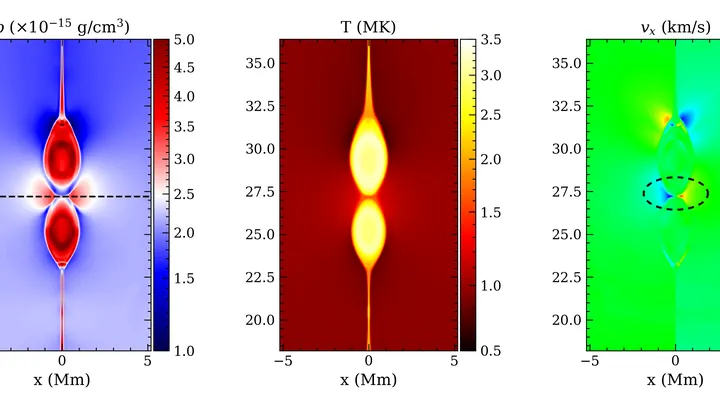
The Flare's Fiery Heart: Ions Race Along Magnetic Lines

Solar flares crank temperatures up to millions of degrees, but iron ions move much faster along magnetic lines than across them. An international team, analyzing nearly 4,600 spectra from the Japanese Hinode satellite, proved for the first time that line broadening is driven not by turbulence but by
arXiv:2606.06577v1 · 2026-06-04

The Silence of the Interstellar Wanderer: The Hunt for Radio Signals from 3I/ATLAS

Astronomers took advantage of the visit of the interstellar object 3I/ATLAS to conduct a unique radio reconnaissance. Using the 500-meter FAST telescope and the method of canonical polyadic decomposition, they analyzed the data, trying to extract periodic signals against the background of terrestria
arXiv:2607.01666v1 · 2026-07-02

Light Trap for Nanoparticles

Special surfaces, optimized by computer algorithms, capture and hold the tiniest particles with the force of light. This technology is essential for ultrasensitive sensors, precise assembly of microdevices, and even manipulation of individual atoms in quantum systems.
arXiv:2607.02352 · 2026-07-02

Corkscrew Galaxy: How a Twisted Jet Reveals the Magnetic Signature of Clusters

The spiral radio jet of the 'Corkscrew Galaxy' served as a natural magnetometer: astronomers compared its bends with Faraday rotation measure and proved that RM oscillations are synchronous with its morphology. In the eastern part of the jet, rotation is generated by its own magnetic field, while in
arXiv:2607.02665v1 · 2026-07-02

Waltz of Invisible Moons: The First Spectroscopic Find

Astronomers have discovered planetary-mass moons around a brown dwarf for the first time using high-precision spectroscopy. Observations with the VLT and the CRIRES+ spectrograph revealed periodic wobbles in the radial velocity of the starlike object CD-35 2722 B, hinting at at least one moon about
arXiv:2607.05193v1 · 2026-07-06