Neural activity refers to the electrical and chemical signals that neurons use to communicate and process information in the brain and nervous system. It encompasses action potentials (brief electrical spikes), synaptic transmission (chemical release of neurotransmitters), and the complex patterns of firing across networks of neurons. This activity underlies all cognition, perception, movement, and emotion, and is the focus of neuroscience research aiming to understand how the brain computes and how disorders arise.
History
The electrical nature of neural signaling was established in the late 19th and early 20th centuries by scientists like Emil du Bois-Reymond and Julius Bernstein, with the modern understanding of the action potential formalized by Alan Hodgkin and Andrew Huxley in 1952, for which they won the Nobel Prize in Physiology or Medicine in 1963.
How it works
Neurons maintain a resting electrical potential across their membrane. When stimulated, ion channels open, causing a rapid depolarization — the action potential — that travels along the axon. At the synapse, this electrical signal triggers release of neurotransmitters, which bind to receptors on the next neuron, either exciting or inhibiting it. The sum of many such signals determines whether a neuron fires, creating complex temporal and spatial patterns of activity across neural circuits.
In practice
Neural activity research drives brain-computer interfaces, neuroprosthetics, and treatments for neurological conditions like epilepsy and Parkinson's disease, as well as machine learning algorithms inspired by neural networks.
Fun fact
A single neuron can fire up to 1,000 times per second, and the human brain contains roughly 86 billion neurons, each making thousands of connections.
The brain is like a city where every cell is a resident, and its fate depends on its neighbors. It used to be thought that the aging of each cell was its own private business: DNA damage accumulated, so the cell wore out on its own. But a new study shows that even a cell's ability to repair its DNA depends on who lives next door.
A forest ages in different ways. In one spot the trees thin out gradually, as if they have grown tired of growing, while in another they cling stubbornly to life, spending their strength repairing damaged branches. The aging of the brain's cortex looks much the same when you view it through the lens of thousands of MRI scans.
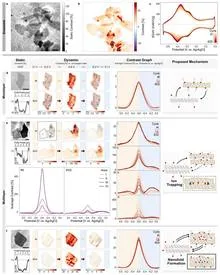
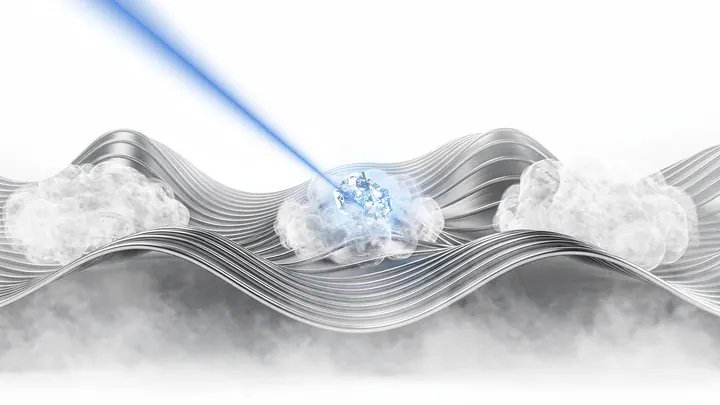
A stack of pages that has been flipped through many times remembers it: some sheets lie flat, others stick up, and creases remain here and there. Layered materials behave much the same way when ions enter them.
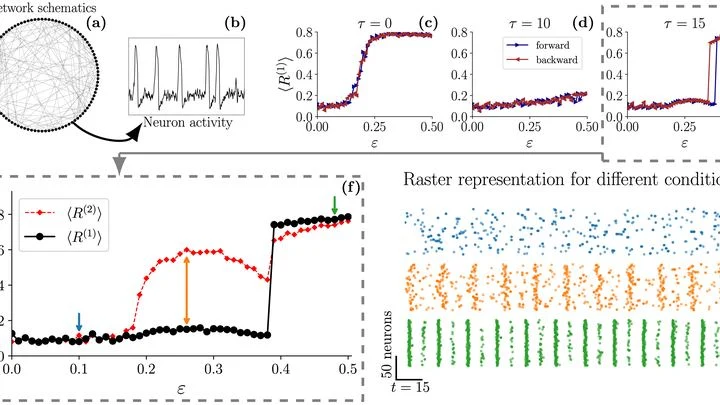
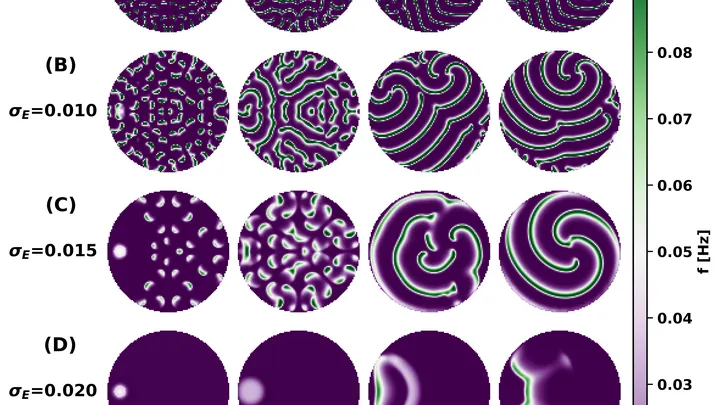
Imagine a large orchestra without a conductor. Each musician hears everyone else and adjusts to the collective hum. If every instrument amplifies its neighbors, the sound builds to a screech; if some occasionally dampen it, the orchestra may fall into silence or break into cacophony.
Inside the wall of every artery, a concert plays without pause. Smooth muscle cells, which line the vessel from within, simultaneously build a supporting scaffold of collagen, remodel their own internal skeleton and extract energy from glucose. Conducting this orchestra is the NOTCH3 protein, which sits on the cell surface and catches signals from its neighbors.
In the dark room of the scanner, a person watches for rare flashes on a screen. An infrared camera records their pupil a thousand times per second, while an MRI scanner simultaneously logs which brain areas light up. In this way, 89 volunteers aged 19 to 78 helped scientists see how the pupil becomes a display on which the brain outputs two different signals.
At a crowded reception, an older person asks their conversation partner to repeat themselves again and again: the words drown in the hum of voices. This is what the bridge looks like, the one that carries sound from the ear to meaning. While that bridge holds, noise merely gets in the way, but it doesn't cut the conversation short.
A superconducting detector usually works like an honest ruler: absorb a photon, get a pulse whose amplitude is strictly proportional to the energy. This mode is convenient, but it has a ceiling: a weak signal easily gets lost in the amplifier noise.
Now imagine a swing.
The brain is like an orchestra, with the cortex as the conductor and the thalamus as the first violin. The thalamus relays signals from the eyes to the visual cortex. But the cortex can also send commands back, tuning the thalamus for the task at hand. This was once a hypothesis, but now it's been tested in humans.
Epithelium lines our organs like tiles on a floor. At rest, cells cling to each other, and the tissue is elastic. But during embryonic development, wound healing, or tumor growth, this layer begins to flow like thick honey. What exactly triggers such softening?
Sound enters the ear and hits a thin membrane inside the cochlea, the spiral organ in the inner ear. This membrane doesn't just vibrate like a string; it actively pushes the vibrations when they are weak and stops when they are strong. That's how the ear hears both a whisper and a loud conversation.
Scientists built a model where each piece of the membrane is a tiny pendulum with a spring.
A person flips a coin to make a decision. They stand still — the coin lands heads. They take a few steps, and flip again. It would seem walking shouldn't affect the coin. But what if the walk itself changes how often they decide to simply repeat the previous toss?
That's exactly what researchers tested.
A bell hidden in a thick box can be made to ring without opening the lid. Just send a sound wave through the walls, and the clapper will tremble. That's roughly how transcranial ultrasound works: sound passes through the skull bones and makes neurons deep in the brain 'ring'—generating electrical impulses.
In the long extensions of a neuron, the dendrites, tiny couriers are constantly bustling about. These are messenger RNA molecules carrying instructions for protein assembly. Their journey starts at the cell body and ends at synapses — contacts with other neurons.
A neuron transmitting a signal is like a tiny battery that quickly discharges and recharges. For nearly 70 years, it was believed that a special "potassium valve," opening with a delay, was responsible for the recharge phase. New work claims this current is a ghost.
A stadium packed with fans hears the announcer’s voice for the first time, and instantly the whole place erupts. The message sounds again and again. Only a handful of people in nearby rows respond. That’s roughly how neural networks behave in brain organoids — tiny lab-grown replicas of the brain.
A bacterium swims toward food. A chemical signal guides it forward, but with each movement the signal changes. A loop emerges: sensation, action, new sensation. The authors turned this loop into a measurable quantity.
A cloud of atoms cooled to near absolute zero suddenly starts behaving like a brain. One excited atom triggers a chain reaction — neighbors light up in turn, and an avalanche of activity sweeps through the gas. Physicists call this Rydberg facilitation: atoms are easier to excite when an excited one is nearby.
The meditating brain is an orchestra, and attention is the conductor. When you're focused on your breath, all instruments play in harmony. But suddenly, a thought-cello plays a false note: that's mind wandering. An experienced conductor doesn't panic: they instantly catch the dissonance and gently guide the orchestra back to the main melody — the breath.
After a stone is thrown, the circles on water vanish, but the liquid retains microscopic oscillations. The slightest gust, and ripples appear again. Neural networks behave similarly. When electrical signals quiet down, the memory of them remains in the contact points — synapses.
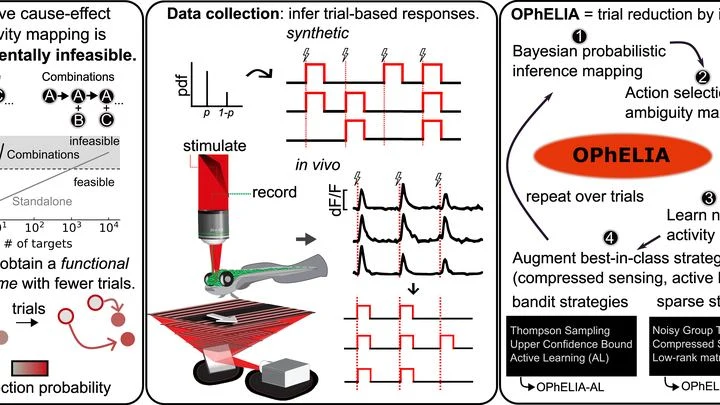
To understand how the brain works, you need a detailed map of neuron connections — the so-called connectome. The traditional approach is like trying to figure out a huge garden irrigation system by opening each tap one by one and watching where the water flows.
Imagine an old theater in the damp fog. On the stage, a scattering of actors, but only one is caught by the spotlight beam, made to freeze in the bright patch. The rest billow in the dim light, ready to dissolve at any moment.
In 1905, Einstein showed that the chaotic motion of pollen in water results from the jostling of invisible molecules. A century later, physicists have learned not only to observe but also to control motion at the quantum level.
A neuron sends a signal to its neighbor. The neighbor doesn't respond immediately — the impulse travels along the process at a finite speed, like a letter delayed in transit. Usually, such a delay is considered a nuisance, but in this new work, it becomes the conductor.
When two excitable neurons are connected with a delay, a rhythm spontaneously emerges between them.
When the conductor leaves the orchestra, the musicians keep playing from memory for a while. But without a unified rhythm, each one starts to speed up or slow down on their own, and the harmonious symphony turns into disjointed noise. According to new research, the brain and heart behave much the same way in the last hours of a person's life.
A smartphone camera captures everything indiscriminately, but the eye immediately picks out what matters. The retina doesn't just pass the image to the brain: it highlights contours on the spot, suppresses noise, and adjusts to brightness.
An artist paints a picture, glancing at the audience in the hall. If the viewer smiles, the artist adds more red and rounded lines to the canvas; if the viewer frowns, the artist removes blue and sharpens the angles.
An orchestra plays without a conductor. Each musician has a score: that's the genes. But the volume and tempo depend on the acoustics of the hall, the mood, and the neighbors on stage. That's roughly how heredity and daily life together shape a teenager's behavior.
Every group has its unspoken trios: three friends who are always together. And there are pairs that exist on their own. It turns out that how much trios "contain" pairs determines how everything, from a virus to a new idea, spreads through the group.
Scientists introduced a measure they call the nesting coefficient.
The brain is like a multi-story building: lower floors process simple signals, while upper floors assemble them into complex perceptions. Scientists have long suspected that this order is tied to how neurons work together. But exactly how has remained a puzzle.
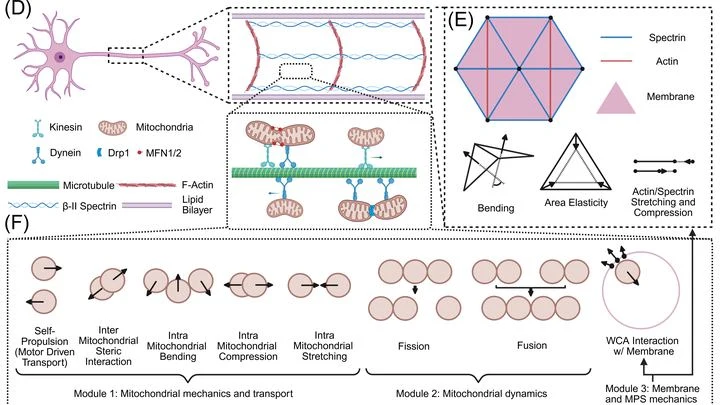
Inside every neuron, there's a long, thin channel, the axon, through which signals travel from the cell body to other cells. To keep this channel working, mitochondria constantly shuttle along it. These tiny organelles produce energy and move in both directions, like cars on a narrow road.
A cell about to divide first marks its waist. Beneath its membrane, in a thin gel of protein filaments, movement begins. The filaments flow like a slow river, and a belt forms in the middle of the cell. This belt tightens more and more until the cell is pinched in half.
Scientists built a computer model of this process.
A neuron that has just calmed down is like a pianist lifting their hands from the keys. But inside, silent work continues: tiny pumps push chloride ions outward, returning the instrument to a state of readiness. If the pumps fall behind, chloride builds up, and then an inhibitory signal meant to quiet the cell suddenly starts exciting it.
A chef's knife and a peeler each handle different tasks, but when a cook learns a new recipe, they often grab the same knife for everything. The brain seems to do the same when mastering a new skill of distinguishing patterns.
In the experiment, monkeys trained for weeks to tell apart barely noticeable differences in complex patterns.
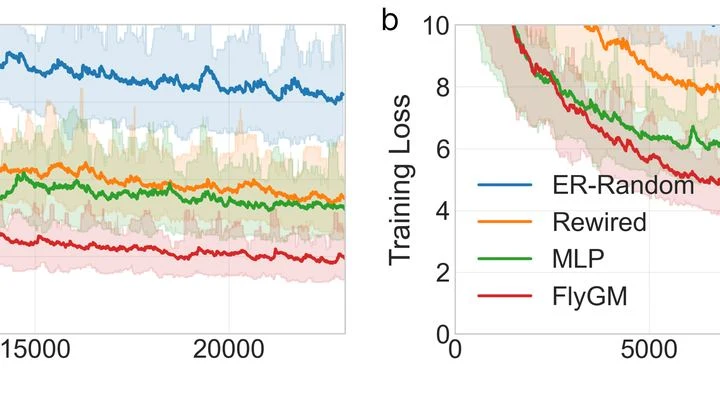
The fruit fly Drosophila is a tiny creature with a brain the size of a poppy seed. It contains about one hundred thousand nerve cells, and scientists have already mapped all their connections, like a city subway map where stations are neurons and lines are the links between them. This map is called a connectome.
Inside every cell, there is a scaffold of filaments, like construction scaffolding that gives the cell its shape and allows it to move. These filaments are connected by crosslinking proteins: some simply hold them together like ropes, while others act as tiny motors that crawl along the filaments and pull them toward each other.
At night, the brain doesn't switch off. Instead, it sorts through the day's events like a librarian arranging books on shelves. But where do those strange, sometimes nonsensical dream images come from? Many have assumed they're just random noise with no meaning.
A new computer model shows that randomness doesn't hinder: it helps.
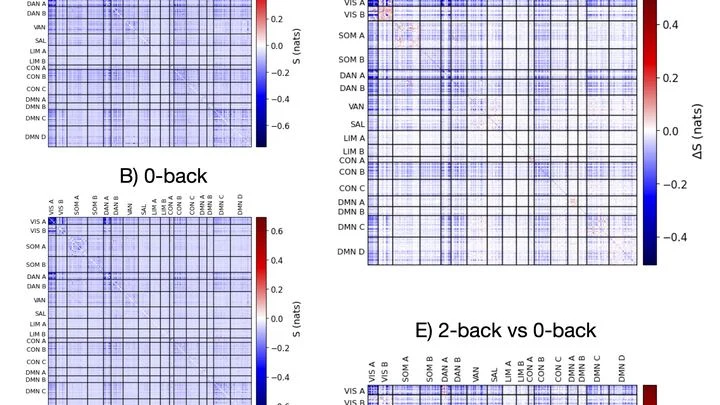
Imagine an office where employees exchange notes. When there are few tasks, everyone works independently. But when an urgent order arrives, some departments start actively messaging others, and the overall work becomes more coordinated. That's roughly how the brain behaves when we try to hold several things in mind at once.
You're trying not to think about the argument you had this morning, but vivid images keep popping into your head. At the same time, you're preparing a report and holding numbers in your mind. It doesn't go well: memory interferes with work, and work prevents forgetting. Scientists set out to see how the brain copes with this dual load in people with varying levels of anxiety.