The Brain Translator: How Different People Hear the Same Signal express
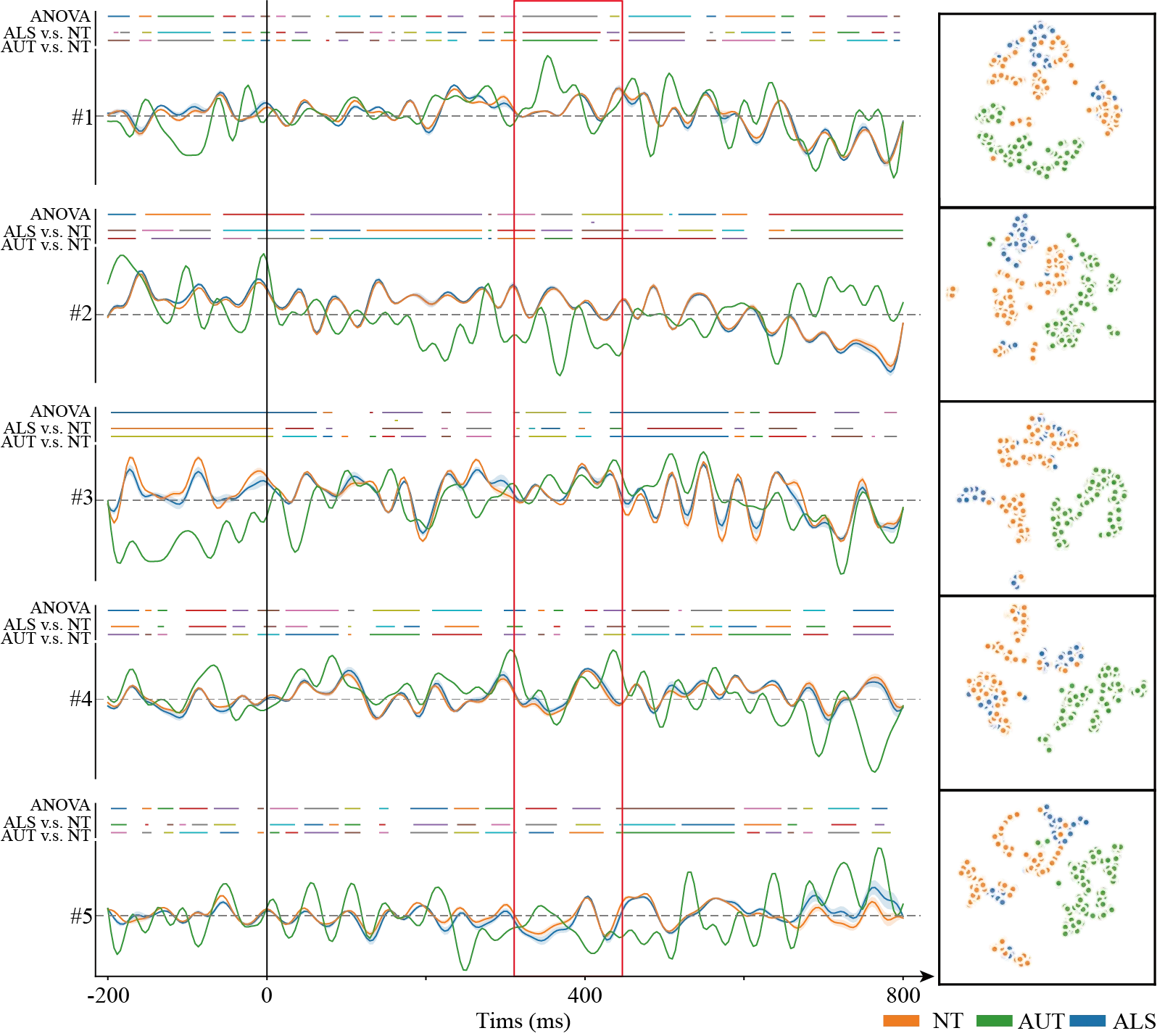
A person looks at flashing letters on a screen, and a computer guesses which one they chose by a burst of brain activity. It's like an interpreter who catches not words but the brain's electrical signals. But different people's brains 'speak' with an accent: one person's signal is bright and clear, another's is quiet and smeared. The scientists decided to figure out exactly how these accents differ.
They collected brain wave recordings from three groups of people: those with amyotrophic lateral sclerosis (a disease that weakens muscles), those with autism, and those without such conditions. For the analysis, they devised a program that not only recognizes the signal but also shows its 'portrait'—what a typical wave looks like for each group. It turned out that the portraits are indeed different: one group's wave is sharper, another's is wider, and a third's is shifted in time.
This finding is important for people who cannot speak or move. For them, brain interfaces are the only way to communicate. If the program knows what this particular person's signal looks like, it will make fewer mistakes. In the future, such systems could adapt to each person from the first minutes of use, like a good interpreter who quickly gets used to the speaker's voice.
The P300 signal appears in the brain about 300 milliseconds after a person notices something important: it's like an instant 'aha!' inside the head.